Heinrich Hermann
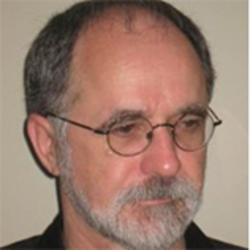
Heinrich Hermann co-founded the journal Int|AR: Interventions Adaptive Reuse with Liliane Wong and Markus Berger, co-edited the first two volumes, and served as head of its international advisory board. Before opening his own design studio in Concord, MA in 2002, he practiced in his native Austria and Germany and worked as designer and senior designer with large and small firms in Boston. He contributed to a wide range of project types and sizes, from residential, cultural/civic, and academic buildings to very large mixed-use facilities, including the Ritz-Carlton on the Boston Commons Complex.
Hermann earned advanced degrees from the University of Applied Arts in Vienna (MagArch ’79) and Cornell (MArch ’82). His 1995 PhD dissertation at Harvard focused on the poetic/spiritual in 20th-century architecture, still the focus of his research and practice. As a teacher he continues to actively explore pedagogical strategies aimed at helping students unlock their unique creative potentials.
In addition to RISD, Hermann taught at Montana State, Virginia Tech, Washington University in St. Louis, Roger Williams, Northeastern, Harvard University, and the Danish Institute for Study Abroad (DIS) in Copenhagen, where incoming graduate students in RISD’s Interior Architecture department begin their studies. From 2012–15 he served as full professor and chair of the architecture and design department at the SUNY College of Technology at Alfred (Alfred State), where he implemented the only accredited BArch program in SUNY’s 64-campus system.
Academic areas of interest
Aside from his passion for the cultural, economic, and sustainable merits of adaptive reuse, Hermann’s research has for many years focused on ideas, principles, strategies, and devices associated with the poetic/spiritual. Cognitive-emotive associations evoked by such works may lead receptive individuals to temporarily transcend the habitual perceptions of time, space, and focus on the self and result in feeling greater harmony with all being.