
Members of RISD’s growing community of sound artists and researchers discuss how the evolving studio contributes to the college’s overall educational mission.

How does everyday sound shape our understanding of place and activity? How do architectural spaces influence how sound travels and how we listen? Students in Sited Sound: Composition and Public Space—an elective in RISD’s new Sound BFA program taught by Professor Shawn Greenlee 96 PR—explored such questions using recently acquired state-of-the-art speaker technology.
In addition to heading up RISD’s Digital + Media department, Greenlee leads the Studio for Research in Sound and Technology (SRST), which includes a soundproof studio in 15 West where students can access specialized equipment. But the point of this class is to take the students’ compositions on the road, presenting them in the Washington Place Auditorium, the Fleet Library, the RISD Auditorium, and the Grand Gallery of the RISD Museum.
“We have an additional space in the basement of Washington Place outfitted with an immersive cube loudspeaker array so students can test their ideas in a studio setting in-between outings with the IKO,” Greenlee says. “Readings and listening studies are paired with assignments so that they’re able to observe the sites while composing for them, paying attention to how sound behaves, where it changes, and how people use the spaces.”
The IKO Greenlee is referring to is a 20-sided, 3D loudspeaker built by Austrian manufacturer Sonible that uses complex algorithms to send focused sound beams in any direction, creating an immersive sonic experience. “We have the only one of these in North America,” Greenlee notes, “and debuted it last April at the Residual Noise Festival, which RISD co-sponsored with the Brown Arts Institute.”
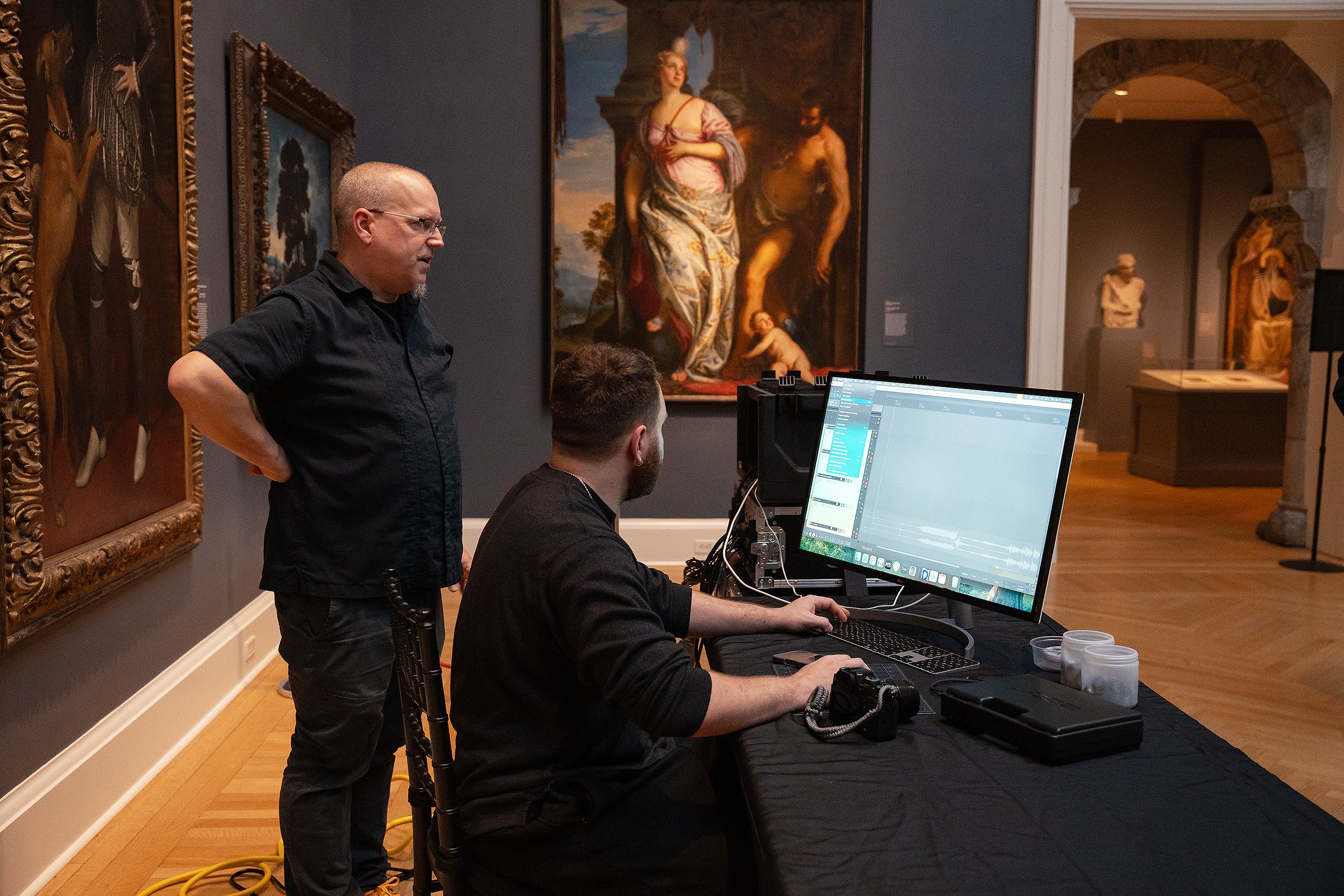
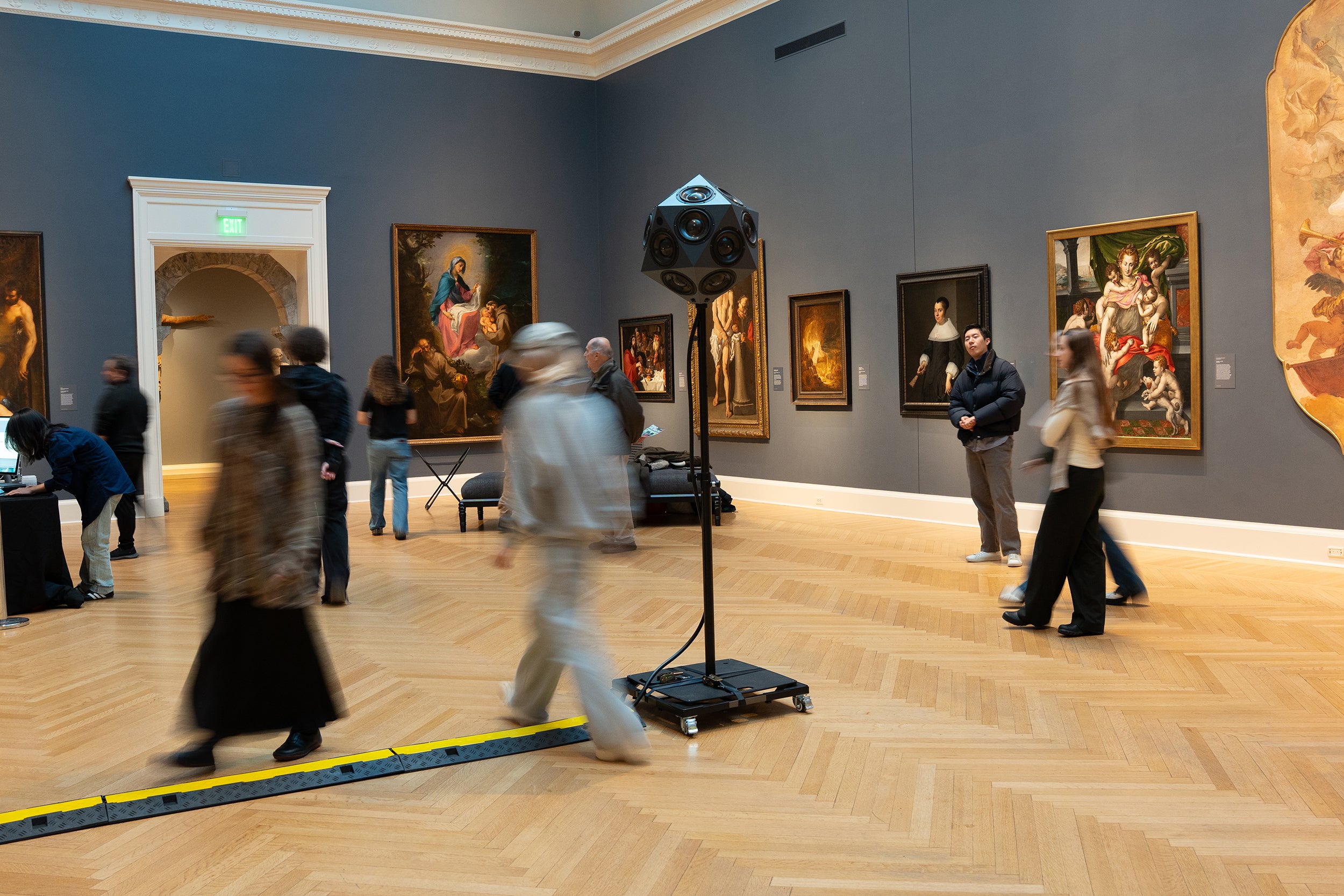
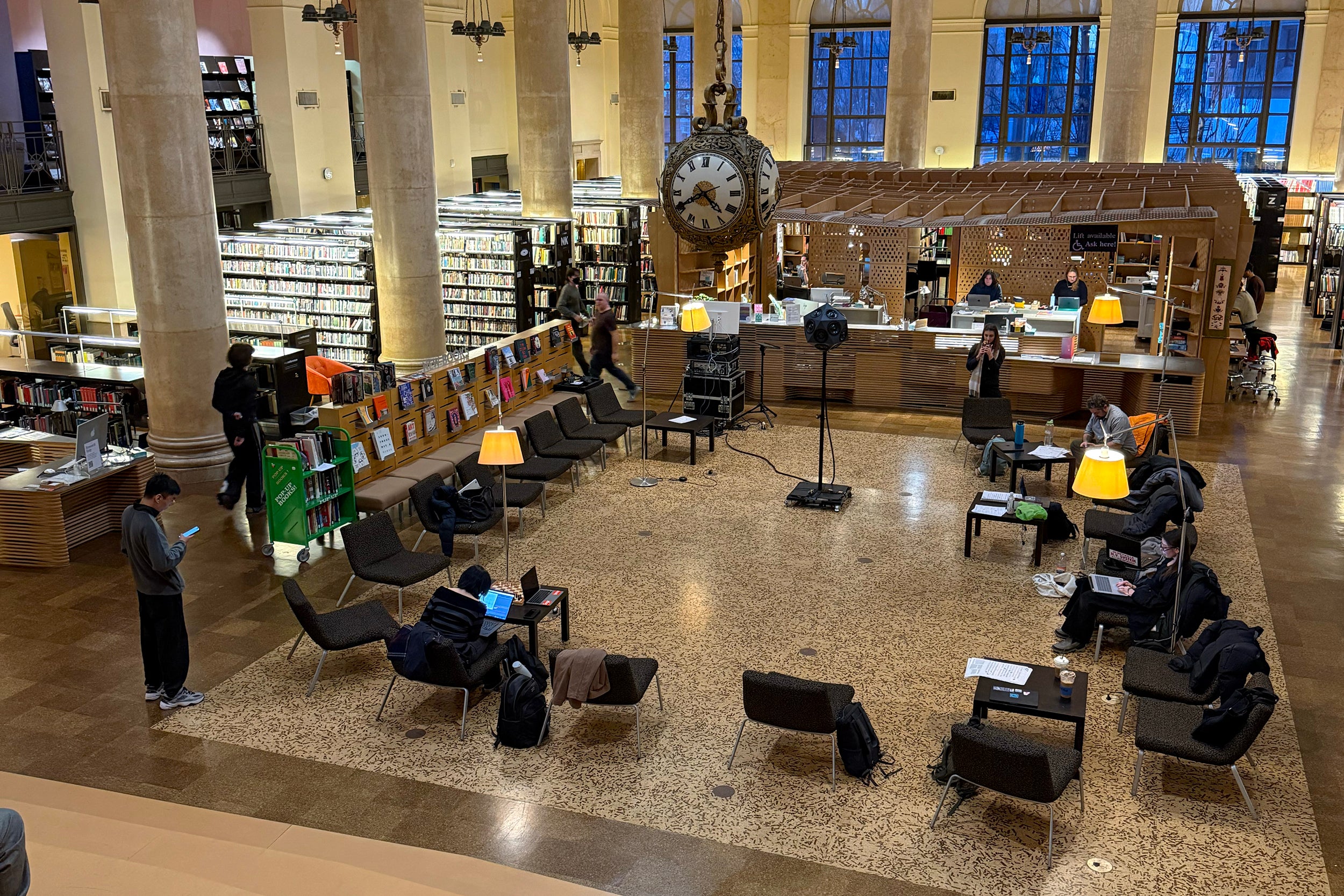
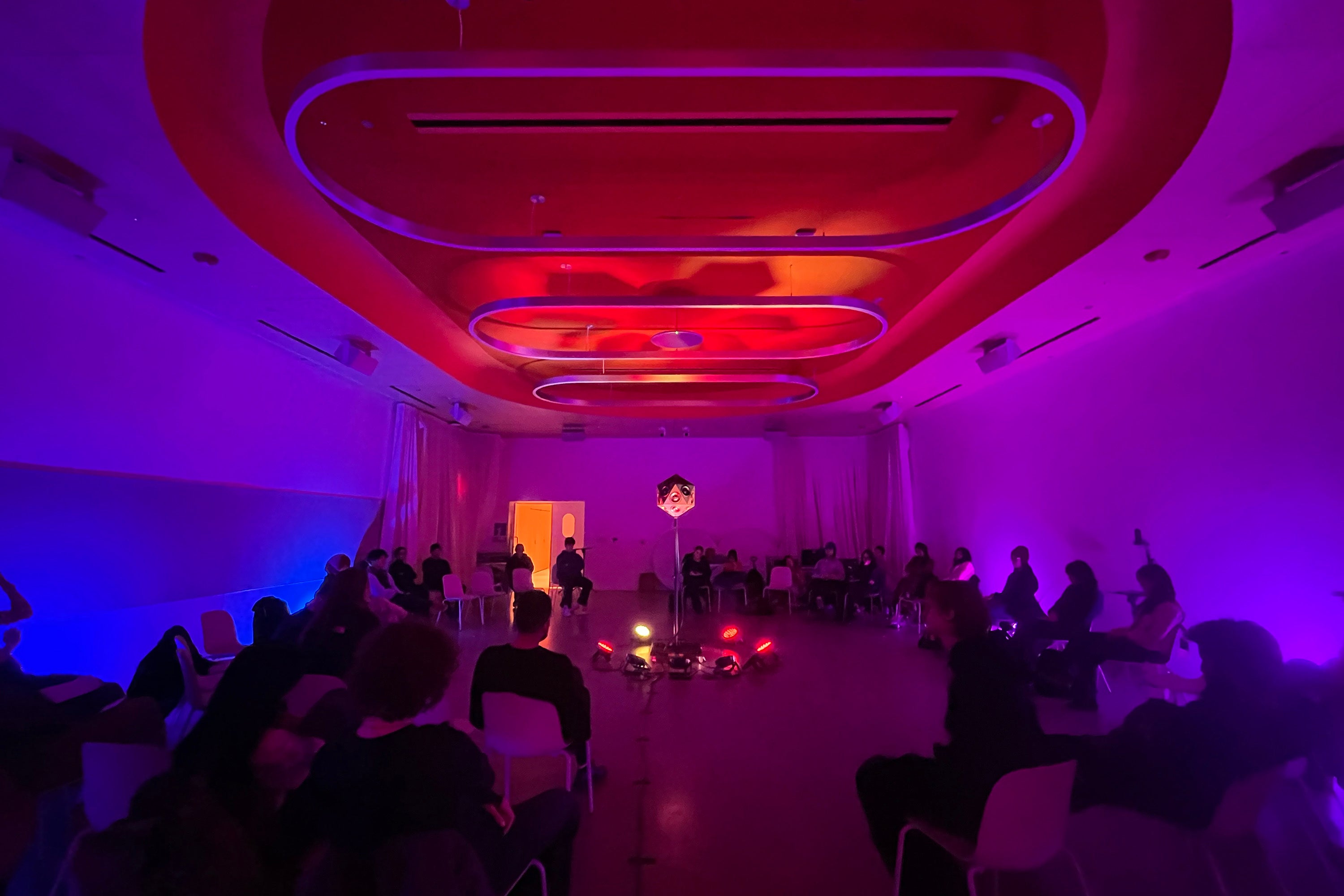
This winter, students in the class used on-site research and experimentation to examine how acoustics, architecture, and social dynamics influence auditory perception. The atmospheric compositions they created using field recordings and self-produced sounds temporarily transformed familiar campus spaces into sites for focused listening and collective reflection. The goal, says Greenlee, is to control the spatial form—including density, directionality, duration, and movement—in a variety of interior spaces.
For their first assignment, students concentrated on how sound occupies space in the Washington Place Auditorium. They attempted to use sound as a beacon or anchor and to create zones that expanded, contracted, or pulsed. For the pieces they presented in the Fleet Library, they examined how a single spatial idea can shift in intensity, clarity, and impact depending on audience presence and context.
For the last assignment before their final public presentation on February 5, students developed short, high-order ambisonic works (or HOAs) to activate two sites: RISD’s main auditorium and the museum’s Grand Gallery. HOA enhances traditional ambisonics by using a greater number of channels, allowing for more precise localization of sound sources and a more immersive listening experience. “The focus was on translation,” Greenlee explains, “how sound reframes experience when scale, movement, and attention change.”
During the Grand Gallery session, students also considered how the pieces they created responded to the museum’s architecture and atmosphere. Sophomore Ingrid Järvi 28 PT explained that her piece, which incorporated layers of distorted piano and the rushing of water, was meant to respond to the gallery’s impressive collection of Renaissance paintings. “I wanted to reference time, to make something that felt dated and far away like an old music box in response to these paintings,” she said.
A piece by grad student Yuanji Liu MFA 26 DM combined her rhythmic recitation of the Chinese alphabet with abstracted voices of the class that she recorded during an earlier crit. “The sounds were flying by me and moving all the time,” one student noted after the piece was played.
Greenlee suggested that listeners move around the space during each session. He used the metaphor of a lighthouse to describe the IKO’s reflective effect. “Imagine that all the walls are mirrors,” he said, “and the speaker is a lighthouse beaming an incredibly bright light across the space.”
Simone Solondz / museum photos by Kaylee Pugliese
February 9, 2026
Members of RISD’s growing community of sound artists and researchers discuss how the evolving studio contributes to the college’s overall educational mission.

Two new courses offered through the Digital + Media department encourage students to expand their creative practices by exploring sound design.

Since opening in 2018, the spatial audio studio above the library has helped advance sound studies at RISD.