Leeland McPhail
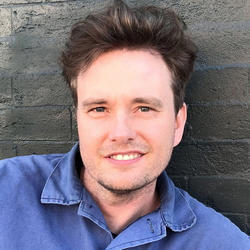
Leeland McPhail is an architectural designer, educator, and founder of HERE HERE, whose work marries disciplinary pursuits of architectural excellence with a non-deterministic ecological practice. Based in Providence and working across New England lands, Leeland approaches architecture as both a material discipline and a means of reshaping relationships among land, labor, resources, climate, and culture. Leeland recently joined Machado Silvetti as an associate, bringing his commitment to material agency and architectural rigor to a practice known for its cultural and civic work.
Leeland’s formal education at both Yale as the Frederick C Bland Scholar and at Basehabitat in Austria and informal education with earthen builders like architect Timur Ersen and master thatcher Christian Ditlefsen have shaped an ongoing pursuit of the (sometimes contentious) relationship between architectural form and material lives. Through HERE HERE, Leeland develops projects and practice that connect design with regional resources, craft, construction, and the long-term stewardship of buildings and landscapes. This work encompasses bioregional and plant-based materials, earthen construction, waste fibers, thermodynamic assemblies, adaptive reuse, and forms of construction designed for repair and disassembly.
Rather than treating sustainability as a series of technical checklists, Leeland begins with the origins, lives, and afterlives of buildings and architectural practice itself: where materials come from, how they are assembled, who maintains them, and how they might return to productive cycles. At RISD, where Leeland recently served as thesis chair for the Sustainability Design Lab course The Remainder: A Waste Fiber Exploration, he supported students as they investigated the architectural potential of overlooked and discarded cellulosic and keratin and protein fibers. This culminated in a book he edited called Cellulose, Binder, Cellulose, Hybrids: A fiber specimen archive and wrote the article Fiber: Resistance. Urgency. Proximity.
His recent grant-funded research projects locate physical materials within the space of representation. Leeland seeks architecture that is regenerative without becoming transactional—an architecture of exacting detail, cultural relevance, ecological reciprocity, and enduring beauty.