
The unconventional designer creates unexpected, humorous objects with stories to tell about consumer culture.

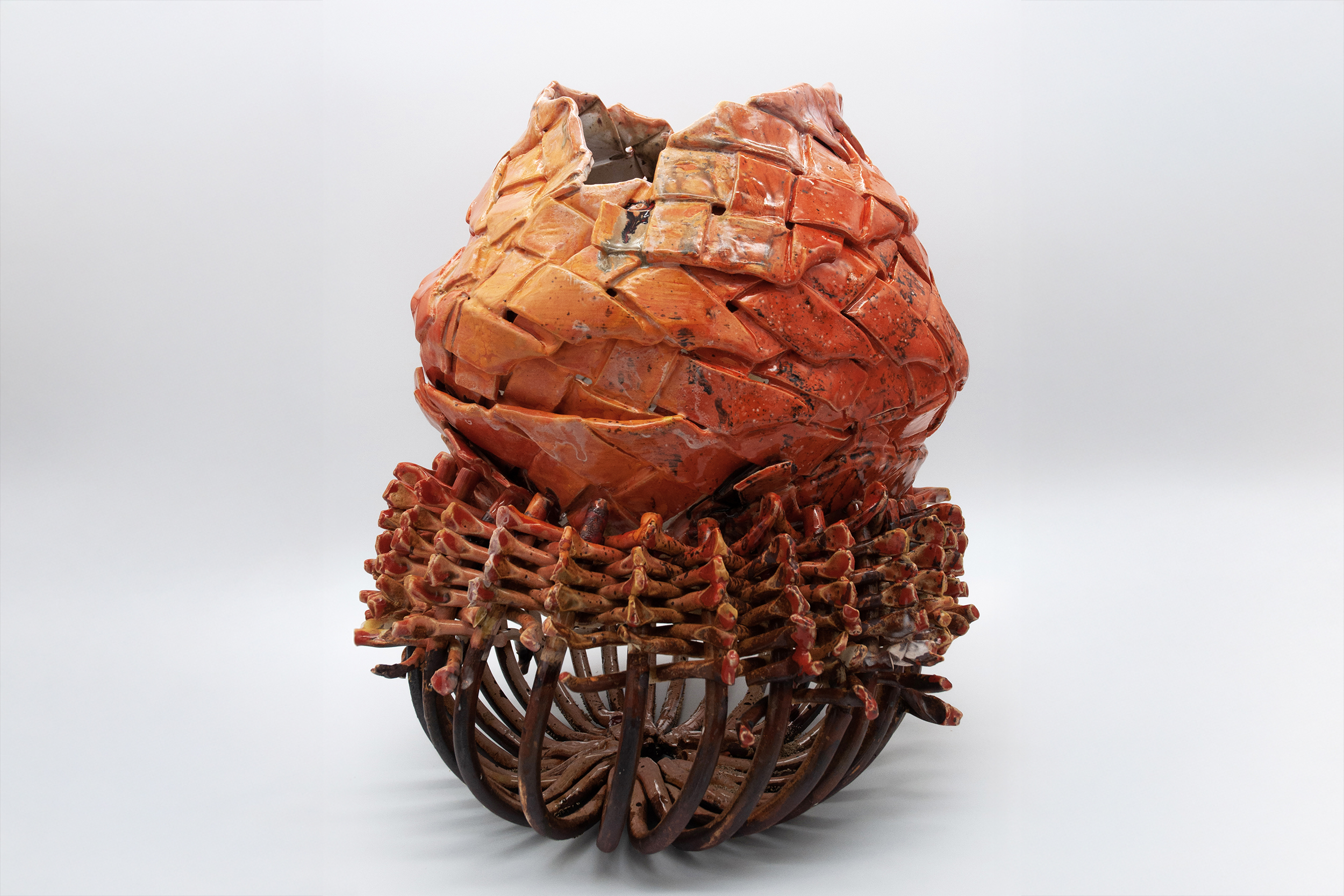
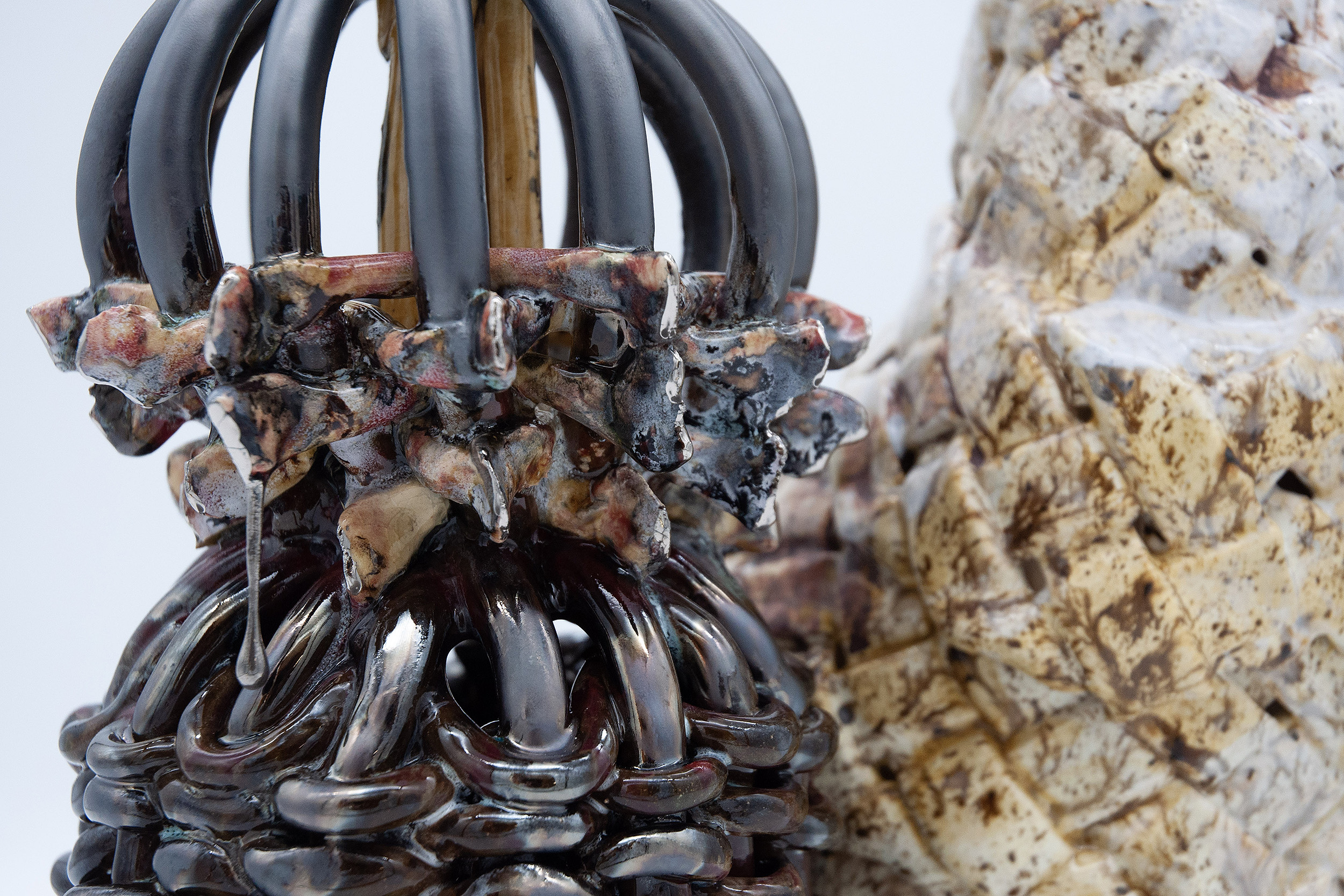
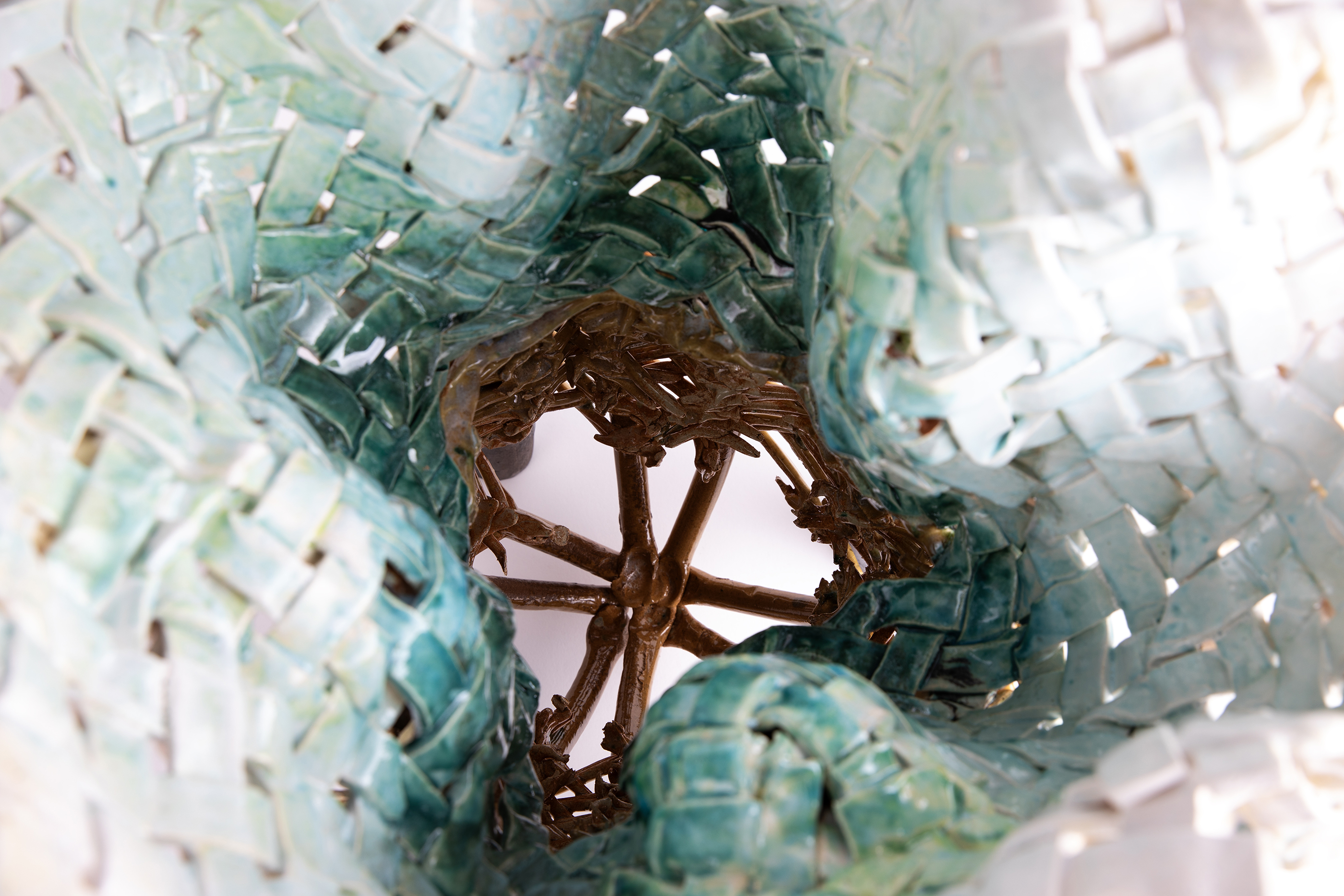
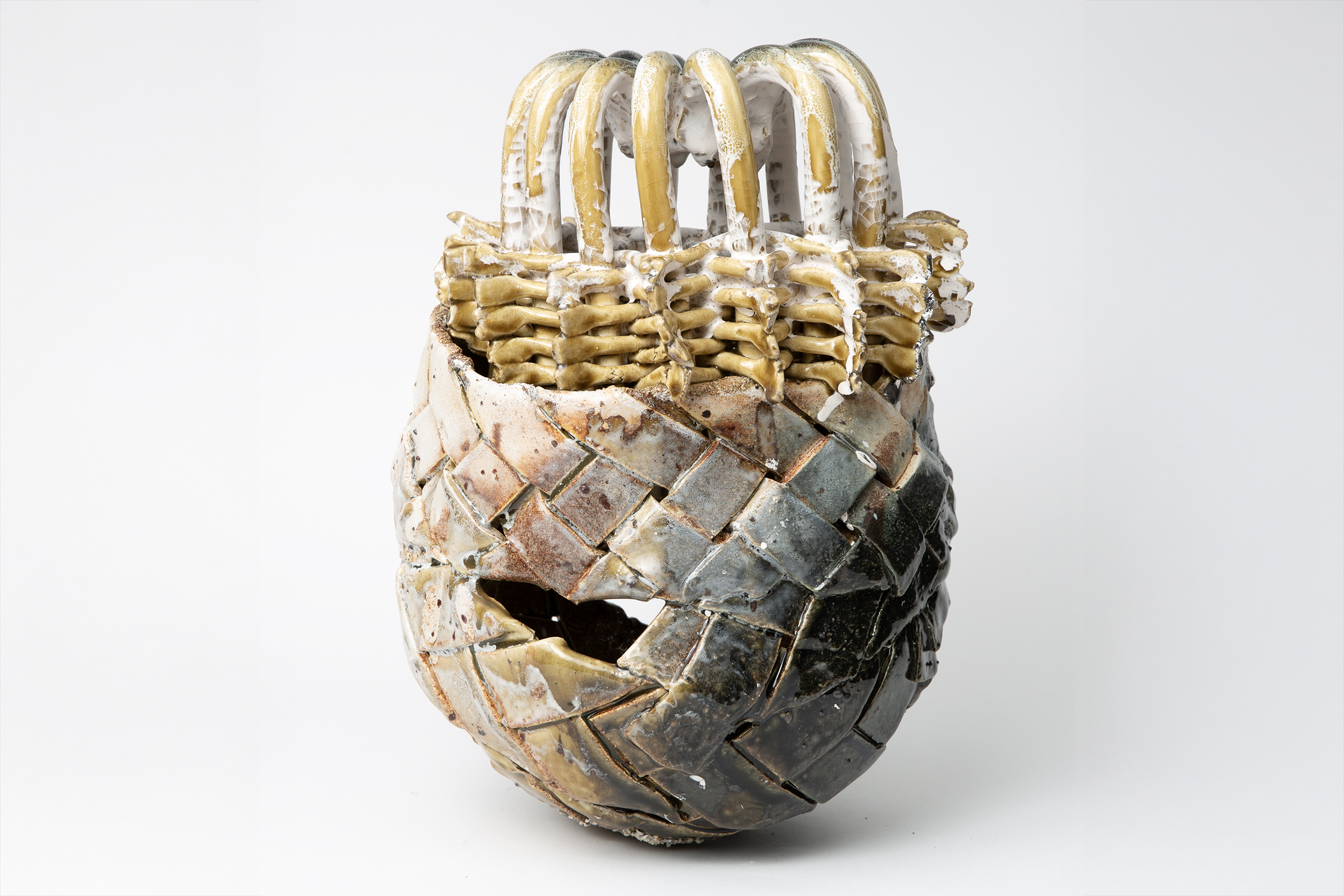
Ceramics artist Anina Major MFA 17 CR uses the vernacular of craft to reclaim experiences and relocate displaced objects. Her work is inspired by Bahamian straw plaiting, a skill she learned from her grandmother in the Bahamas. Major’s process is both iterative and intuitive. She is the recipient of numerous awards and residencies, including the 2023 Joan Mitchell Fellowship, the inaugural Future Perfect Prize in 2024, and most recently, she was awarded $50,000 via a prestigious 2026 USA Fellowship. Her recent work is currently on view at Shoshana Wayne Gallery in Los Angeles. Here she shares her thoughts about life after grad school and lessons learned at RISD that continue to resonate.
How would you describe your creative practice?
I focus on craft as vernacular, specifically weaving styles I’ve inherited from my Bahamian lineage. I’m continuing to build that language and to preserve the practice of weaving as a way of thinking through identity and culture.
What made you want to be an artist?
I always thought of myself as an artist, a creative being, but there was a moment when I first thought about being a professional artist, which is different. That came later in life. I felt like there was a voice missing, and I wanted to contribute to the conversation—to share my work and put myself out there. It wasn’t a straight path for me.
What was it that initially kept you from making that leap?
You can be the most talented person, but that doesn’t necessarily translate into this infrastructure we live in. There are so many factors that contribute to someone being able to do this for a living. Artists don’t fit into that rigid 9-to-5, paycheck-every-week system. Nobody in my family works that way, so I had no point of reference for that lifestyle.
What changed that allowed you to commit to the life of an artist?
I felt like I wasn’t helping the younger Anina use her talent or fulfill her purpose in life, like I was ignoring my calling. Sometimes you don’t know what you’re capable of until you have a point of reference: other artists you feel a kinship to. When I found those points of reference, I started to tap into my own agency.
“RISD gave me the space and time to really think critically and ask myself hard questions. It wasn’t easy.”
Why did you initially choose to study at RISD?
I thought RISD would stretch my understanding and my skill sets, and I really admired the work of the professors who were there at the time: Simone Leigh, Katy Schimert, Larry Bush, Nicole Cherubini. The facilities and resources are one thing, but being in conversation with artists whose work you admire is what really molds you as an artist.
What lessons did you learn at RISD that you still carry with you today?
When I came to RISD, I wanted to delve into my identity as a maker. I started by making little straw dolls. But it was what went into making the dolls that mattered: the practice of weaving. That was the breakthrough moment. Creating sculptural forms was another breakthrough. I could easily weave something flat out of clay, but I didn’t start making 3D forms until three weeks before Grad Show!
Did you see your practice differently after studying at RISD?
For sure! RISD gave me the space and time to really think critically and ask myself hard questions. It wasn’t easy. You’re constantly trying to dig deeper. Different points of view allowed me to see my own work differently and to really own my gestures. RISD tapped into my curiosity and contributed to my self-discipline. It’s all about making the work and asking questions.
What do you love about your discipline or medium?
I love everything about clay! I love that it’s always teaching me something. Every time I touch it, I learn something new. And it doesn’t allow me to take anything for granted. You think you’ve got it, put it in the kiln, and then it transforms into something else. It teaches me what it means to be agile and how to let go of preconceived notions. Me and clay really go at it sometimes!
Any advice for young artists just starting out?
Stay focused on the work. There are so many distractions. Believe in what you’re doing, and never stop.
Life After RISD is an ongoing series featuring alumni making outsized impact in culture and industry. Stay tuned for more from our graduates on how RISD has helped to shape their practices and the way they engage with the world.
interview by Simone Solondz / top photo by Blair Meadows
February 2, 2026
The unconventional designer creates unexpected, humorous objects with stories to tell about consumer culture.

The Brown | RISD Dual Degree Program grad discusses his worldly, discipline-melding approach to sculpture and installation.

The Levantine interior designer discusses her love of craft and collaboration and how her style combines Asian and Middle Eastern influences to reflect a modern Arab identity.