
Eleven arts educators and a full-time librarian join the community, bringing a wealth of new knowledge and perspectives to RISD students.

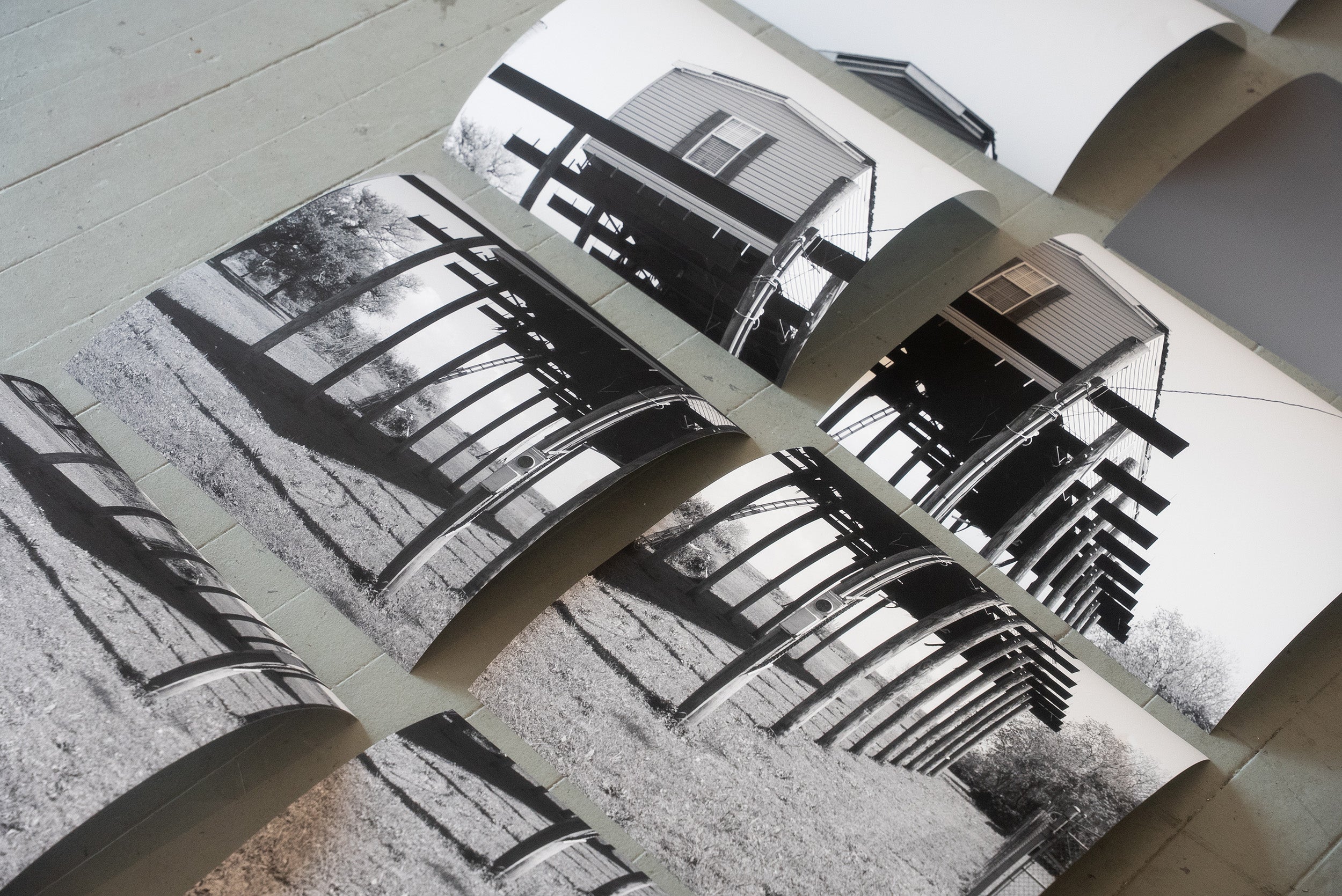
“How do you see sequence serving the work? Maybe you want to make the display less democratic in order to help the viewer understand what you’re trying to articulate with these images,” Associate Professor Nelson Chan 06 PH said to grad student Elysia Perkins MFA 27 PH at a spring crit in RISD’s Fletcher Building.
Chan is co-teaching a critique-based Photography course with Graduate Program Director Laine Rettmer. It brings together the entire grad cohort to provide generous feedback to each student on whatever project they’re working on.
“It’s an opportunity for students to think through their own work and learn how to verbalize their ideas,” says Rettmer. “We encourage them to incorporate theory in new ways and test out new concepts. It’s important not to crystalize ideas too early, but instead to leave room for the unexpected—particularly for first-year grad students who aren’t yet focused on their thesis projects.”
First-year grad student Lola Owett MFA 27 PH asked the group to weigh in on a series of large-format, black-and-white images of broken shoes she is working on. All of the shoes are her own, and the project is meant to reflect on “the ground as a sense of reality and the high heel as woman’s attempt to rise above it,” the artist explained.
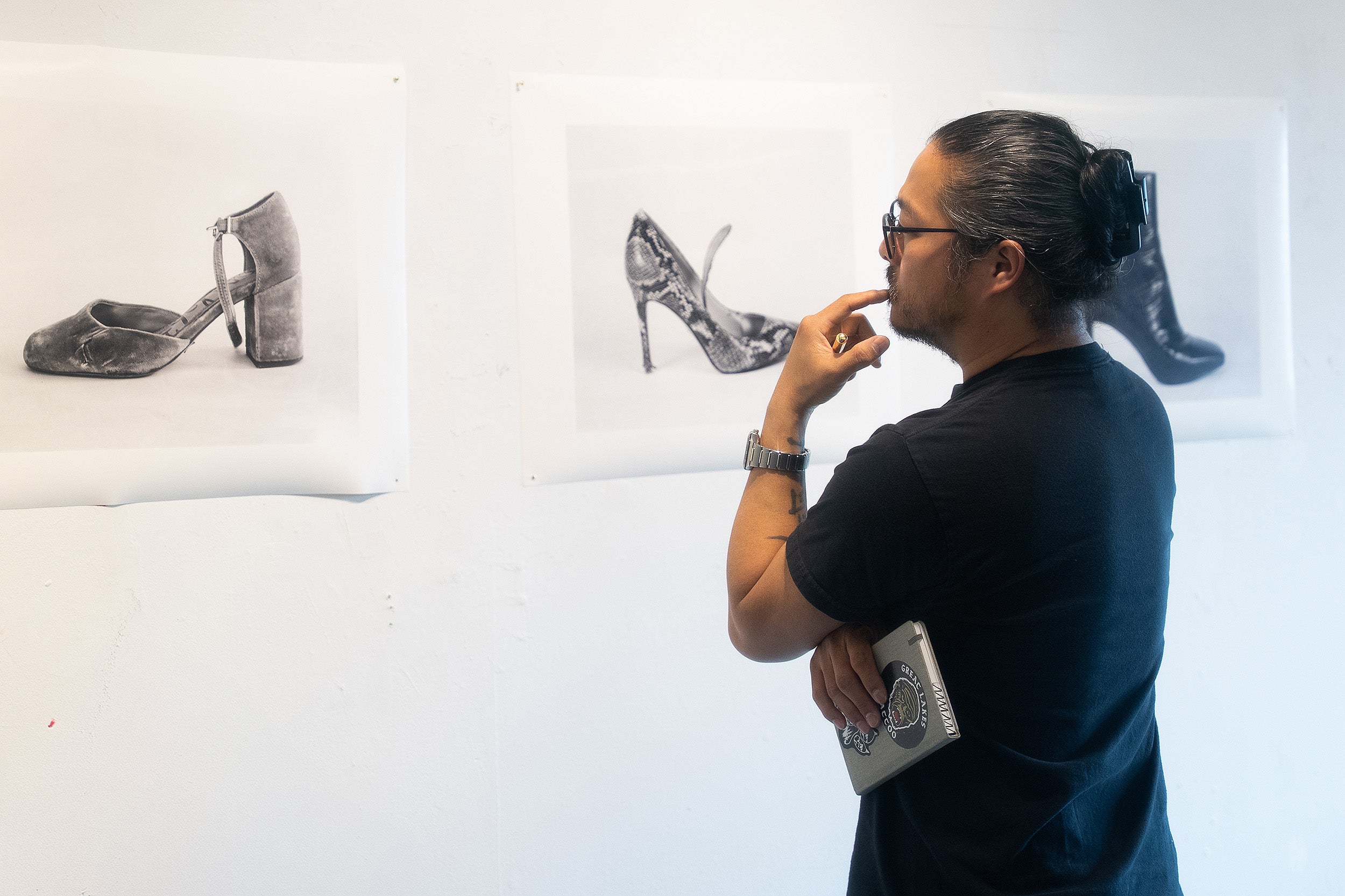
One student noted that her black-and-white treatment of the objects runs counter to the sensationalized view that advertisers bombard us with regularly. Another wondered what information the photos convey that the shoes themselves cannot. “You’re kind of abstracting the shoes and treating them all the same but at the same time asking the viewer to notice the differences,” he observed.
“These forensic black-and-white photos arranged topologically make me think about the historical and conceptual within the language of photography,” Chan offered. He also encouraged Owett to use the focus stacking feature on a digital camera to quickly work through her ideas before engaging the more time-consuming (and expensive) large-format 4x5 camera.
Chan is also teaching a seminar this semester called The Image and Difference that explores the social, political, sexual, racial, and economic issues surrounding difference and photography. “In that course, we’re examining how photography has the ability to perpetuate and normalize intersecting forms of inequality while also providing avenues for opposition and reflection,” he explains.
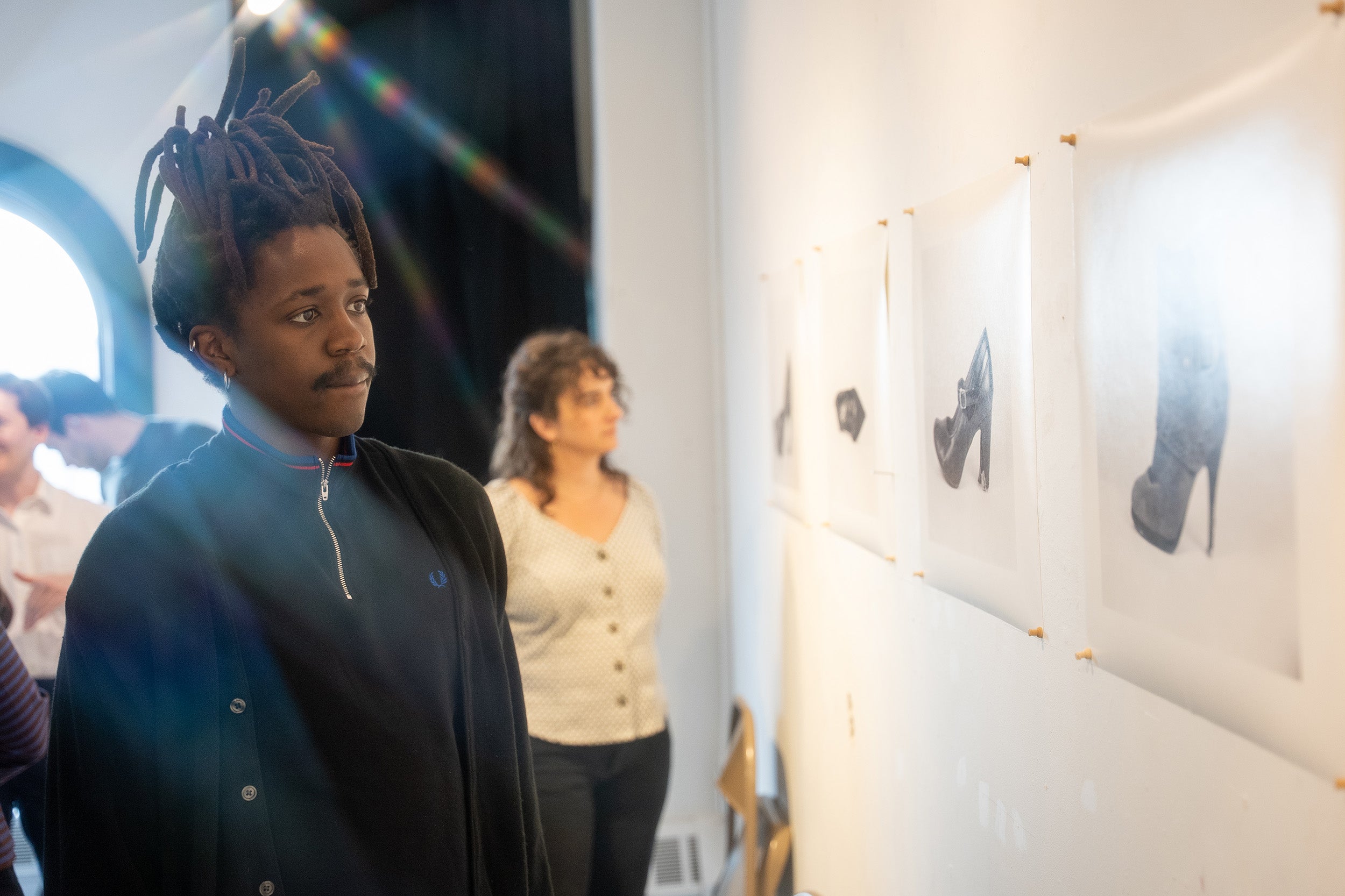
According to the course syllabus, the class is “considering the potential for violence embedded in our conceptualization of photography and the human body, drawing from photographic theory and critical, cultural, and film studies.” That perspective was useful during Owett’s crit in that some of the images she showed evoked a sense of violence: the damage that high-heel shoes can inflict on the wearer’s body.
As a Photography department alum, Chan has an interesting perspective on how things have changed over the years and how they have remained the same. “While the program has always been photo-based, students are encouraged to follow whatever path their work is leading them to, be that sculpture, installation, time-based video work, etc.,” he says. “RISD students aren’t only taught how to be technically proficient or conceptually rigorous, but are intensely trained in photographic literacy, which sets them up to dream about being the editor who hires the photographers and chooses the pictures that make up the stories in a New Yorker essay or an Aperture title.”
Before coming to RISD, second-year grad student Virginia Hanusik MFA 26 PH used mostly still photographs in her practice, exploring the relationship between landscape, culture, and the built environment. During her crit, she showed new iterations of previous work as well as a diptych video focused on the same ideas. “What you’re seeing is the surge protection barrier in New Orleans built after Hurricane Katrina,” she explained. “To me, the video is somehow spiritual, like worshipping a monument.”
Simone Solondz / photos by Kaylee Pugliese
April 20, 2026
Eleven arts educators and a full-time librarian join the community, bringing a wealth of new knowledge and perspectives to RISD students.

Curated by the International Center of Photography’s Marley Trigg Stewart, Every Time I Conjure a Stone, I Throw It breaks down the form and function of the photograph.

From Apparel Design to Textiles, campus hummed with innovative approaches and generative discussions the week before the winter break.