
The latest development in the successful partnership provides students with the rare opportunity to experiment and create new bodies of work using natural gems.

For thousands of years, people have been using engraving, inlaying, and overlaying techniques to ornament precious metal objects, including jewelry, ceremonial weapons, and even suits of armor. As grad student Jonathon Zalakos MFA 26 JM puts it, “such interventions make taken-for-granted objects more significant and create a material conversation between cold, utilitarian steel and warm, precious silver.”
Zalakos recently shared his love of engraving with students in a Wintersession course called Silver Meets Steel offered through the Jewelry + Metalsmithing department. Teaching the course furthered his longstanding goal of making meaning by integrating traditional goldsmithing materials and techniques with contemporary practices and philosophical thought.
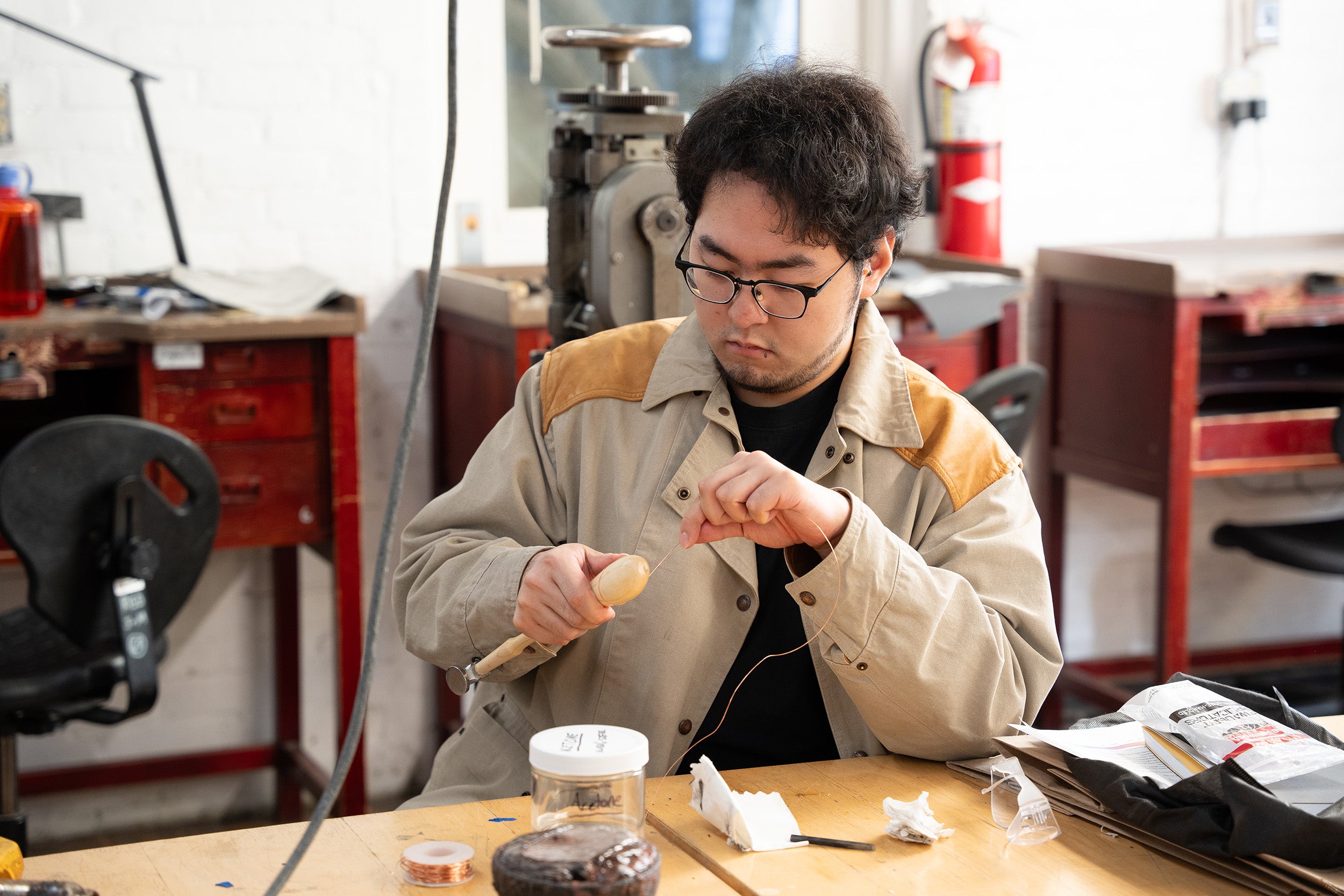
Students began by building familiarity with such key materials as silver wire and sheeting and creating their own chisels and other tools to work the metals. They then learned to prepare steel surfaces, embed silver, apply patina, and polish their final compositions. They conducted independent research into related techniques, including damascening and nunome zogan, both of which originated in ancient Syria, and ipsa, which was developed in Korea. All of these techniques involve using a chisel to raise thousands of tiny “teeth” from the metals’ surface that adhere to fine silver or gold almost like Velcro.
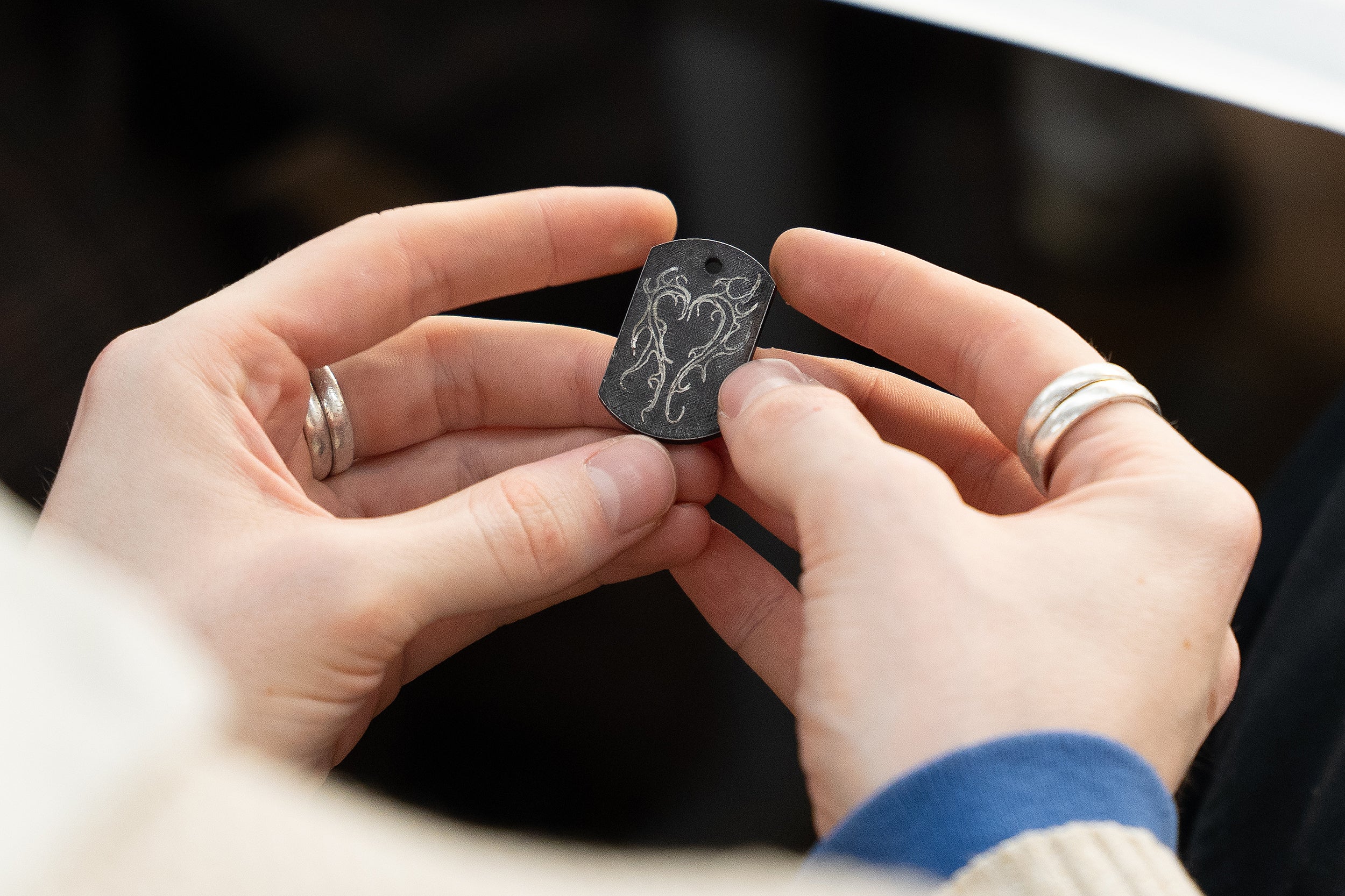
One class project involved decorating the tools themselves and thus turning a mass-produced object into something completely unique. Another invited students to engrave a meaningful metal object of their choice, embedding their own narrative into the metal.
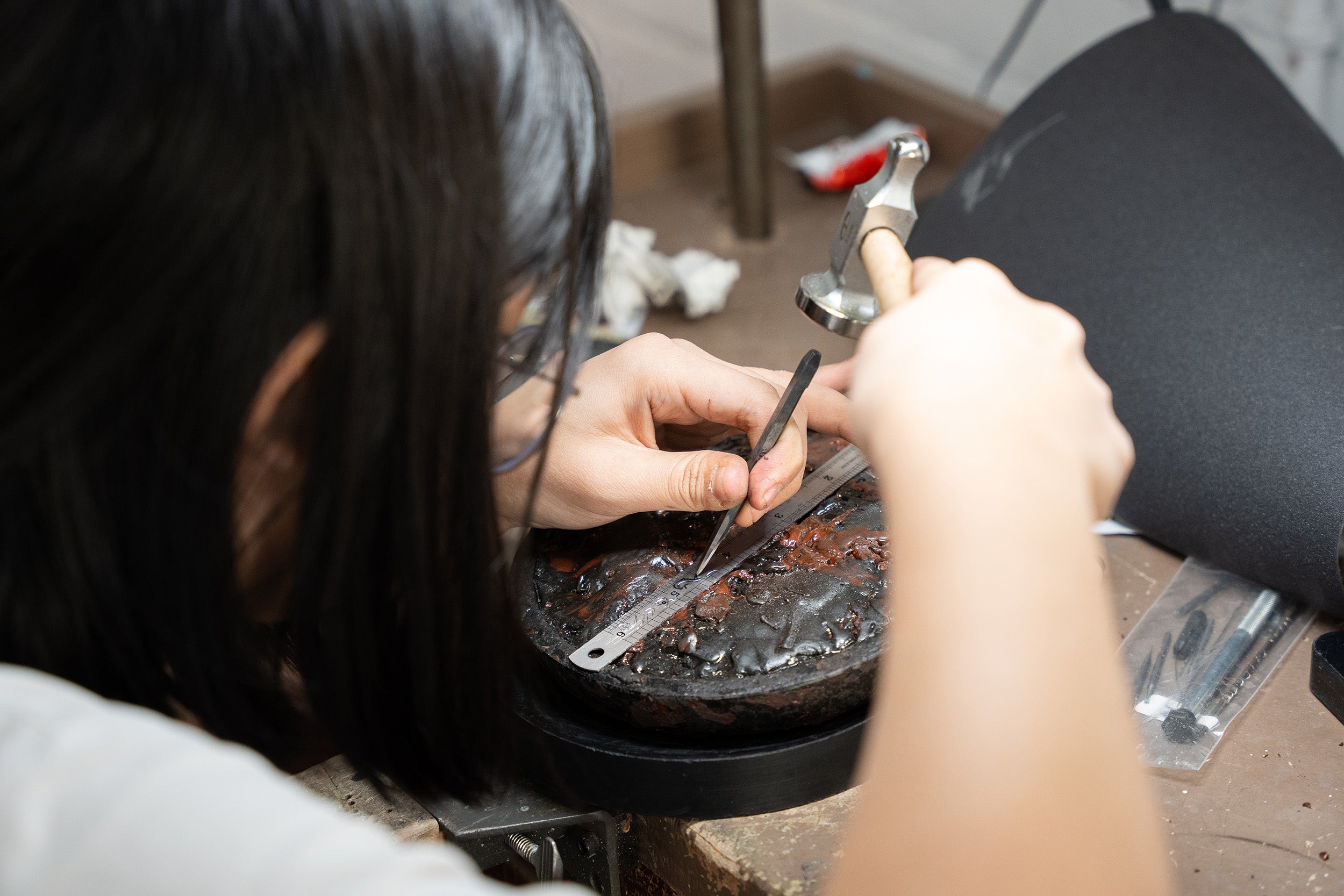
On a cold winter’s day, the class gathered in the Metcalf Building to discuss the challenges they encountered when trying to engrave key rings and learn how to make a V-chisel (or hairline chisel), which Zalakos described as an engraving workhorse. “The V-chisel has a more complex geometry than the flat chisel,” he added, “so take your time to make a perfectly accurate tool.” As the term progressed, he offered skills demos of everything from sawing and filing to drilling holes, working with a torch, and tempering steel.
The key ring assignment was tougher than it sounds in that the engraver must juggle the plate, the chisel, tweezers, and the silver wire to be adhered. “The silver kept coming off!” one student lamented as the class took turns examining his work. “It’s hard to get the chisel into the corners so that the metal adheres to the edges of the plate,” Zalakos responded.
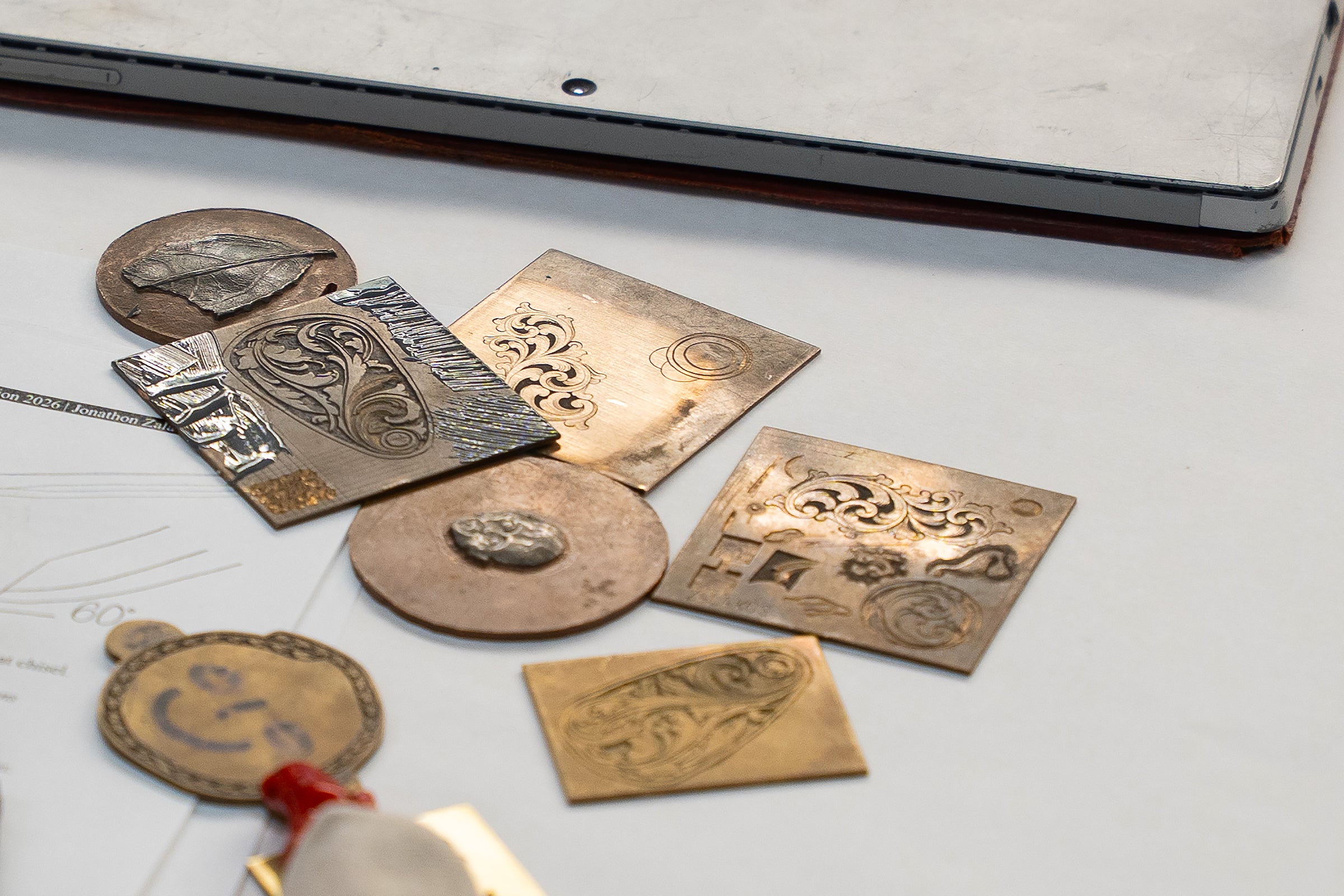
Another student was happy with his design but not the black patina he had created to contrast with the silver overlay. The process used to create patinas is complicated. First one must rust the steel with heat, then blacken the rust using tea, polish the silver, and finally seal the piece with wax. It’s important to heat the piece gently from below until water just sizzles on contact. Zalakos encouraged the student to try buffing the piece with baking soda and a microfiber cloth.
“There’s so much to learn from the experience of doing this,” he added. “Going with the flow in terms of design is a good move when you’re just getting a feel for the materials and processes.”
Simone Solondz / photos by Kaylee Pugliese
February 16, 2026
The latest development in the successful partnership provides students with the rare opportunity to experiment and create new bodies of work using natural gems.

The first cohort of apprentices-in-training are nearly halfway through the two-year, 4,000-hour pilot program.

Students in a spring studio called Creating in Platinum are investigating the characteristics and corresponding design constraints of the unique precious metal.