
The award-winning, internationally recognized glass artist reflects on her obsession with the medium and the early days of RISD’s Glass department.

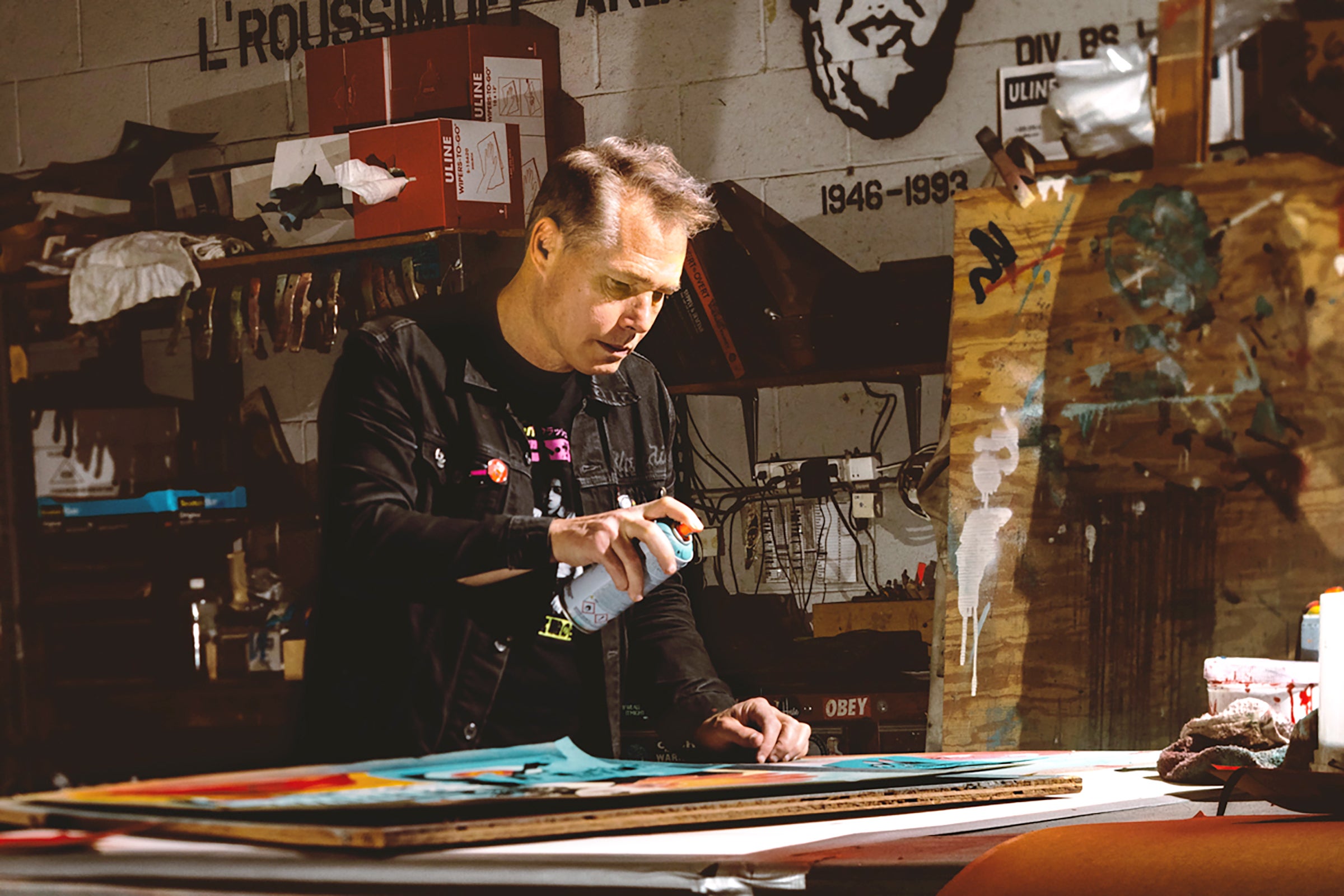
Contemporary street artist, graphic designer, and activist Shepard Fairey 92 IL stepped into the limelight as a first-year student at RISD in 1989 with his Andre the Giant Has a Posse sticker campaign. Since then, he has gone on to found OBEY Clothing and creative agency Studio Number One, transform urban landscapes around the world with more than 140 large-scale public murals, and use his voice to promote social justice, environmentalism, and political engagement. He is currently showing his unique synthesis of illustration, stencil, and screen printing in Paris and London and preparing for exhibitions in Atlanta, GA; Asbury Park, NJ; Art Basel Miami; and New York City. Here the RISD alum and Board of Trustees member shares his thoughts about life after college and lessons learned at RISD that continue to resonate.
How would you describe your creative practice?
I’m a blend of many things: a street artist, graphic designer, activist, and clothing entrepreneur. The thing I’m probably most passionate about is making large-scale public murals. They change the landscape of the city and engage with people who might not experience art otherwise. The money I make selling affordable prints, clothing, and paintings funds the charitable work I do for social and political causes I believe in.
Is there one thing you’ve made that you feel is most representative of your work?
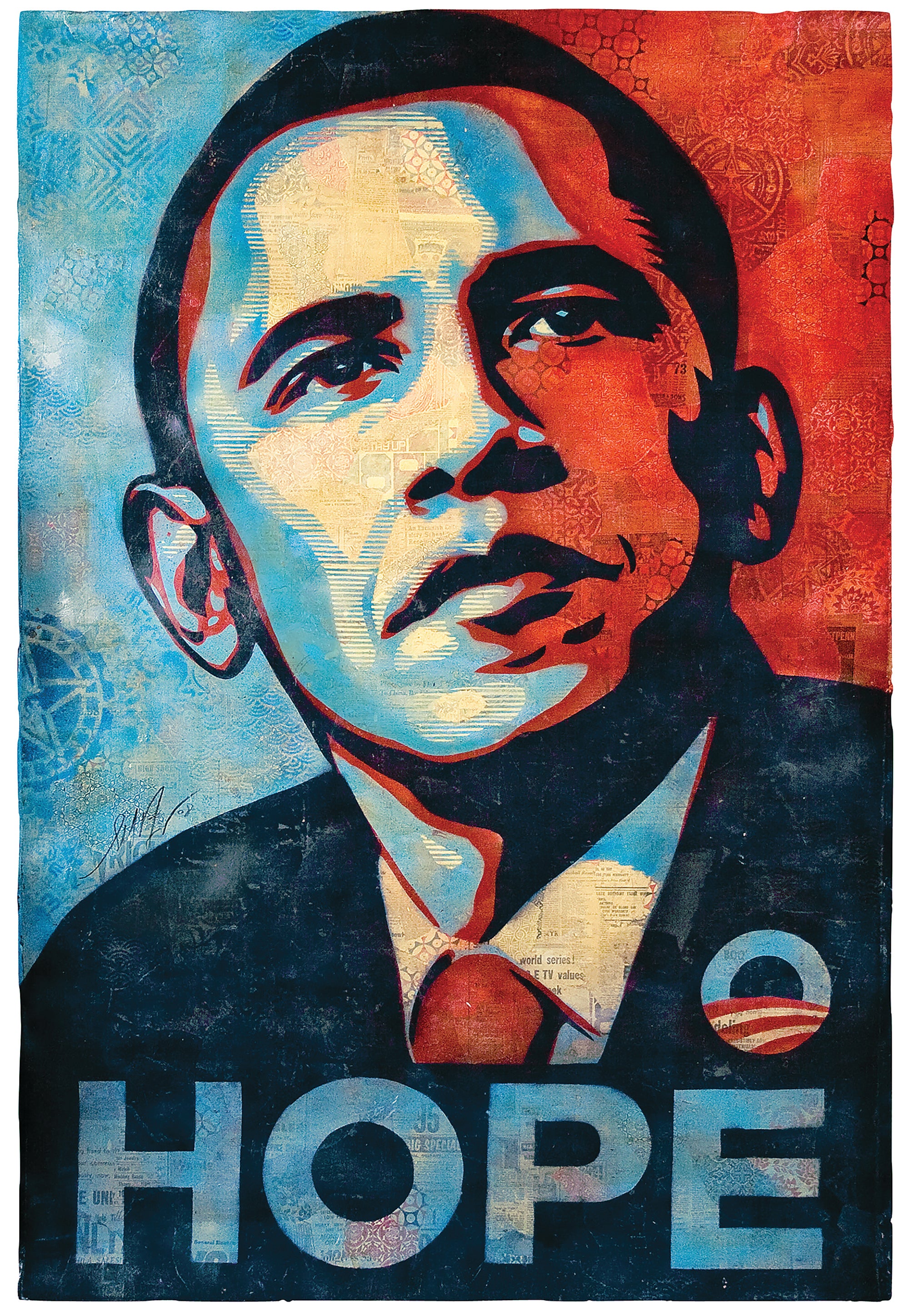
Not really, no. I’ve always considered the power of my work to be cumulative. But there are highlights: the Hope poster for the Obama campaign and the We the People series I did for the [2017] Women’s March, both of which went viral globally. I’m proud of that work. It showed that grass roots activism can make a difference.

What made you want to be an artist?
When I realized being a professional skateboarder wasn’t going to pan out, I settled on art [laughs]. But joking aside, I’ve been passionate about art since I was young. I get so much satisfaction from creating something—from solving a problem conceptually and visually. It’s like therapy.
What do you love most about the work?
I love being able to escape while I create, getting so absorbed in the work that time disappears. I never want to be checked out, but I also don’t want to be looking at all the misery in the world 24/7. I need a good balance of escape and engagement. Every day is a challenge to rise to. And I never feel cranky about it. I feel lucky.
Why did you choose RISD?
Because my parents made me! [Laughs.] At first, I thought it would be too difficult. But I didn’t realize then that art was going to become the work that isn’t work. I’m so grateful I went to RISD. It was incredibly demanding, but it was also life changing. The students were super talented and diverse and were really a great influence on me. Great facilities, great teachers. And the work ethic that was required! It demanded that we pull things from ourselves we didn’t realize we were capable of.
What lessons did you learn at RISD that you still carry with you today?
I learned that technique is really important. Even if you don’t end up incorporating a specific technique into your [personal] work, it may still be incredibly valuable for pickup work you need to do in other areas. Surviving as an artist is not easy, and versatility is crucial. The other thing, as I mentioned, is work ethic. Consistency in delivery makes as much of a difference as bare-bones talent. For all the clichés about inspiration, I learned at RISD that being a great artist or designer is like being a conditioned athlete. You may not always run your best time, but when you’re conditioned, you’re going to perform well.
Is there a particular assignment or studio experience that still stands out to this day?
One project I remember came from [late Professor Emerita] Gracia Moncrieff Melanson [MFA 62 PT], who taught my first-semester [Experimental and Foundation Studies] drawing class. For the last four weeks of the semester, we had to do a large-scale drawing. I spent more time on that drawing than I have ever spent on a piece in my life! I really wanted to impress her. After that, I never felt anything was out of reach. I learned that with the right amount of focus, practice, and time, you can accomplish a lot. I still have that drawing. It’s been in some of my museum shows.

Any advice for young artists just starting out?
Don’t let the brutal and fickle nature of social media determine your path as an artist. If you’re looking for feedback, turn to people you genuinely trust. It’s fine to experiment, but second-guessing your vision and instincts is not helpful. Also, be tenacious. If I hadn’t been as stubborn and tenacious as I am, I probably would have given up before I found an audience for my work.
The ongoing Life After RISD series features alumni making outsized impact in culture and industry. Stay tuned for more from our graduates on how RISD has helped to shape their practices and the way they engage with the world.
interview by Simone Solondz / top photo by Jeffrey Rovner
September 24, 2026
The award-winning, internationally recognized glass artist reflects on her obsession with the medium and the early days of RISD’s Glass department.

The recent Film/Animation/Video alum and Student Academy Award-winning animator reflects on his passions for problem solving, the magic of filmmaking, and what RISD taught him about hard work.

The empathic industrial designer and educator discusses how his own identity enables him to find unique solutions and effect positive change.