
Twelve aspiring designers examined a variety of themes, from disgust and desire, masculinity and femininity to post-apocalyptic worlds.

“The work you’re going to see is not about something mechanical, mass-reproducible, or robotic; rather, it serves to highlight the unique signature of our graduating students—celebrating the intelligence of the human hand and the enduring presence of the human spirit.” Wearing a white suit, Apparel Design Department Head Gwen Van Den Eijnde addressed the crowd of fashionistas gathered at Providence’s WaterFire Arts Center for this year’s Collection runway shows in late May.
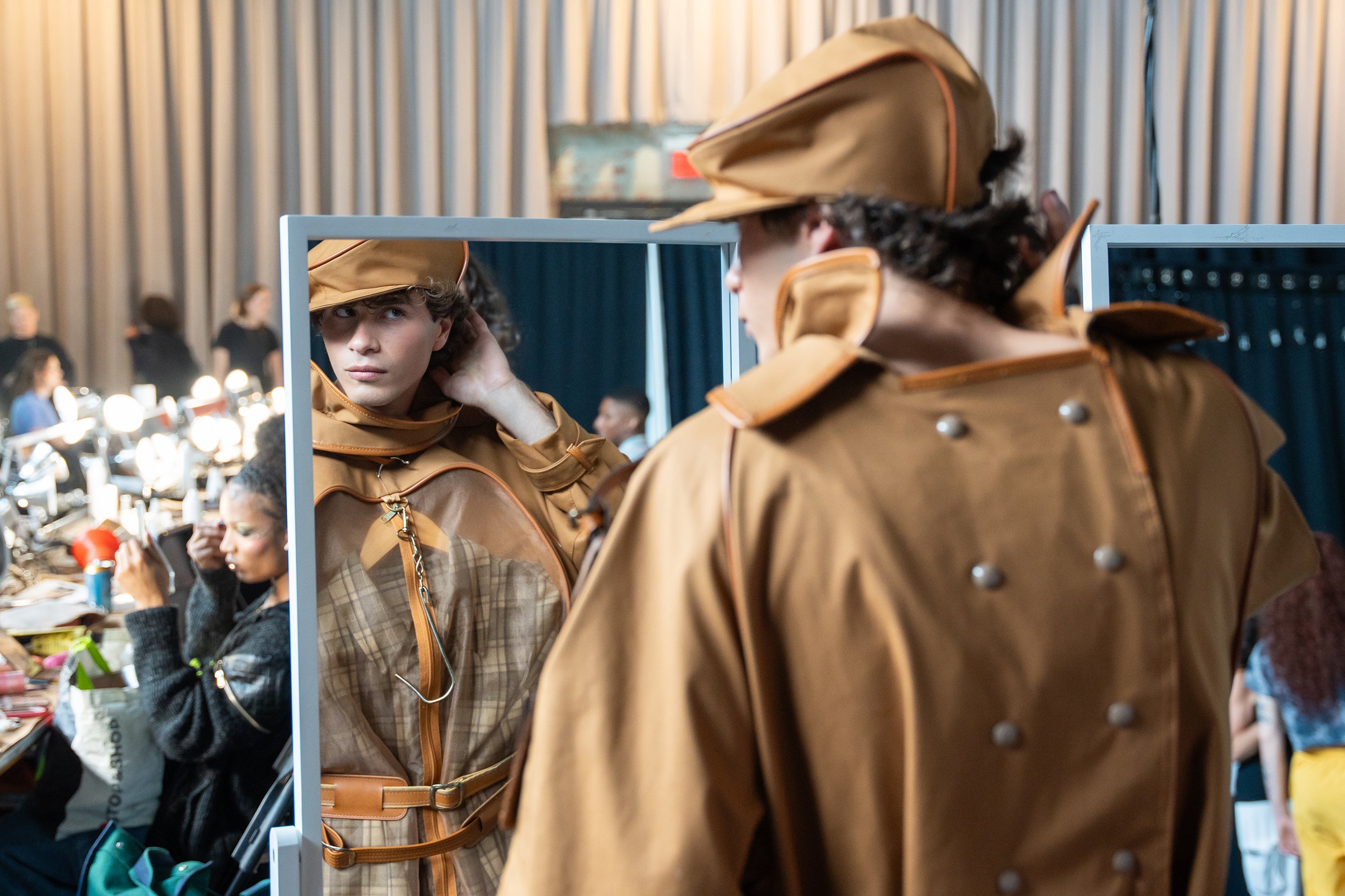
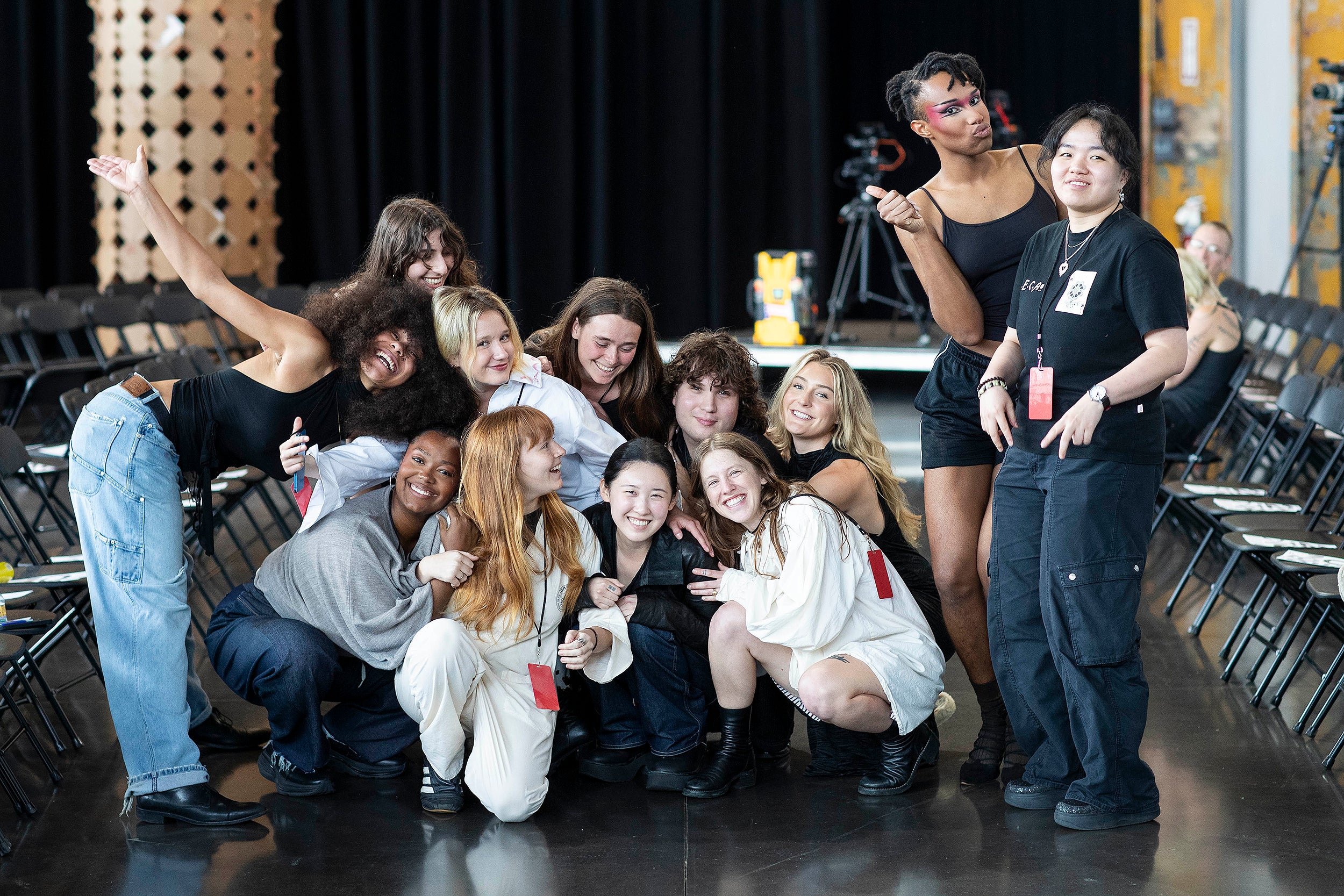
Backstage, 12 graduating Apparel Design students took a last look at the models wearing their designs before the music kicked in and whimsical hand-knitted work by Cali Kircher 26 AP stepped out into the light. Free from commercial constraints, the students created dramatic, experimental looks evoking everything from archaic rituals to intergalactic fashion to personal expressions of identity and memory.
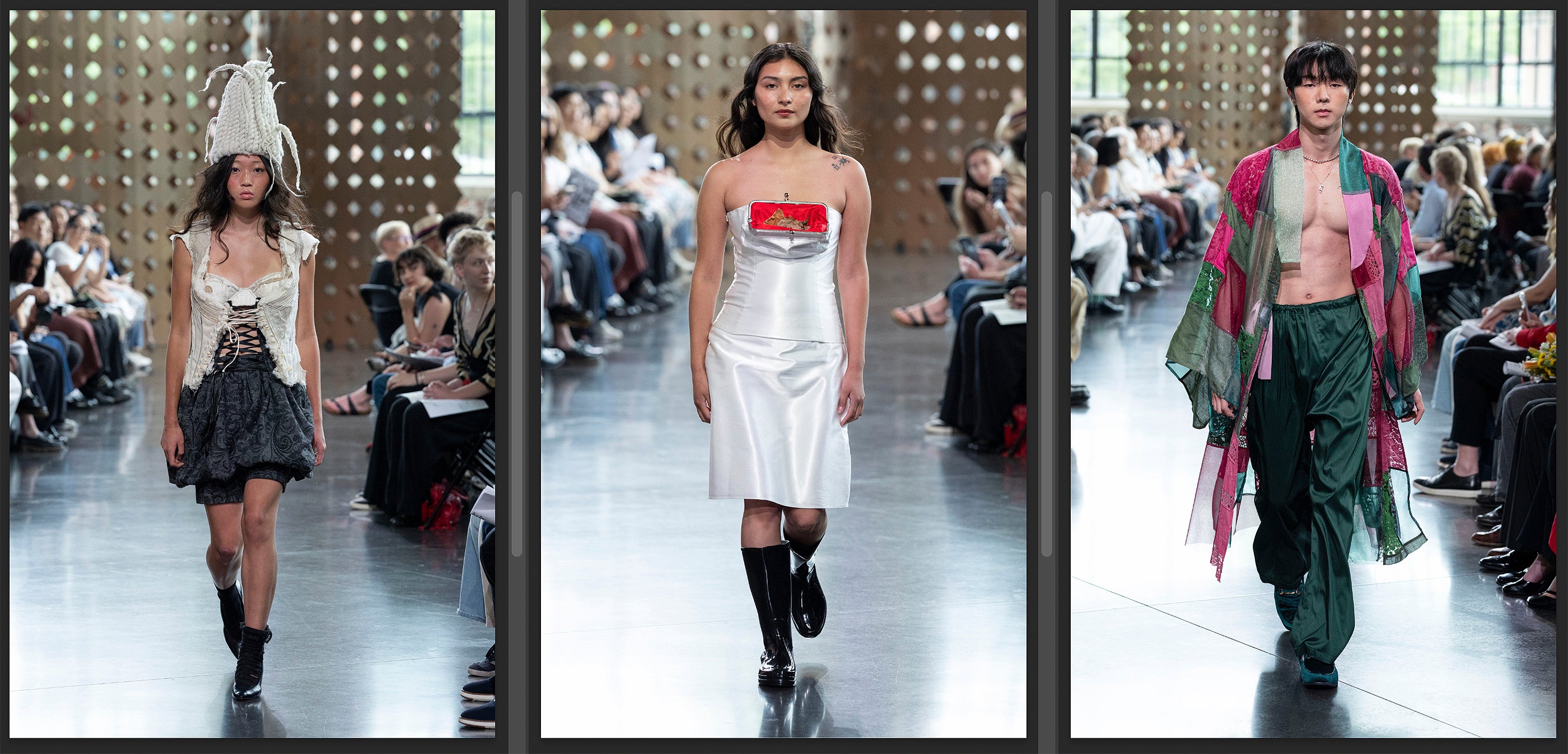
Maya Mary Muravlev 26 AP/PH transformed familiar silhouettes in her collection by dyeing the fabrics, burning them with a lighter, and creating custom digital prints using her own photographs. Self-described hoarder Mariam Devadze 26 AP looked to the past for inspiration, describing her collection as “a love letter to the home that was.” Her looks incorporate objects salvaged from her grandparents’ home—a hanging suitcase, a hallway rug—offering witty yet wearable commentary on disposable culture.
Several of the designers created collections inspired by science fiction, including Liam St. Clair-Rounds 26 AP, whose looks featured crumply metallic cloaks, ornate beading, and long silky trains. “An entire planet marches into a dying star,” his artist statement reads. “The red-hot end of times has arrived.” Work by Brown | RISD Dual Degree student Zoe Goldemberg BRDD 27 AP also evoked interplanetary fashion, with “exoskeletal extensions that appear to grow, inflated volumes that read as biological, and surfaces that ripple with the memory of the forces that shaped them.”
Bringing things back to planet Earth, Nerukessa Burgess 26 AP took their cues from Jamaica, showing vibrant, celebratory outfits challenging the boundaries of gendered clothing while asserting the presence of trans individuals. “The silhouettes draw from what is described as eccentric resort-wear, a fusion of drag and beach culture,” they explain. “I return often to the symbolism of the Jamaican flag: black for the people, green for the land, gold for the country’s wealth, and red for the blood of our ancestors.”
Azaria van der Stok-Smallwood 26 AP also used elements of her own identity, from her experience as a young Black girl in rural Pennsylvania, to bring her collection to life. Featuring natural materials like leaves, grasses, shells, palm fronds, and other fibers, her meticulously crafted work, she says, “arises from the rejection of panoptic [surveillance] systems that attempt to imprison Black mind, body, and spirit alike, positioning dress as a site of liberation and resistance.”
One of the only designers to use denim in her collection, Paige Sias 26 AP also incorporated materials like burlap and sugar sacks into her pieces, reflecting on agricultural practices and traditions embedded within her family history and across the African American diaspora. “Sugar sacks are patchworked with lace handkerchiefs, burlap is draped into bodices, and structured workwear meets salvaged bridal textiles,” she says. “My collection gathers these invisible threads and weaves them into something worn, remembered, and carried forward.”
Van der Stok-Smallwood and Sias are among this year’s Virgil Abloh “Post-Modern” scholars. Established at the Fashion Scholarship Fund (FSF) in 2020 by late fashion industry visionary Virgil Abloh HD 21, the fund was created to expand opportunities in the fashion industry by providing scholarships to students who identify as Black or African American and those who reflect the creativity, curiosity, and progressive spirit that drive this work forward.
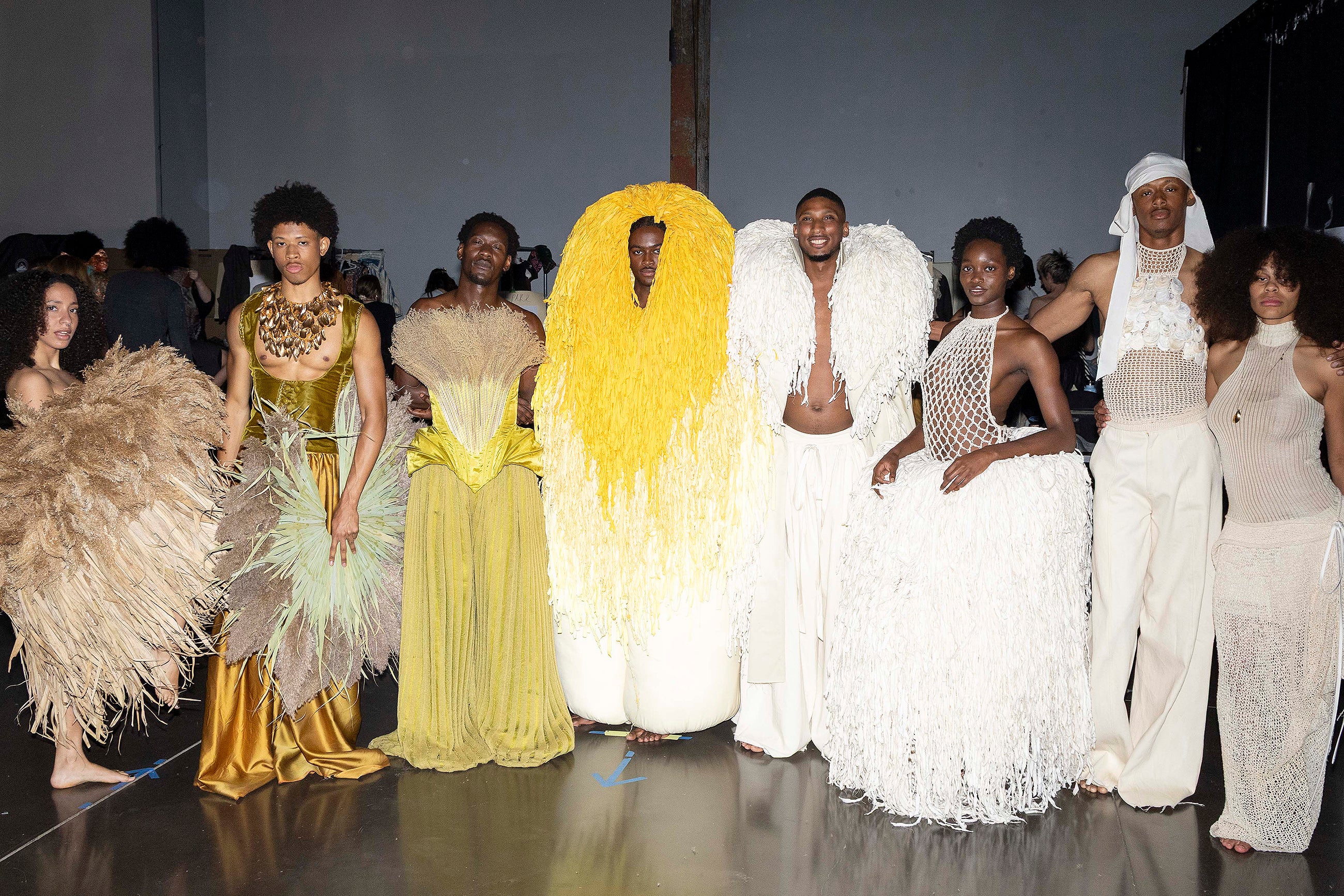
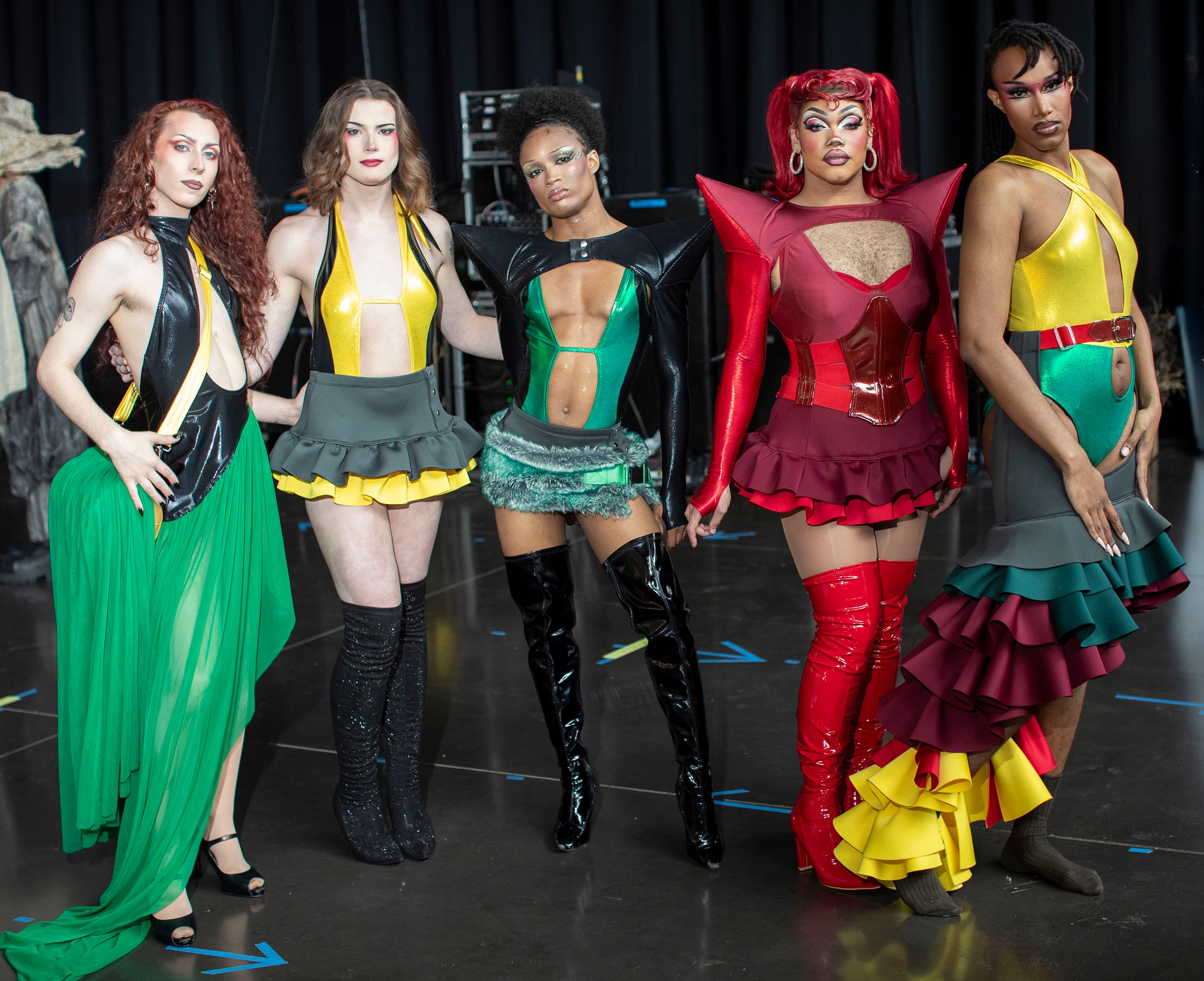
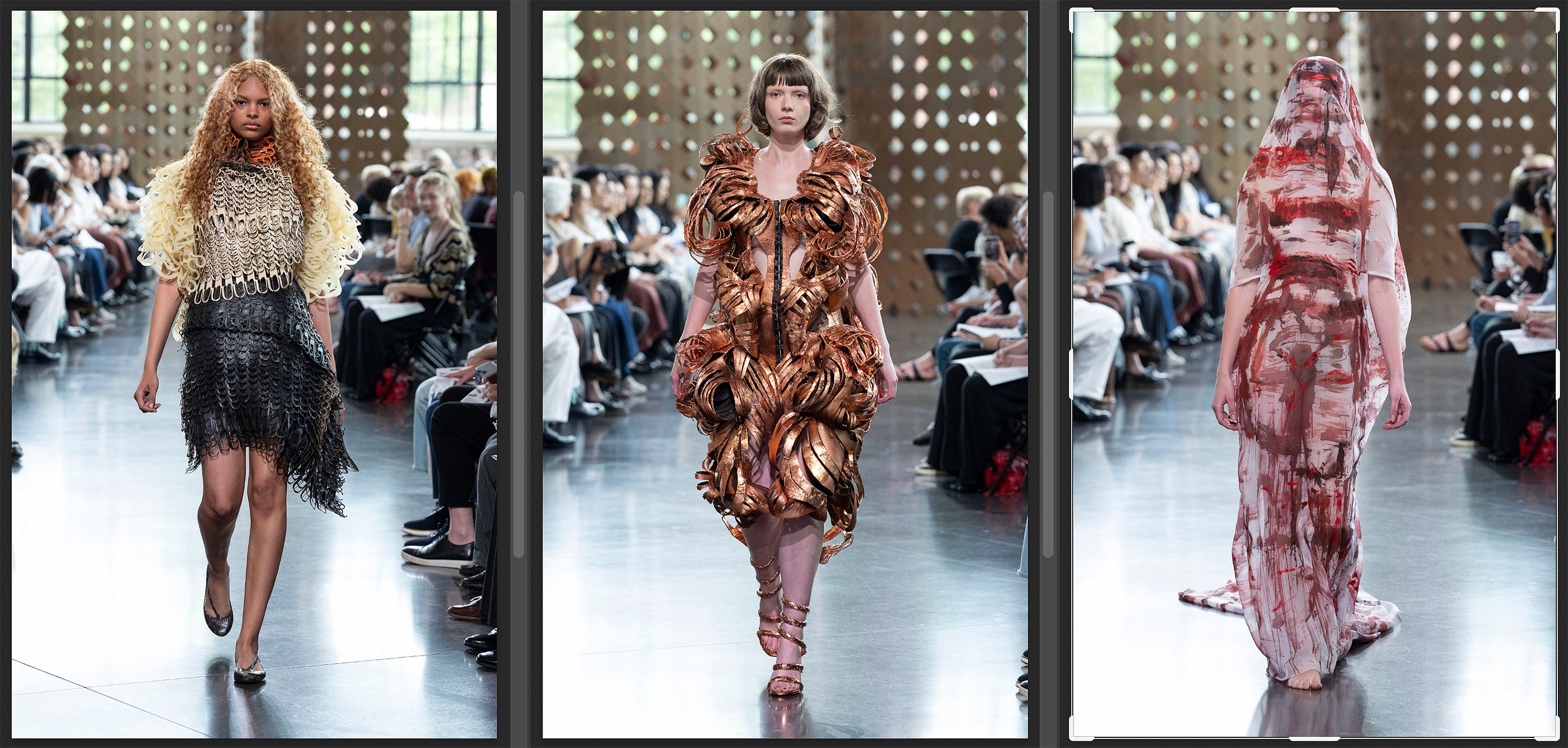
Other work on view explored materiality, exaggerated silhouettes, and the continuum between transparency and opacity. Micaela Giulianelli 26 AP used casting, painting, and surface-building techniques to construct synthetic skins that appear fossilized, hardened, or unstable. Ji Hu Park 26 AP parlayed her love of the color pink into a collection centered around dichotomies: simplicity and complexity, rigidity and flexibility. Day Koo 26 AP found inspiration in the faded hues of her grandmother’s photographs, and Ellia Baldwin 26 AP showed eminently wearable looks created through processes of layering, branching, and mimicking the structures found in natural landscapes.
“This year’s seniors form an eclectic cohort, bringing together personalities and bodies of work driven by vastly different inspirations and interests,” says Van Den Eijnde. “I am proud to be able to share their exceptional work.”
Simone Solondz / photos by Jonas Gustavsson
June 8, 2026
Twelve aspiring designers examined a variety of themes, from disgust and desire, masculinity and femininity to post-apocalyptic worlds.

The well-crafted looks were unveiled at Providence’s WaterFire Arts Center.

The annual Rhode Island Convention Center exhibition presents thesis work by graduate students earning advanced degrees in 19 different programs.