
The alum and designer of the classic Cubebot toy robot worked with first-year students in a Wintersession studio focused on iteration and simplicity.

“If you use tools like the mill or the lathe to cut your pieces, you'll find it cuts like butter. Run it dry without any coolant. The shavings are so fine, they’ll almost look like graphite.”
Instructor and Industrial Design alum Matt Cavallaro 10 ID is explaining to students in his Patternmaking for Cast Iron Production class the various options for fine-tuning the small cast-iron objects they’ve created in the early weeks of the spring semester. He advises them to remove unwanted material using “percussive force” directed with a chisel and then touch up the surface texture with a metal file.
The course is the first in a series of departmental offerings on analogue, shop-based making made possible through a gift from a generous anonymous donor. “We’re really excited about the opportunities this gift allows for, such as guest speakers, field trips, and working with outside vendors,” says Associate Department Head Tom Weis MID 08, who put out the call for course proposals and is overseeing the new series. “It allows RISD to build relationships with all kinds of partners.”
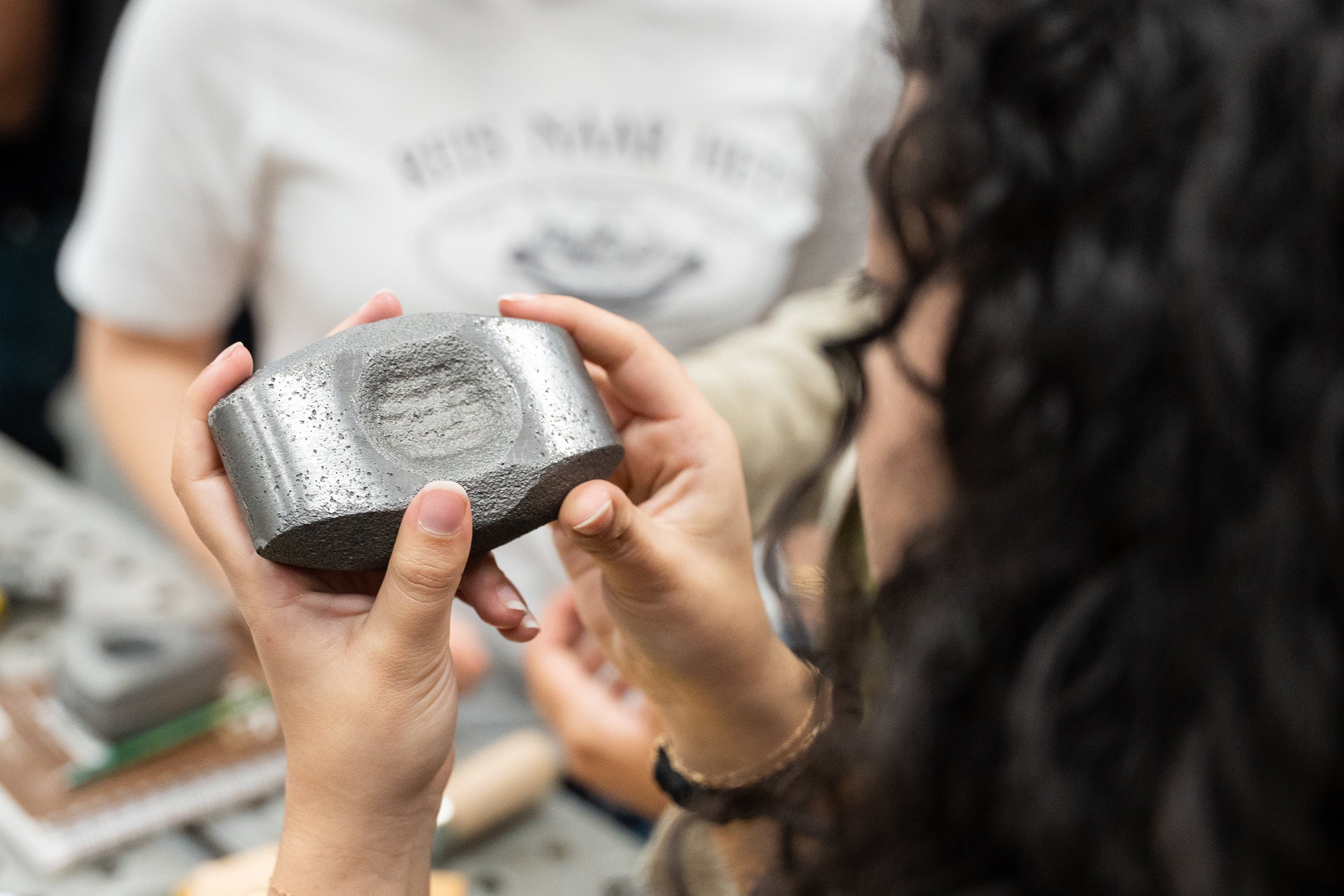

Cavallaro says that the topic for this first course makes good sense since casting is possibly the oldest industrial practice still in use today. “Cast-iron parts are everywhere,” he says, “from the brakes in your car to industrial machinery to decorative ironwork and cookware. The material is versatile and ubiquitous around the world.”
When he was a student at RISD, digital fabrication was in its early stages, and even today it’s not as universal as one might think. Students have limited access to CNC mills (which can be used to make positives for the casting process), Cavallaro explains, although most have experimented with 3D printers and laser-cutters. “Digital processes in this medium aren’t much more efficient than making things by hand,” he adds, “and that hands-on experience really helps you understand the material and speak to foundries and other vendors with confidence.”
The endowed gift allows the class to work with green sandcasting masters at Cumberland Foundry, with whom Cavallaro has worked extensively over the years. “It’s great for students to get the opportunity to engage with external vendors—Cumberland and another shop that will help with the coatings later in the semester,” he says. “Being a good designer is one thing; making sure people want to work with you is another.”

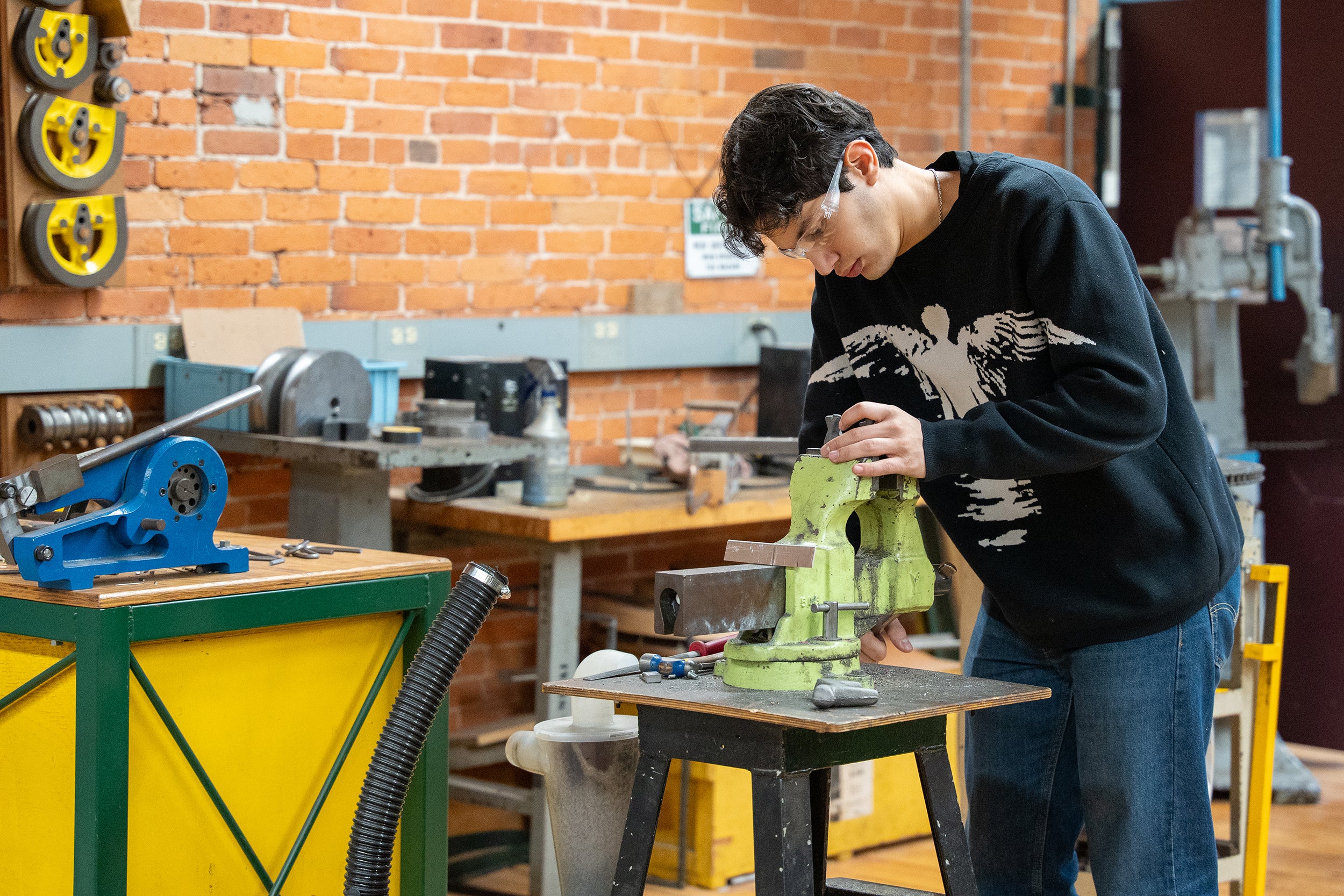
All of the costs for materials and outside services are covered by the endowed gift, which provides students with more freedom to experiment as they iterate and work through successive course assignments. Also covered are tools, new equipment for the department including a top-notch belt grinder, and course documentation in the form of photography, videography, and an analogue publication to be produced when the course is complete.
“I haven’t done anything like this before, and I like the fact that we’re focusing on learning these processes more than making perfect projects,” says junior Khaled Bushnaq 27 ID. He is considering which tools to use on two palm-sized iron horses he has created, one more detailed than the other.

“The first project was exclusively a form exploration into the principles of draft that contribute to good mold making,” says Cavallaro. “The second explored more complex molding processes using a core-baked rigid sand inset that allows undercuts, through-holes, or negative drafts. Khaled’s horses are great examples of that increasing complexity.”
As the semester rolls out, the class will continue to investigate form, build patterns for molding and casting, and hone the other skills they’ll need for their final projects. The work will be photographed for the publication and exhibited on campus in late May.
“This class has been hands-on from day one,” Cavallaro says. “I like to pair theory with praxis immediately to make the concepts clear right from the start. It feels really special to be able to pass on what I've learned.”
Simone Solondz / photos by Kaylee Pugliese and Rue Sakayama 06 FAV
March 19, 2026
The alum and designer of the classic Cubebot toy robot worked with first-year students in a Wintersession studio focused on iteration and simplicity.

Spanning Architecture and Industrial Design, the fall course builds on cutting-edge atmospheric water-generating technology.

New grants totaling over $1.6 million fund the study of everything from inclusive research approaches to carbon exchange in the Antarctic’s Southern Ocean to automated 3D textile manufacturing.