
A mix of Furniture Design and Architecture students, the class is designing and building furniture pieces that reference Kahn’s love of geometric forms and natural light.

An interdisciplinary fall studio spanning RISD’s Architecture and Industrial Design departments challenges students to “imagine a city where power and water are generated and managed on-site, building by building, block by block.” Expanding upon atmospheric water-generating technology developed by SPARK IP, students are designing high-rise buildings for hot, arid climates that actually absorb water vapor from the environment and turn it into usable water.
“The buildings’ ‘skin’ is smart, tuned to the climate, and able to regulate heat and light with minimal energy,” explains Industrial Design Professor Peter Yeadon, who is co-teaching the course with Architecture Professor Jonathan Knowles BArch 84. “Radiant surfaces—inside and out—adapt to season and place, delivering comfort and conserving resources without waste,” Knowles adds. “The goal is simple: make the skyscraper not a symbol of extraction, but a living, breathing engine for the city.”
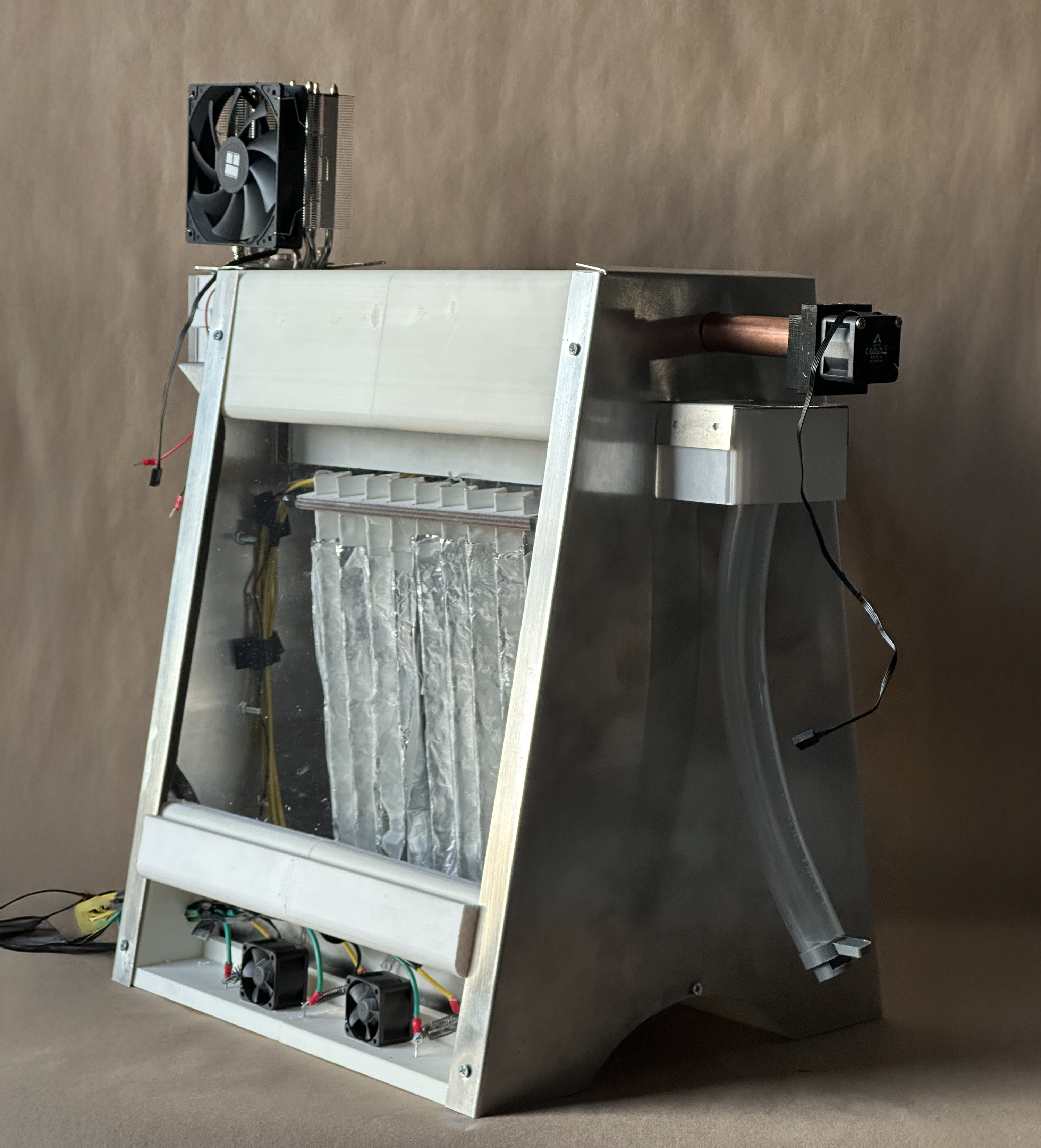
Yeadon adds that the Atmospheric Water Generator (AWG) he developed with SPARK IP relies on sustainable, plant-derived, hygroscopic biomaterials that are both scalable and adaptable. It can be integrated into building designs in multiple ways, including via façades, canopies, roofscapes, and open courtyards.
The course emphasizes collaboration, pairing Architecture and Industrial Design students, and earned backing from RISD’s Marc Harrison Fund, which supports courses exploring innovation in sustainable design. It also relies on input from materials scientists and design experts who focus on tall buildings for desert cities, including RISD alum Kenneth Lewis BArch 83; architect Charles Besjak of Skidmore, Owings, and Merrill; architects Aya Shaker and Dalia Hamati; material scientist Youhong Nancy Guo; and former RISD Provost Pradeep Sharma, who currently serves as director of arts, culture, and heritage at the Hamdan Al Nahyan Foundation in Abu Dhabi.
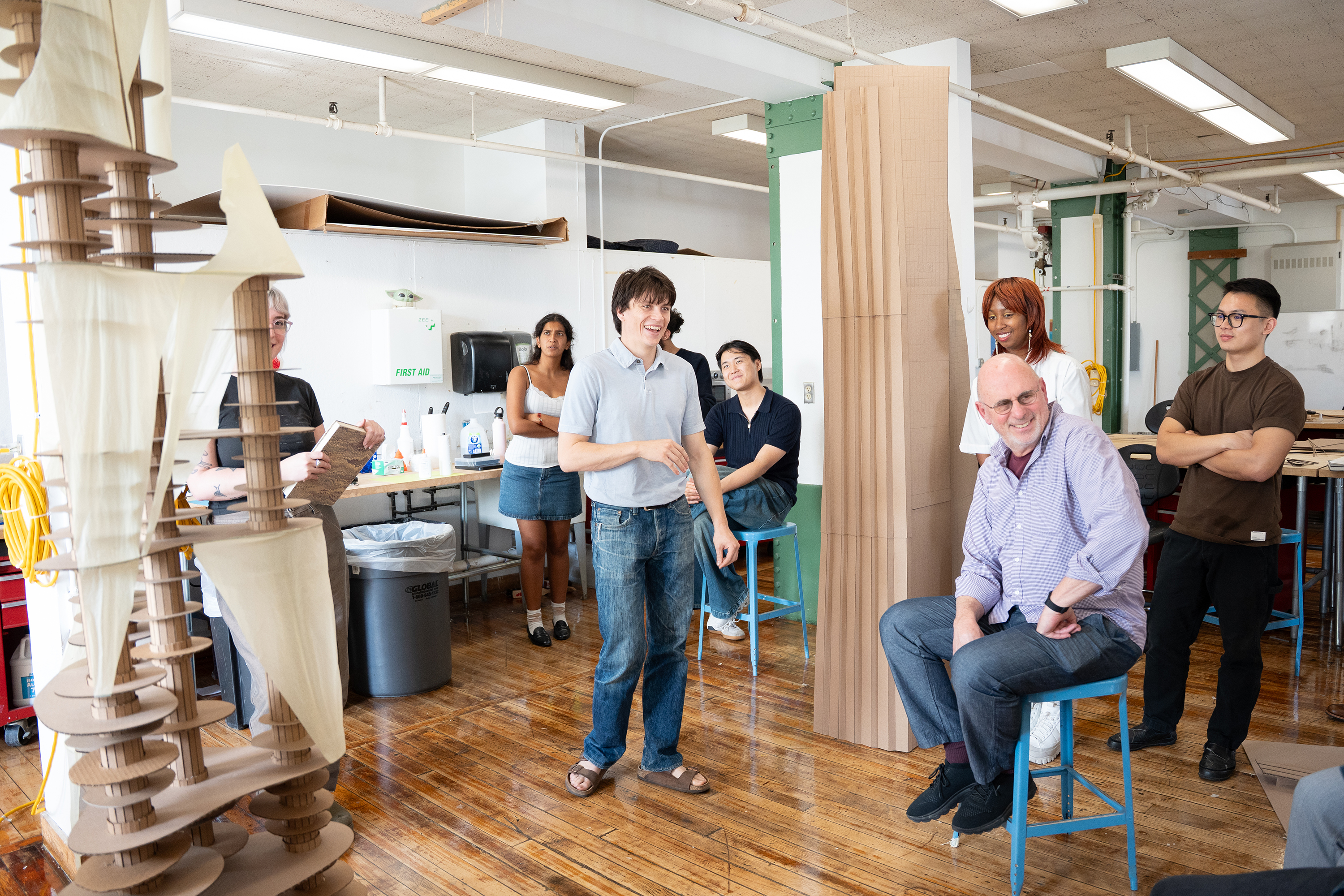
At an early critique in September, students presented cardboard models of their skyscrapers to visiting Architecture faculty members Jim Williamson and Gabriel Feld. Jesse Baltazar 27 ID and Camilla Radoyce MArch 26 showed a futuristic-looking tower made of laser-cut cardboard modeled in Rhino. “As we designed the building, we were thinking about desert organisms like the desert beetle, whose back is slanted to collect water, and the saguaro cactus,” Radoyce explained. “The tower would be shrouded in a skin structure that collects water,” Baltazar added.
“Imagine a city where power and water are generated and managed on-site, building by building, block by block.”
The class and visiting critics circled the model to get a closer look. “The project depends on the elegance of these modulated layers,” Williamson noted. He suggested that the duo modify the model to show all of the building’s floor plates rather than a representative example. Feld wondered if they could implement a hanging system so that the larger plates could support the floors below.
Dalia Sadeq MArch 26 and Yihan Chen BArch 27 presented a building with multiple curved towers that would allow public transportation to run through its base. Each of the towers would be programmed differently: one for residences, one for offices, etc. “The building façade has lots of surface area for the biomaterial application,” Chen noted.
Williamson said the building’s form called to mind Stranded Sears Tower—a digital reenvisioning of Chicago’s landmark building created by architect Greg Lynn for a 1992 exhibition—and Abu Dhabi’s Yas Hotel, which was built over a racetrack. “Installing elevator shafts in these curved towers would be tricky,” he added, “but it can be done.”
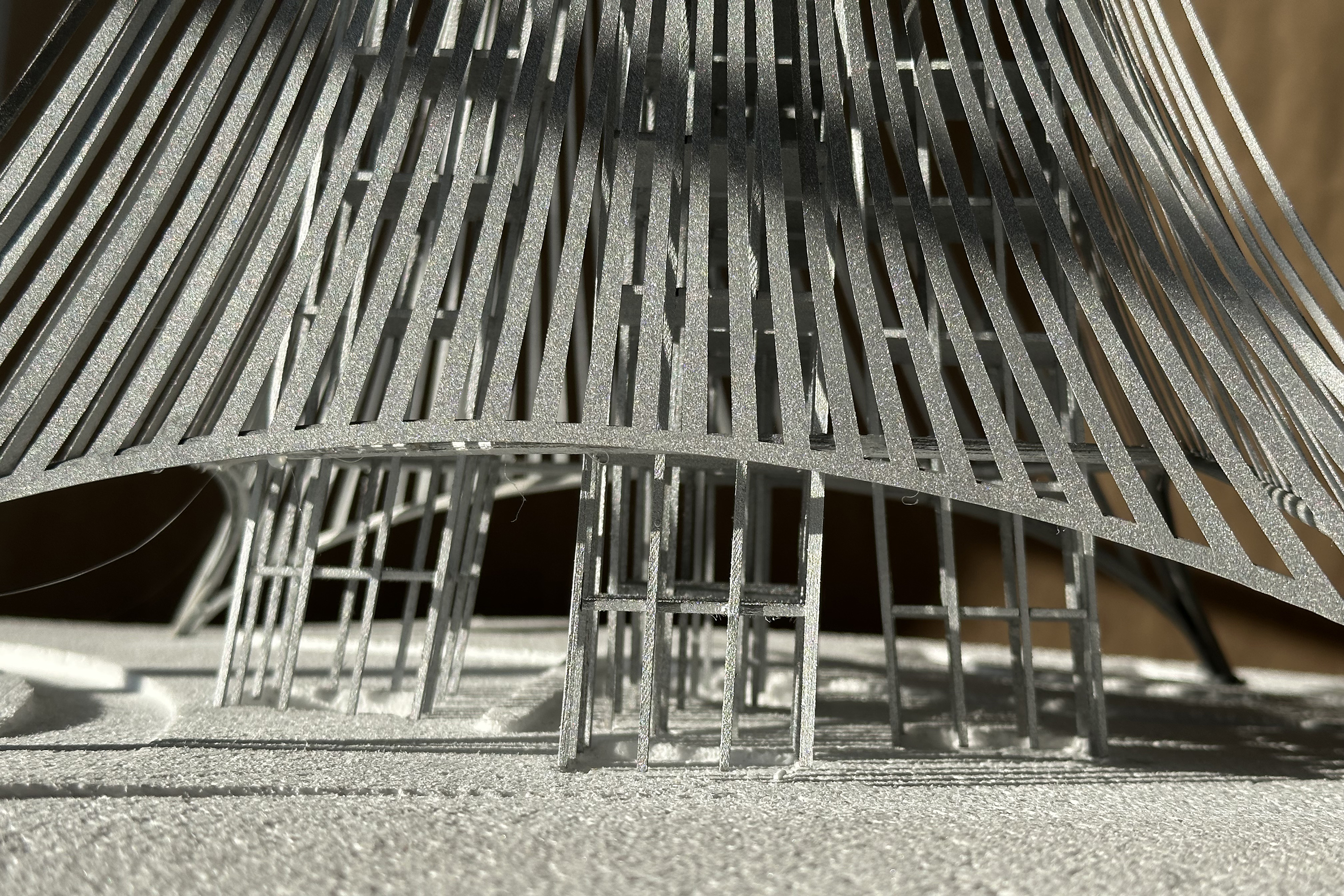
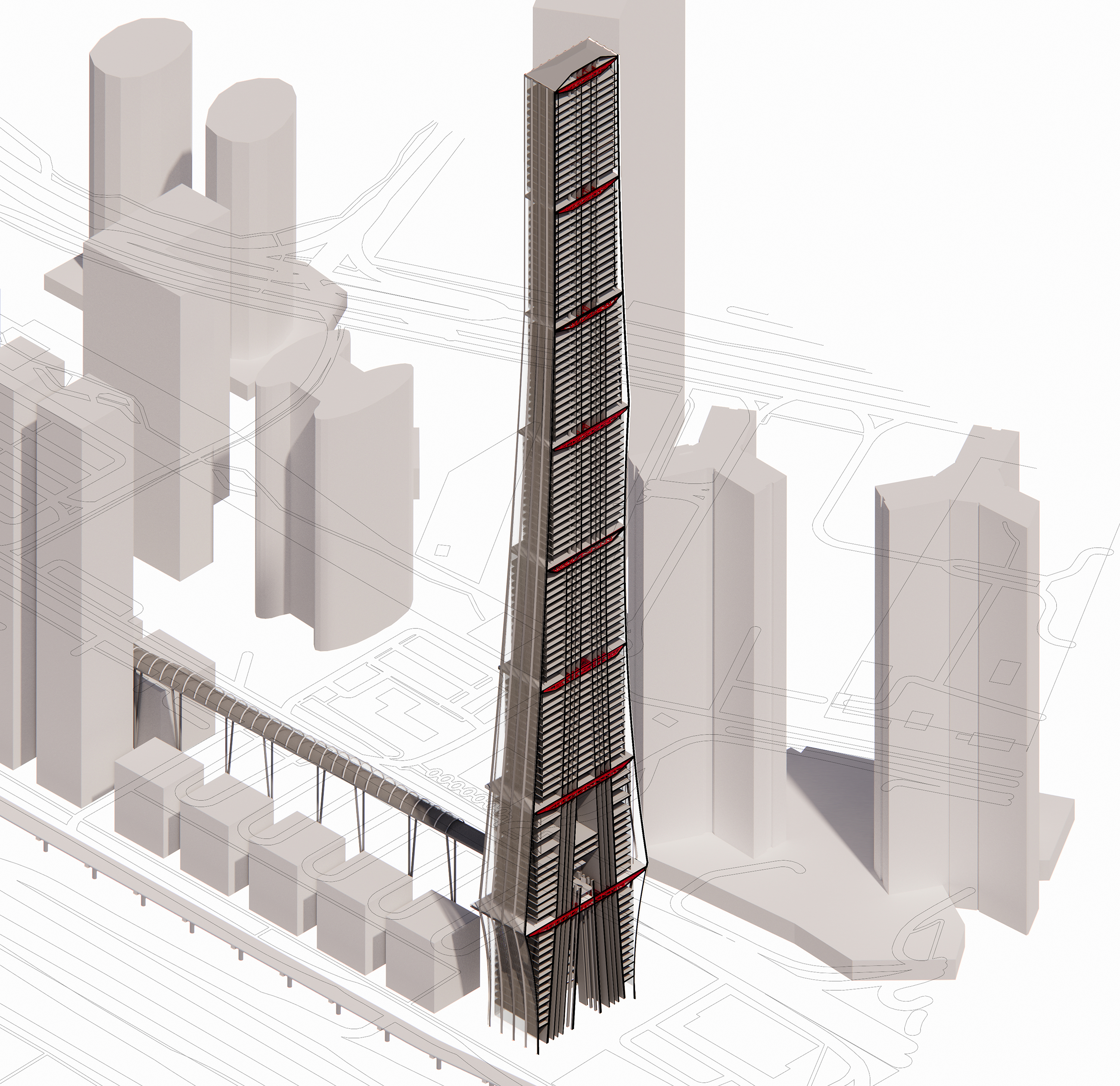
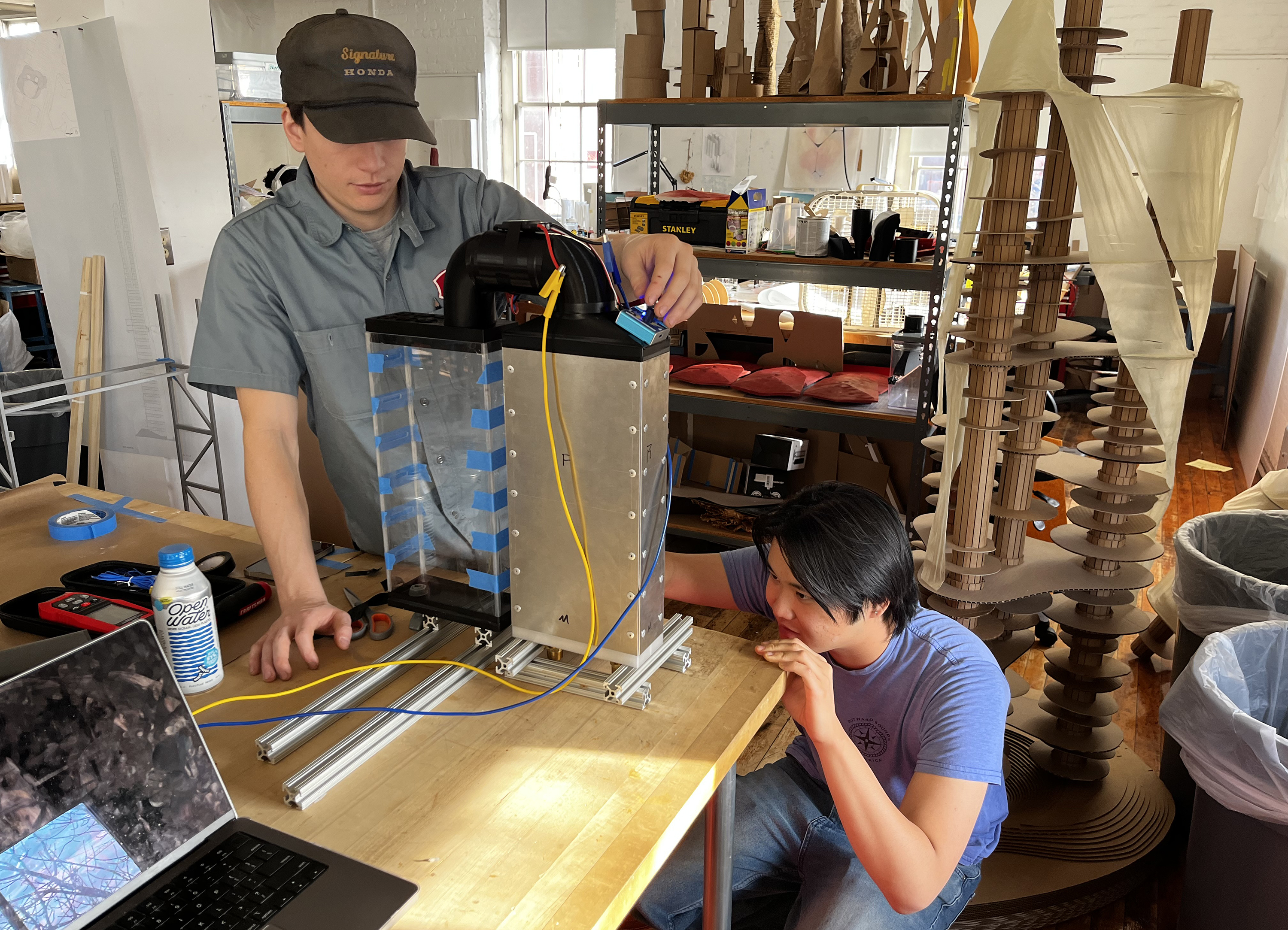
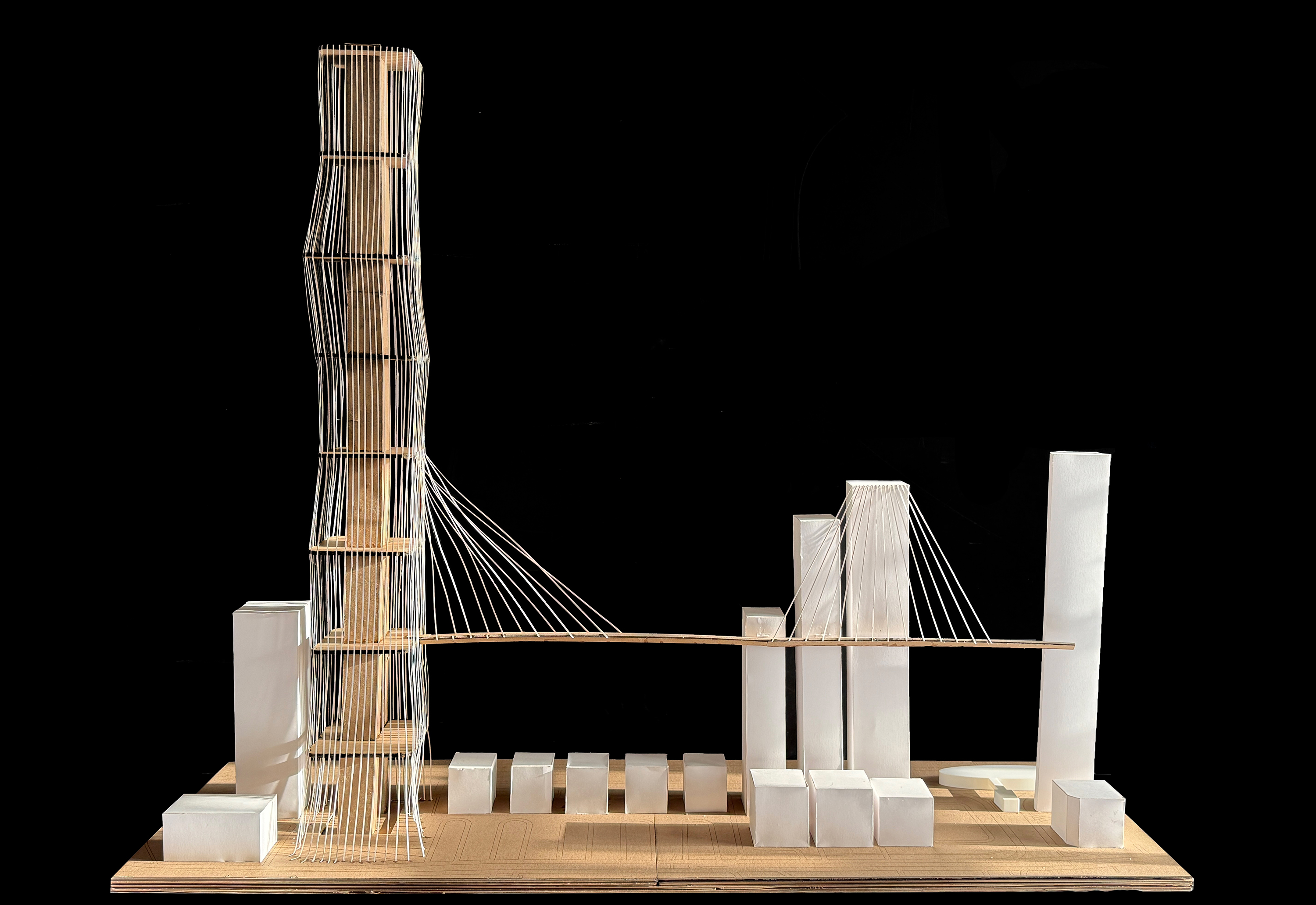
Later in the semester, the students shared their AWG designs and explained how they might be incorporated into their high-rise buildings. Anthony Zhang 27 GL/ID and Anna Crookston MArch 26 presented a design that harnesses the wind for cooling and uses the AWG for creating and collecting water. They’re looking into creating enough water to maintain a vertical farm in one of the building’s towers. Knowles appreciated their clear explanatory drawings and wondered if the length of the building’s cantilevers (or overhangs) could be modified.
Roger Labib MArch 26 and Lee Hayes 26 ID shared two AGW prototypes they have been working on, which would be applied to pleats in the façade of their building. Knowles loved their simple approach to solving the problem but had a hard time reading their initial drawings. “This is a case where you’re relying on one drawing to do too much,” he explained. “The project would be easier to understand if you included a floor plan.”
As the semester progressed, the class moved from designing detailed AWG systems to advancing three of the proposed AWGs and tall buildings, creating half-scale prototypes and models, and presenting them to visiting critics. “These collaborative studies generate both tangible and intangible outcomes and contribute new knowledge and practical insights into how functionalized biomaterials can interact with their environments to perform targeted tasks,” says Knowles. “I couldn’t be more excited about the progress these students are making.”
Simone Solondz / top photo by Kaylee Pugliese
December 17, 2025
A mix of Furniture Design and Architecture students, the class is designing and building furniture pieces that reference Kahn’s love of geometric forms and natural light.

Faculty- and alum-led initiatives focus on everything from new materials to sustainable fishing practices to strategies for mitigating urban heat island effect.

From Providence to Pakistan, this year’s Maharam fellows are putting their creative problem-solving skills to good use.