
Students considered how sound can serve as a spatial and experiential medium, guiding attention, shifting atmosphere, and provoking new forms of encounter.

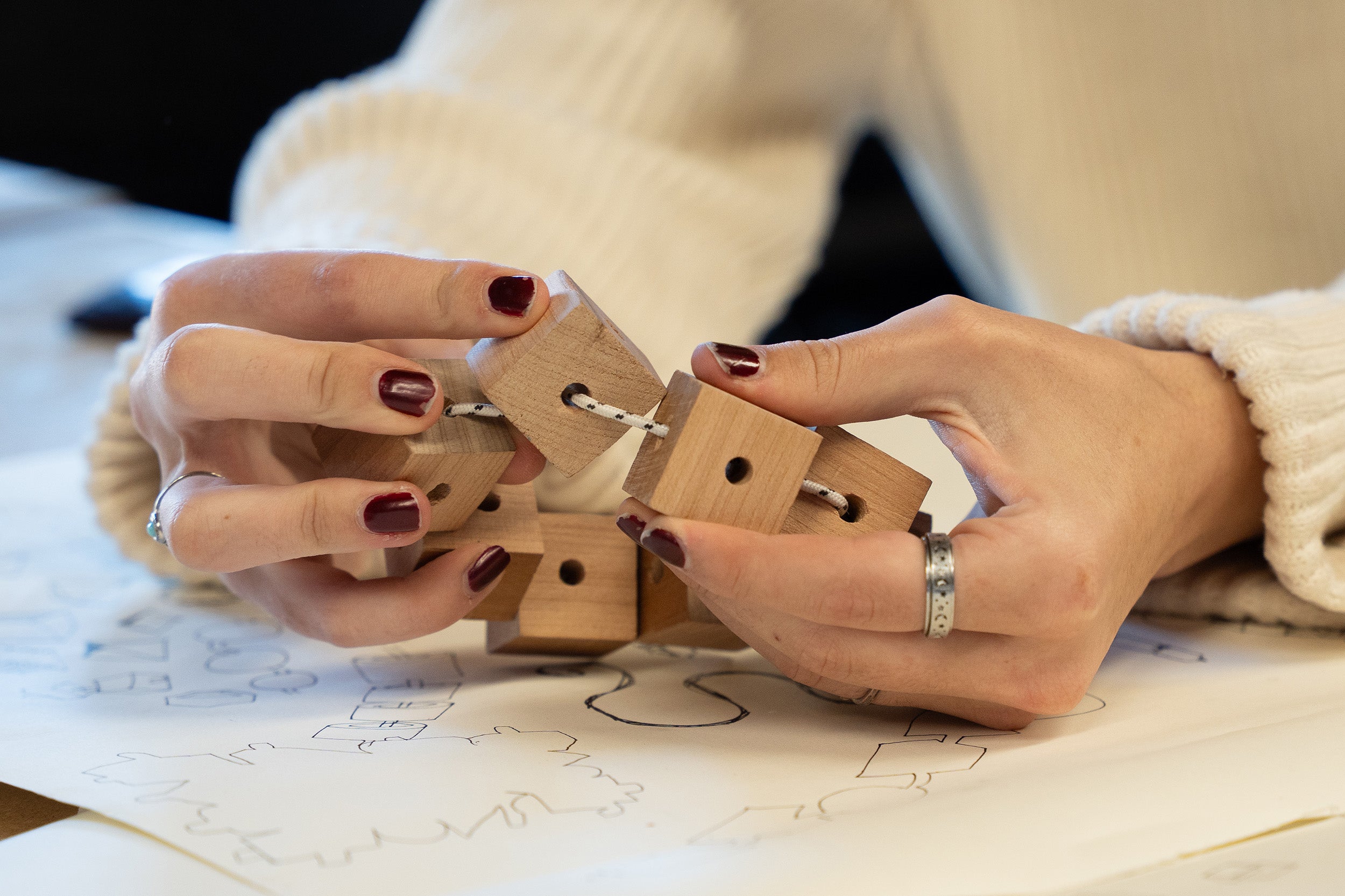
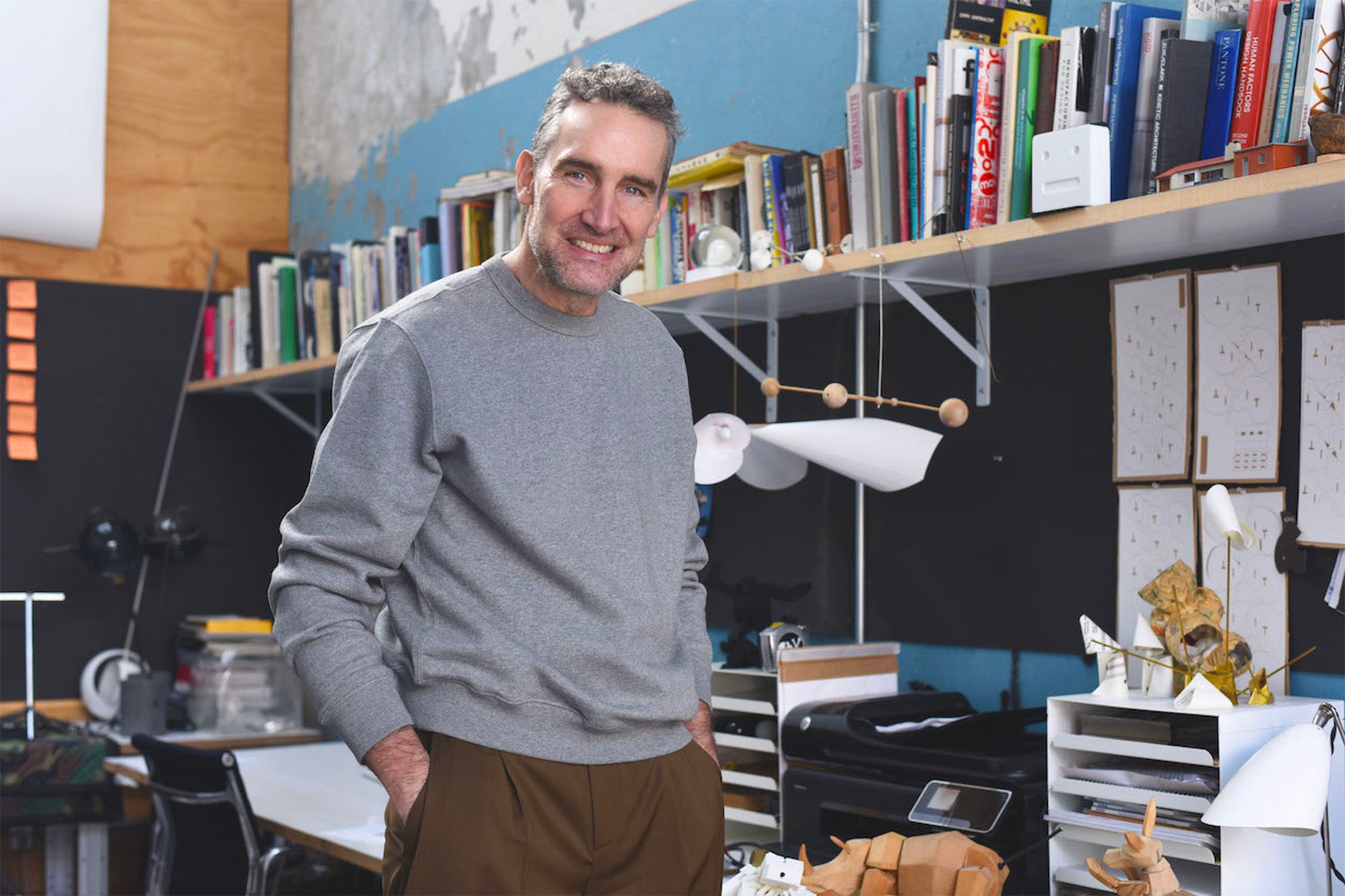
When Brooklyn-based lighting designer and RISD alum David Weeks 90 PT created the Cubebot toy robot some 25 years ago, he was just looking for a new type of project to keep his creative wheels turning. But the simple wooden and elastic toy, which was inspired by Japanese Shinto Kumi-ki puzzles, became an instant classic and took on a life of its own on social media, where users posted photos of the small figure in a wide variety of poses.
Weeks believes that the toy’s success is based on its sustainable materials, simplicity, and personality. “It’s just a simple cube cut up to create anatomical pieces of the body,” he says. “The eyes and mouth were created with a router.”
The Cubebot inspired Weeks to teach a toy design class in RISD’s Industrial Design department this Wintersession. Made up entirely of first-year students, the class focused on using simple, sustainable materials to create toys packed with personality.
“It has been wonderful having David back at RISD,” says Dean of Architecture & Design John Caserta. “He brings an artist’s mind to the design process and values patience and exploration. I think many of the students will come back to what they learned in this course throughout their careers.”
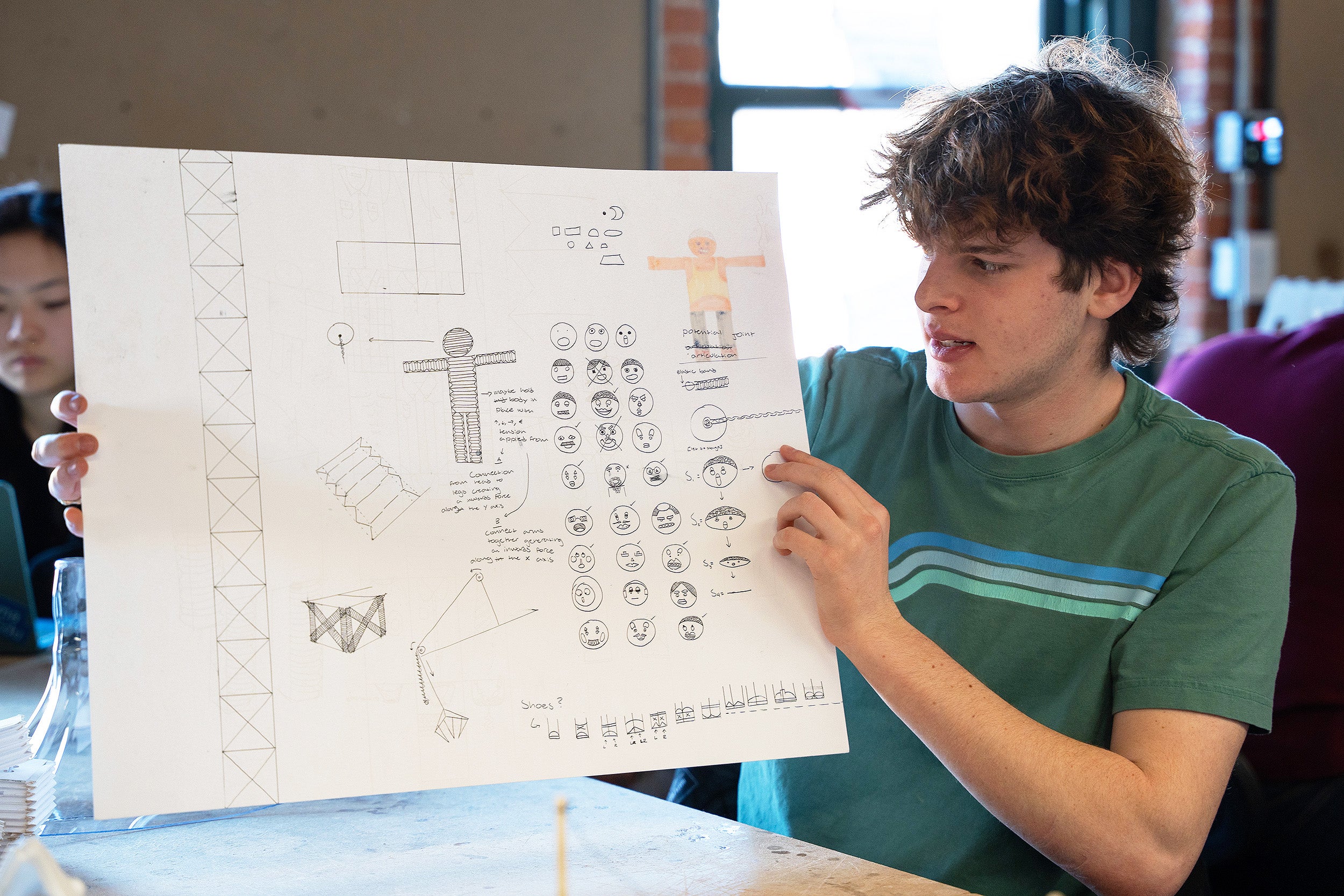
For their first assignment, students were tasked with finding faces in the world around them hidden in tree bark, manhole covers, even cracks in the ceiling. Next, they created hundreds of sketches in search of a spark that would inspire their design. They also met professional designers—like alum August Lehrecke 14 FD of East Providence-based custom inflatables company Pneuhaus and inventor of the Hoberman sphere Chuck Hoberman—who shared their insights and creative processes via live and virtual class visits.
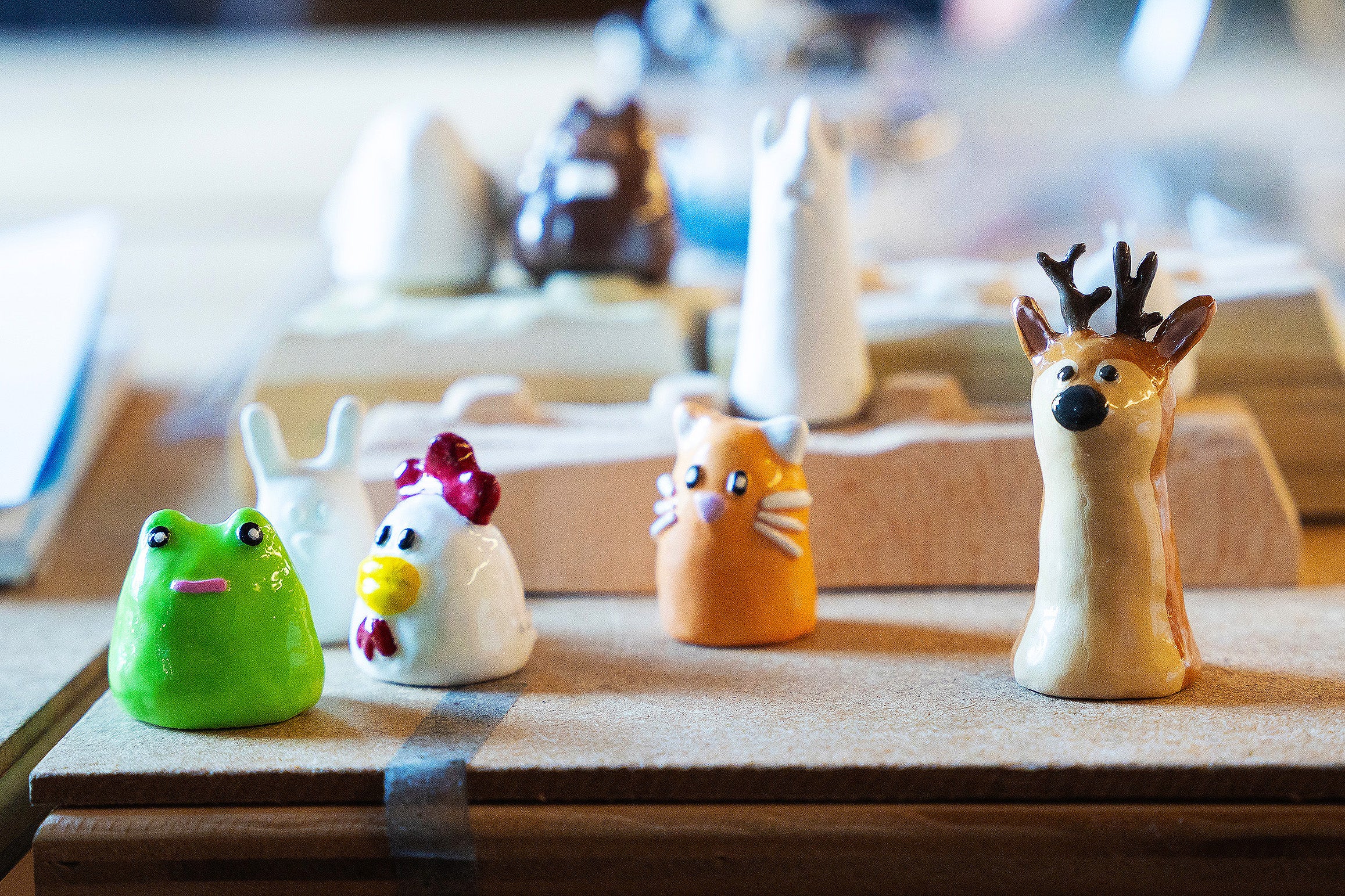
Weeks refers to the second class project as “the trophy assignment.” Students selected found objects and joined them together using a vacuum-forming machine to create quirky sculptures that resemble sports trophies. By the end of the five-week session, each student had developed a toy prototype with kinetic possibilities to draw users in.
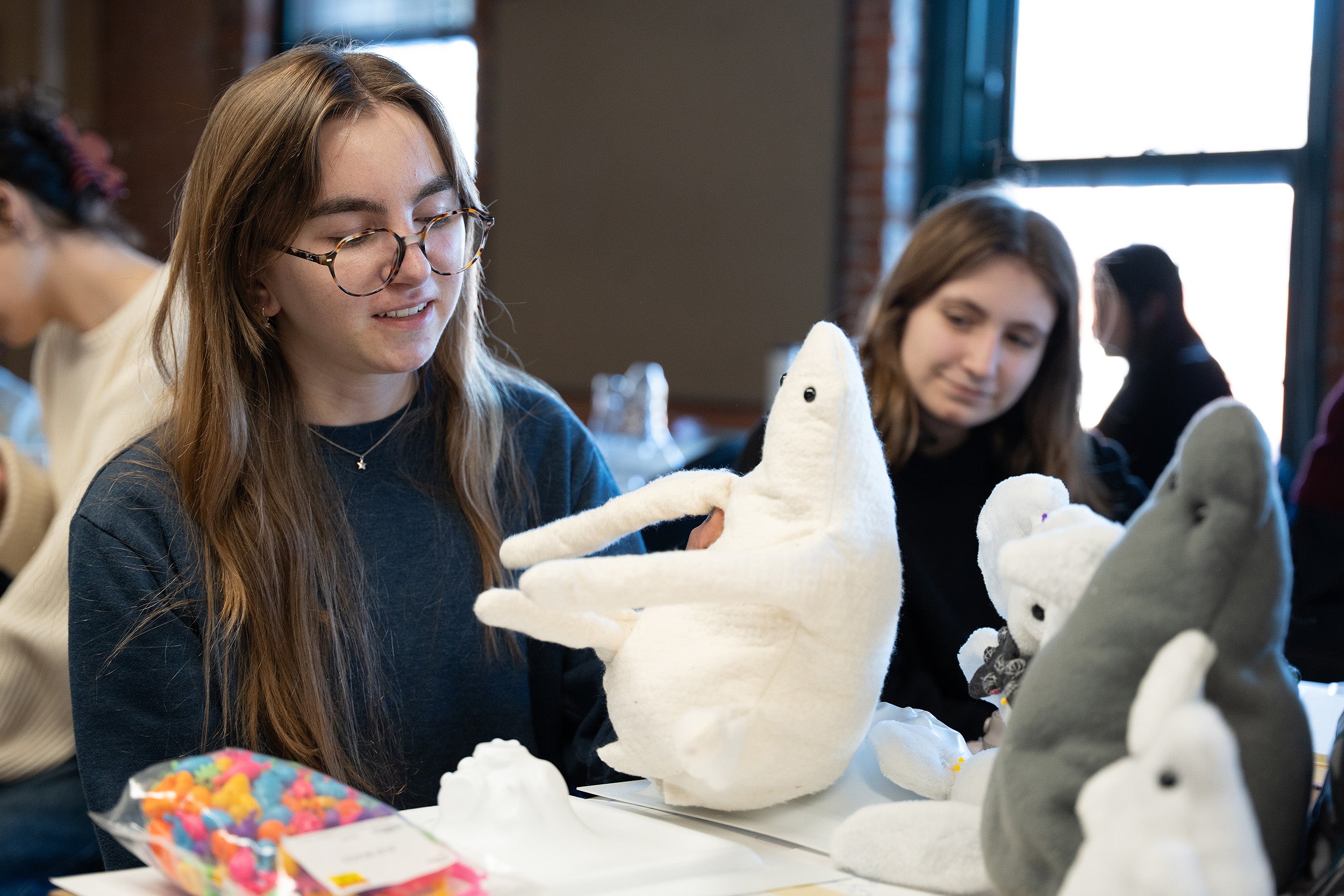
“Using the vacuum-forming machine was a great way to start the process,” says Julia Pagani 29 EFS, who made a reversible plush toy with hand-sewn, detachable limbs. “The idea was to give the user the ability to mix and match the parts and create new creatures.”
Ellie Wirth 29 EFS, who began making stuffed animals when she was seven years old, had a similar idea for a soft, changeable toy. “You can create any animal you want,” she explains, “fictional or real.” The design was intended to discourage parents from buying multiple stuffed animals, which end up in landfills, she adds, and the prototype was made of recycled fabrics sourced from RISD’s Second Life Exchange.
The Squish Sumo, a stress-relief toy by Max Heller 29 EFS, was also intended to promote sustainability and avoid the use of plastic. “I used simple mechanisms and paper-folding techniques to create the toy,” says Heller, “and hope to experiment with color in the future.”
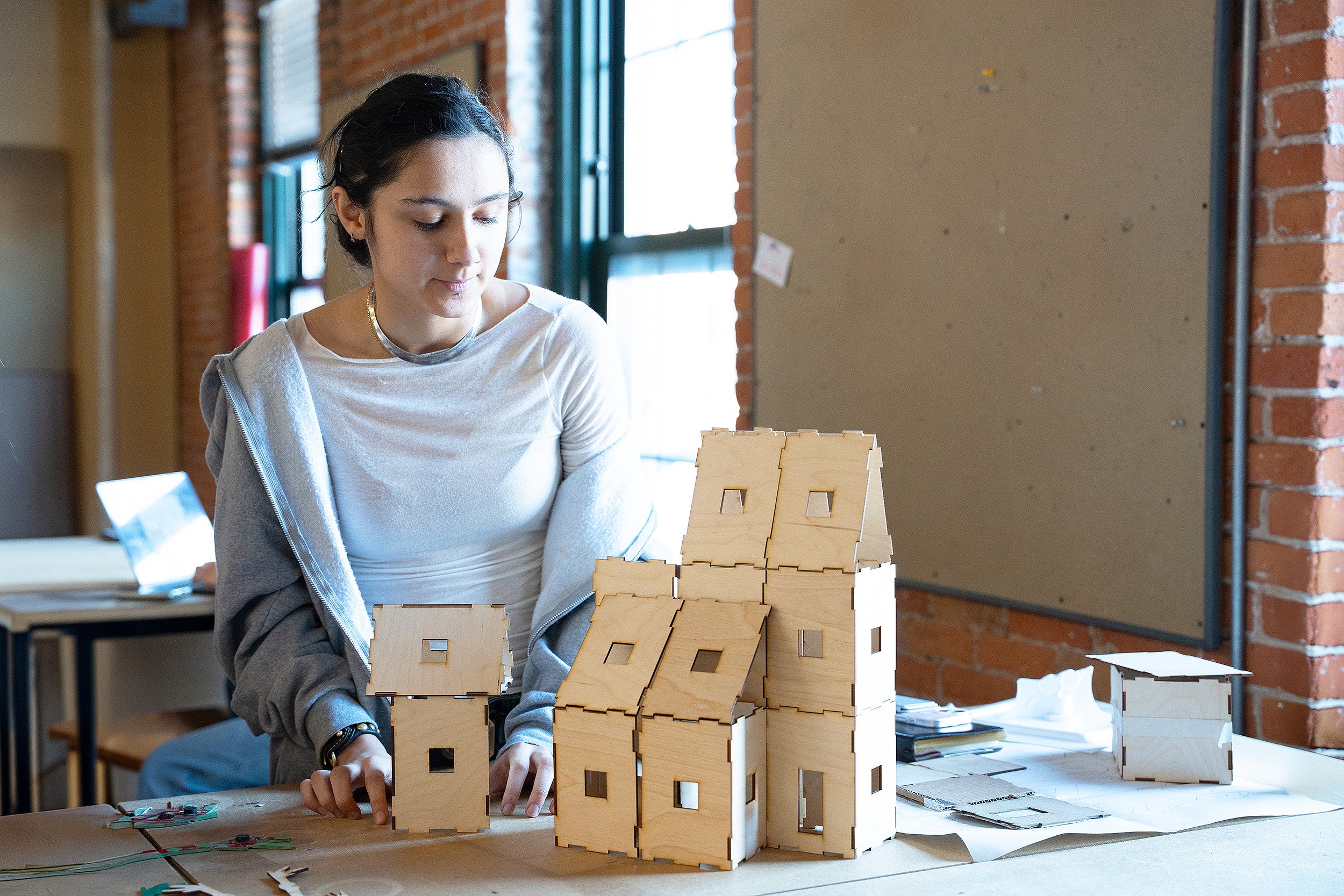
A number of the toys were inspired by building sets the students loved as children. Zoe Forbes 29 EFS remembers playing with MAGNA-TILES as a kid and the joy of finding the mirror piece. “I wanted to make something architectural like an apartment building,” she says, “with roof pieces, fences, and other accessories.” Sally Choi 29 EFS imagined a whole wooden village painted in warm colors situated on a hillside and used scraps from the woodshop to bring her vision to life. “I wanted to create something open-ended because that’s the kind of toy I liked growing up,” she says.
Deeksha Pericherla 29 EFS and Lila Ferne 29 EFS both incorporated educational aspects into their prototypes, in Ferne’s case a kid-friendly anatomy lesson offered via a stuffed dog with plushy organs inside, and in Pericherla’s case a set of soft gardening-related objects, like seed pods and a watering can. “My favorite part of the set is the telescopic blueberry,” she says. “If I were to develop this idea further, I’d make a whole set of blueberries.”
Top image: happy robot guy by Lucy Gan
Simone Solondz / photos by Kaylee Pugliese
February 23, 2026
Students considered how sound can serve as a spatial and experiential medium, guiding attention, shifting atmosphere, and provoking new forms of encounter.

Working collaboratively, students are designing and building exhibits in preparation for an immersive show in the Center for Integrative Technologies.

The class studied inlay, overlay, and engraving processes, reimagining the relationship between the functional and the ornamental.