
Students traveled to Ocean Hour Farm in Newport, RI as part of their yearlong investigation into earth-friendly materials like wool.

“I’m interested in using light to direct viewers’ attention and transforming the space by hanging dyed fabrics with a variety of textures like chiffon and burlap,” said grad student Manal Imran Dar MLA 26. “I think bright greens and yellows would evoke spring and counter the deadness of winter.”
Dar was sharing ideas for an immersive group exhibition to be held in early February at the end of Wintersession 2026. She is one of a dozen students from a wide range of disciplines enrolled in Exhibition Design & Building, a vibrant class taught by faculty member Adam Thabo 98 PR and offered through the Interior Architecture department. In his professional practice, Thabo has designed and developed innovative installations for a diverse array of New York City museums and cultural institutions as well as corporate clients.
The course, which Thabo launched last year, focuses on hands-on exhibition design and construction, from spatial planning and material selection to lighting, signage, and fabrication techniques commonly used in the industry. “Interactive exhibition design really centers on human factors at its core,” he says. “The technology always comes second and has shifted in recent years from simple digital elements to a more holistic approach, with whole rooms that respond to visitors via sight and sound.”
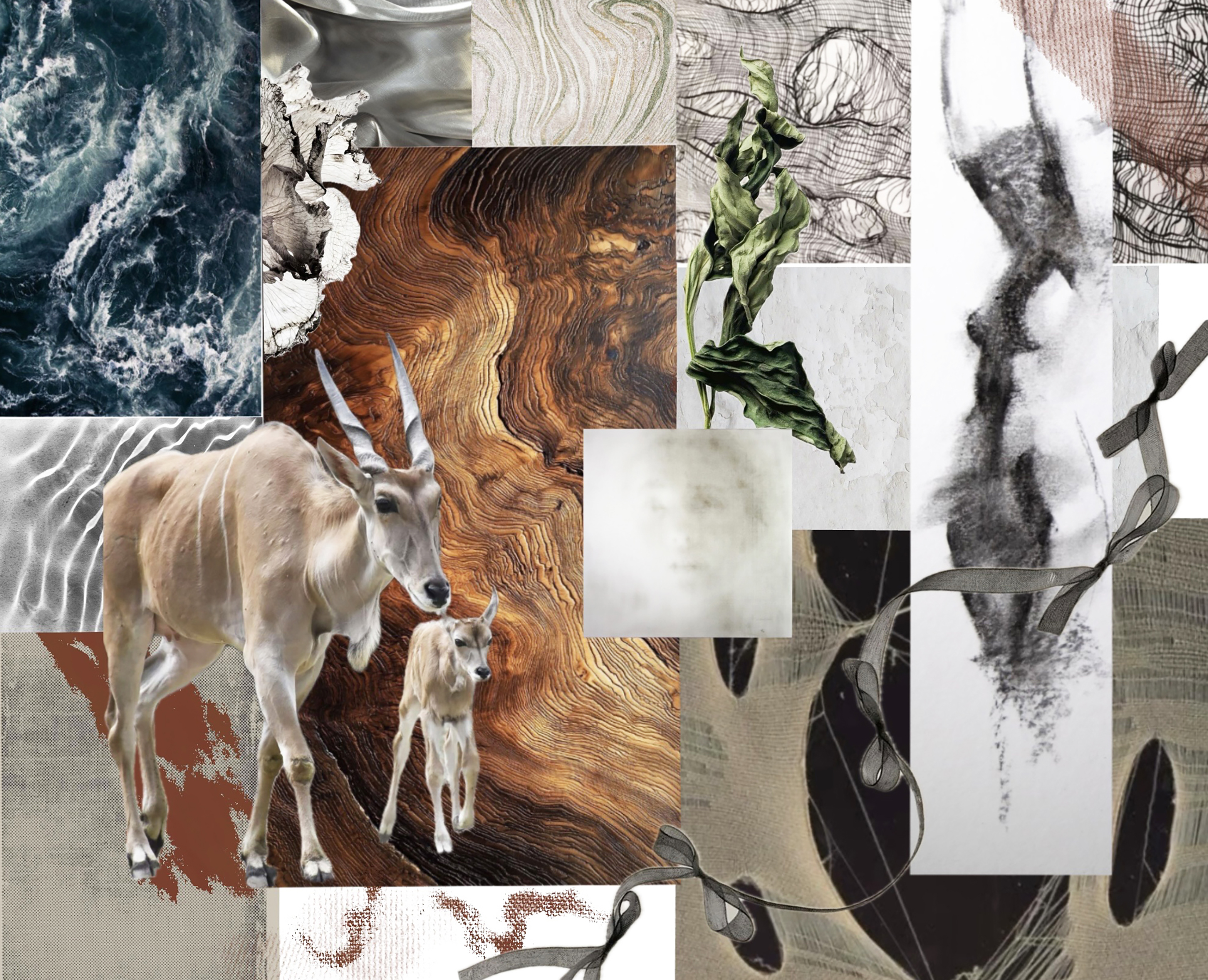
Building on insights offered through lectures and readings, students are getting into the nitty gritty of exhibition design and production, using such tools as CAD/CAM software, handmade models, CNC milling, and 3D printing to test ideas, iterate, and create highly professional exhibition elements. Each of them is playing the role of artist, drafter, and builder.
As artists, they are developing themes for the exhibition and exploring the show’s aesthetics. As drafters, they are focusing on show communications and unearthing any engineering and fabrication concerns related to the exhibition. And as builders, they will translate 3D CAD models into reality with CNC or 3D prototyping techniques as well as traditional fabrication methods.
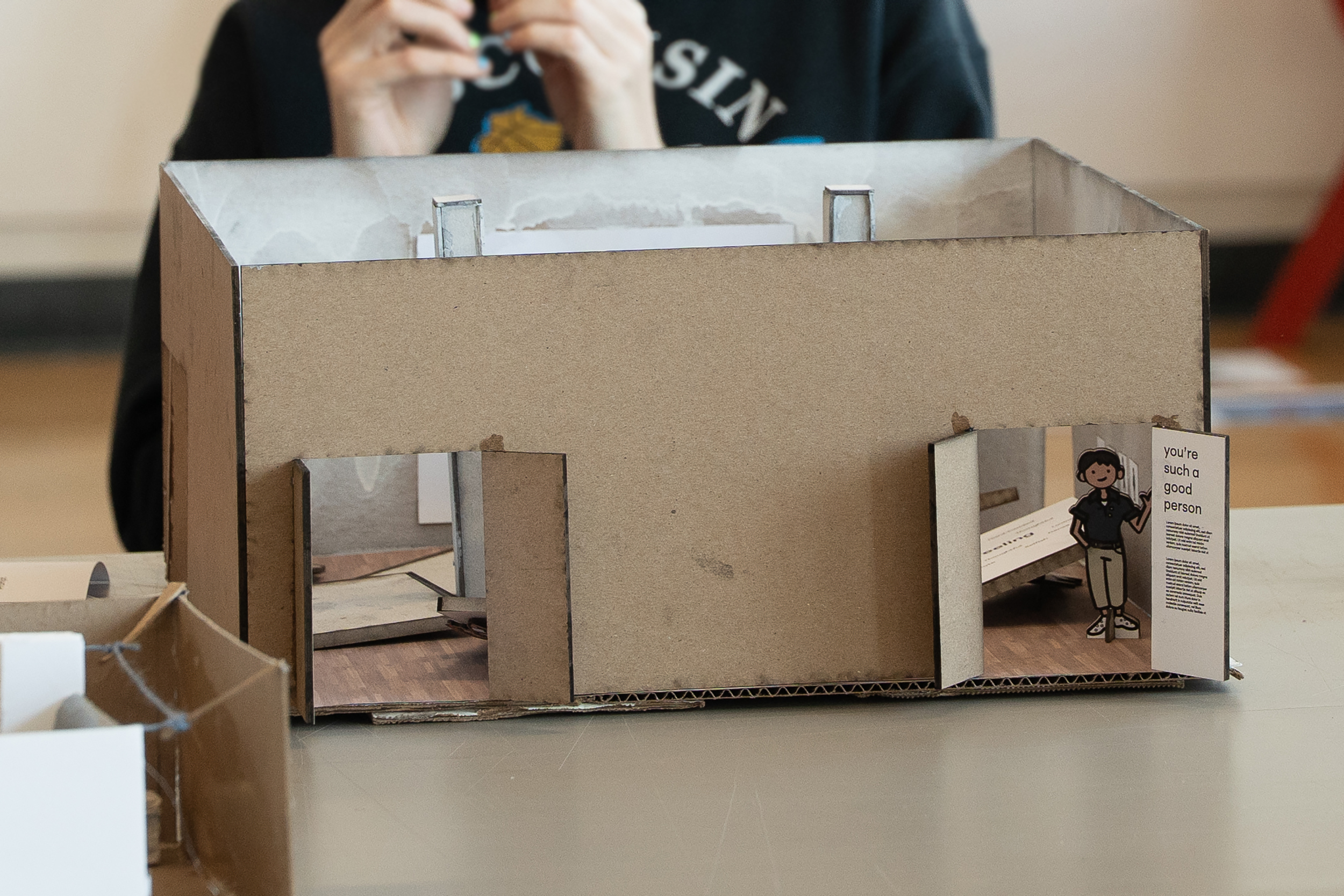
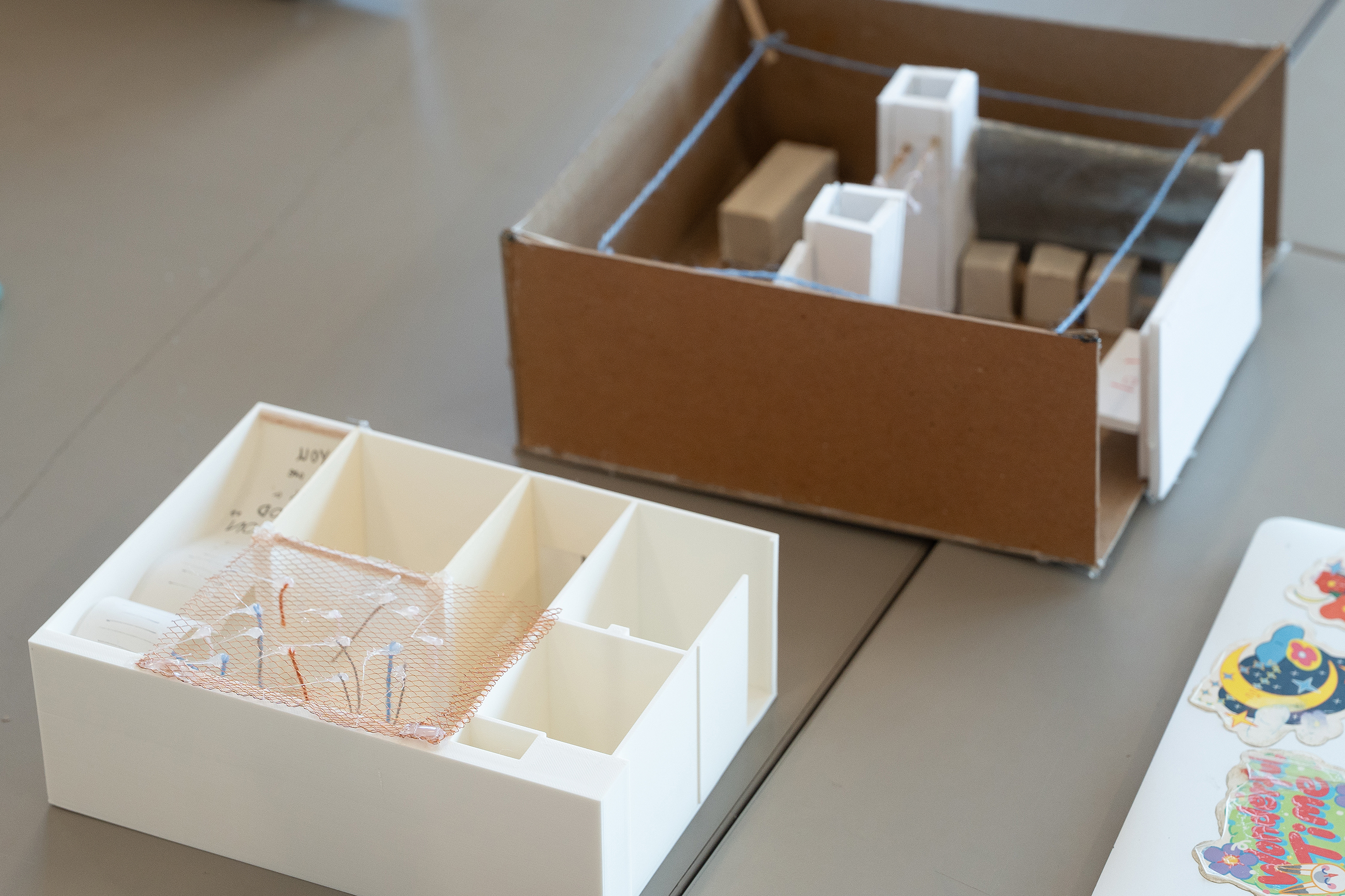
At the beginning of the term, students brainstormed exhibition ideas, presented inspirational mood boards, and drafted curatorial statements. First-year student Kathy Halim 29 EFS envisioned a warm, lived-in space with artworks resting on chairs or hanging from familiar objects like ladders. “Viewers are invited to move through the space at their own pace,” she noted.
Fellow first-year Scarlett Yu 29 EFS proposed a show that would “blur the boundaries between self, body, and environment and invite visitors to slow down and experience life as a process.”
As Wintersession unfolded, Thabo encouraged the class to borrow ideas from one another’s proposals and use the best ones to develop a collaborative statement for the planned February 3 exhibition in the Center for Integrative Technologies. Students gathered around to examine a model by Madeline Thomas MDes 27 featuring small human figures that would be life-size cutouts in the actual show as well as moveable wall panels on wheels and an “I am feeling” wall that would encourage visitors to write notes directly on the wall.
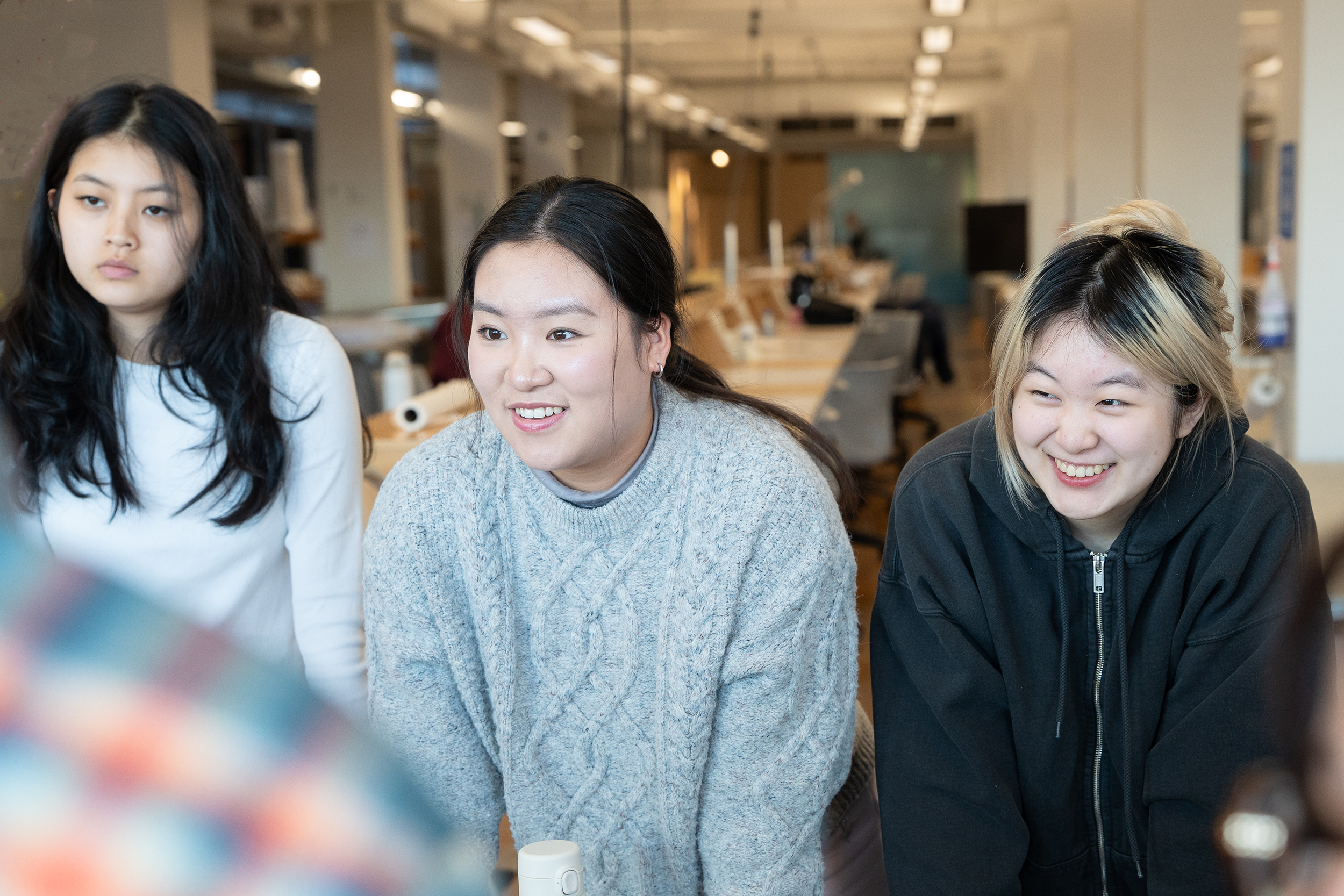
“The life-size figures could prompt visitors to take part in activities related to the theme of being a good person,” Thomas explained. “Maybe we leave crumpled up paper on the floor as well as a wastebasket so people can help clean up the gallery.”
Thomas also proposed a freestanding frame for the exhibition built out of low-budget wooden 2x4s. “That’s a great suggestion,” said Thabo. “That means we won’t have to put holes in any of the walls and we could transfer the whole show to a new space if necessary.”
The RISD community is invited to check out the exhibition in CIT 103 on February 3, 6–8 pm.
Simone Solondz / photos by Kaylee Pugliese
January 27, 2026
Students traveled to Ocean Hour Farm in Newport, RI as part of their yearlong investigation into earth-friendly materials like wool.

Student interventions transform the Front Street Family Center in Woonsocket, RI into a celebration of food, wellness, and community.

Students use drawing, painting and collage to create repeating patterns reflecting their unique creative points of view.