
Artists of color from across the state show powerful work in multidisciplinary exhibition.

“When I got to RISD in 2022, I heard about the first Black Biennial and knew I wanted to curate the show one day,” says senior Karma Johnson 26 SC. A year later, Khalil McKnight 27 PT and King Meulens BArch 28 arrived at RISD, and the three became fast friends. So, when the call for proposals went out across campus for this year’s exhibition, they pooled their creative resources and networks to cultivate Please Catch Me When I Fall.
“Karma came up with the title,” says McKnight. “As a Black person living in post-colonial society, you’re bound to experience life’s negatives and to fall. You learn to rely on your community to lift you up. You can’t always do it by yourself.”
In addition to making space for that vulnerability, the team agreed that it was important to celebrate the similarities and differences among Black communities around the world. “You can learn so much from differences,” Meulens notes. “What the Black Biennial affirms is that we are here, and we are here to stay.”
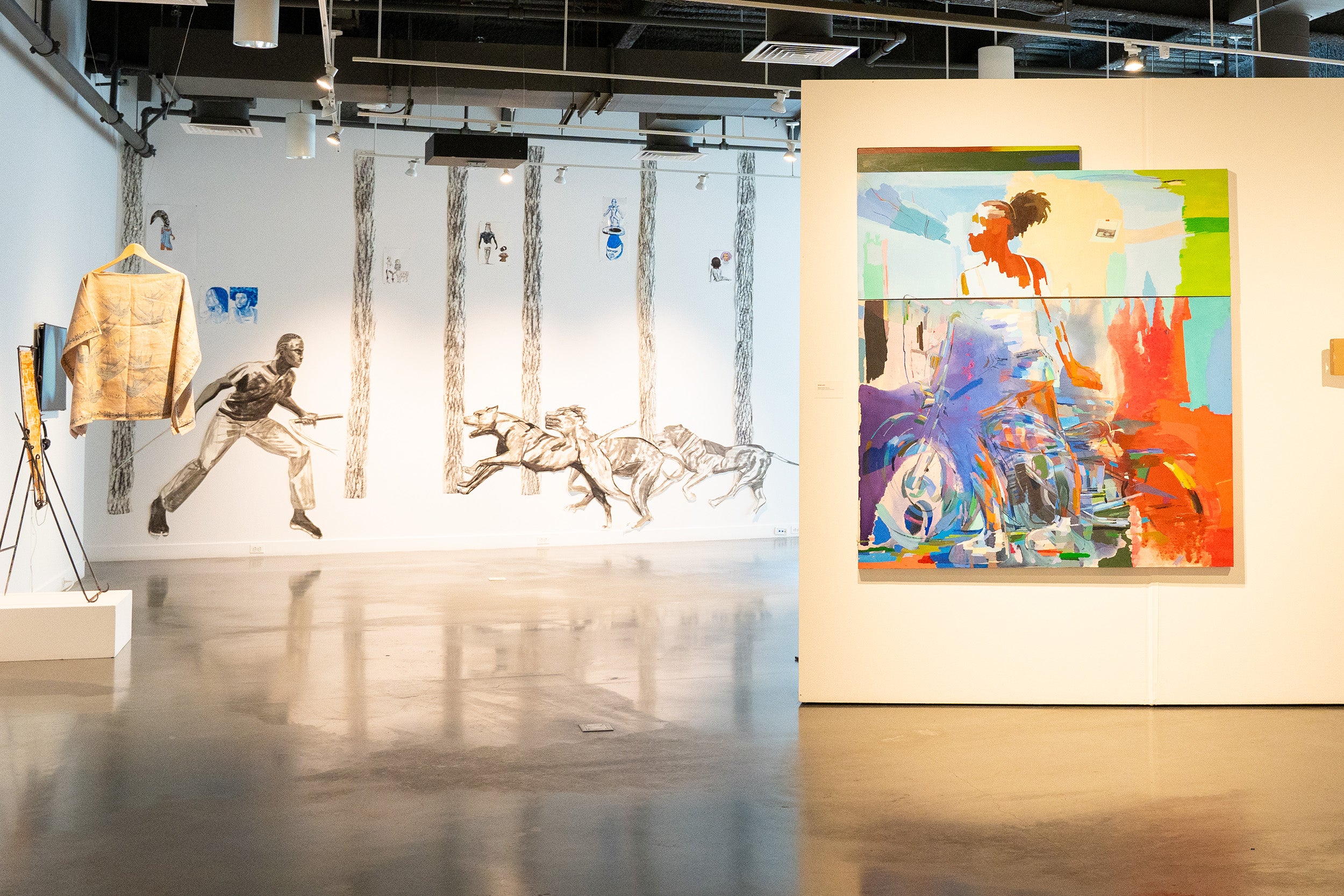
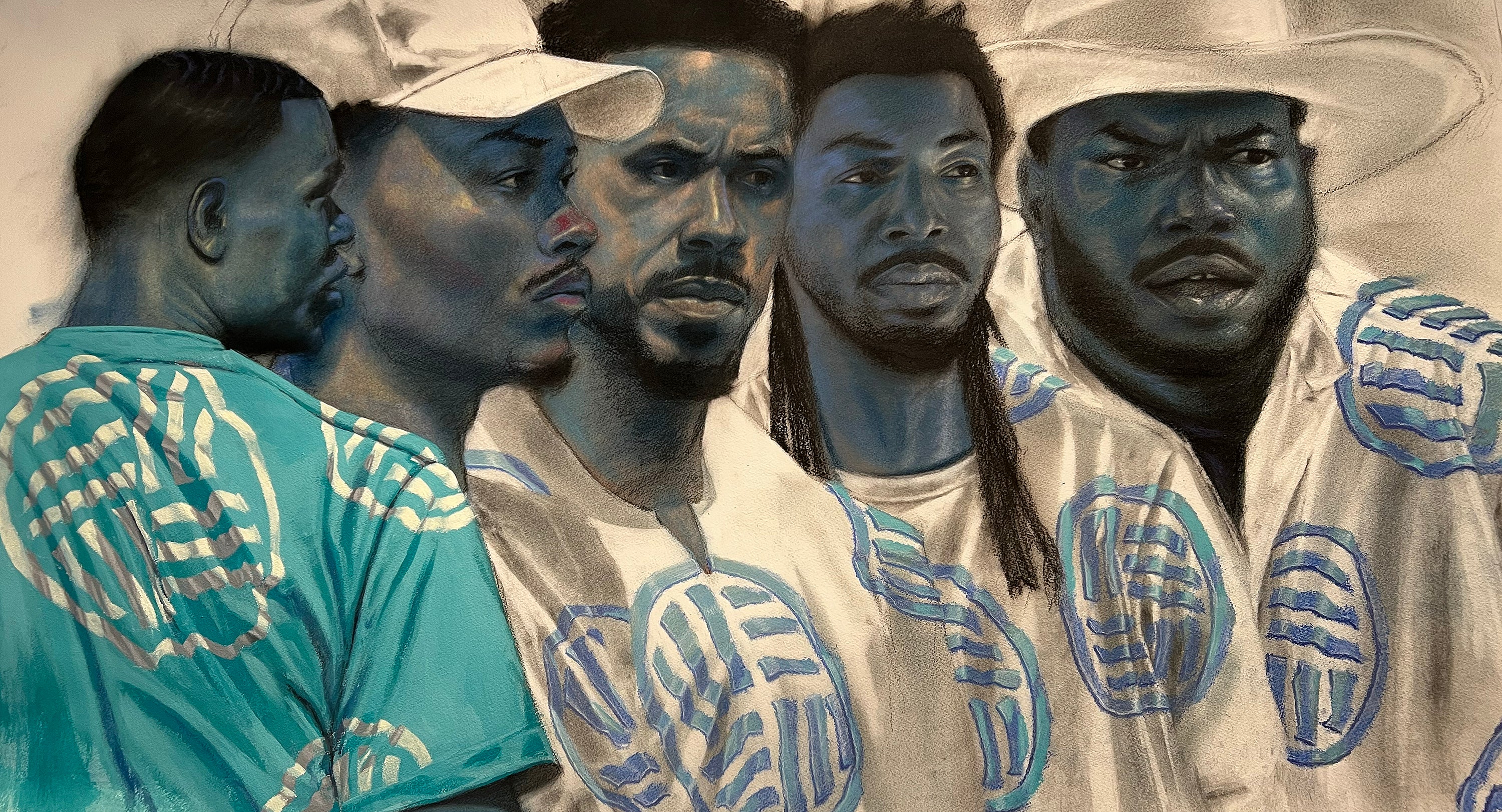
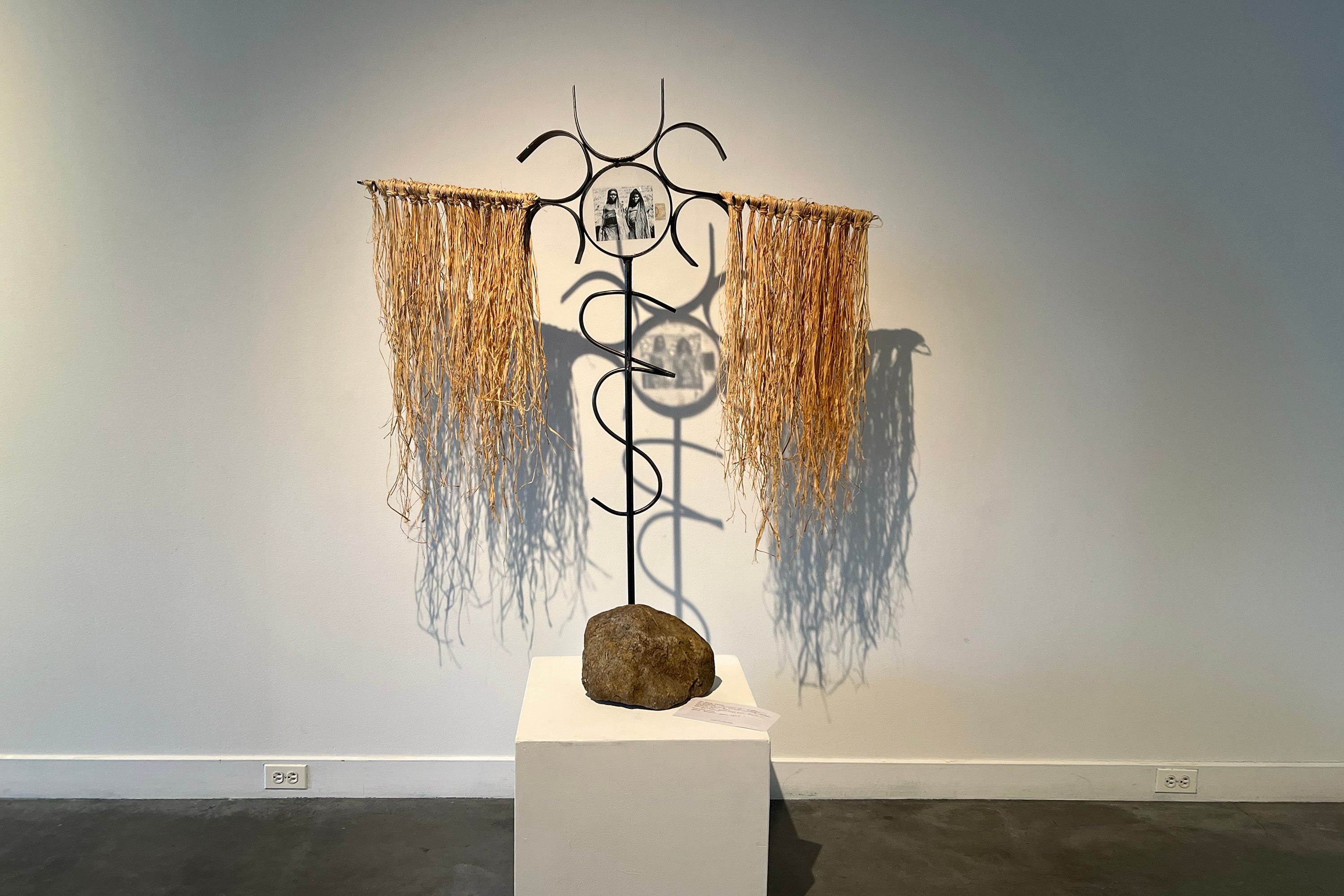
Black artists from RISD and beyond submitted work for the show, and the curators selected about 50 pieces: everything from large-scale paintings to textiles, sculptures, audio works, and even a few poems. Inspired by All About Love, an installation by multidisciplinary artist Mickalene Thomas, they’ve turned the gallery’s Dryfoos Media Room into a homey space complete with sofas and warm lighting.
“Gallery and museum spaces can be so daunting with their blank white walls,” says McKnight. “That’s why creating rooms like this is so important. We want other Black students to understand that this is all possible.”
Meulens adds that the main gallery show was built around large-scale pieces like those by junior Django Lewis 27 PT, grad student Princeton Cangé MFA 26 PT, and alum Dorian Epps 21 ID. “When you’re curating a show, you have all these ideas,” he explains, “but everything might change when the work comes in. We tried to build a rhythm around those key pieces.”
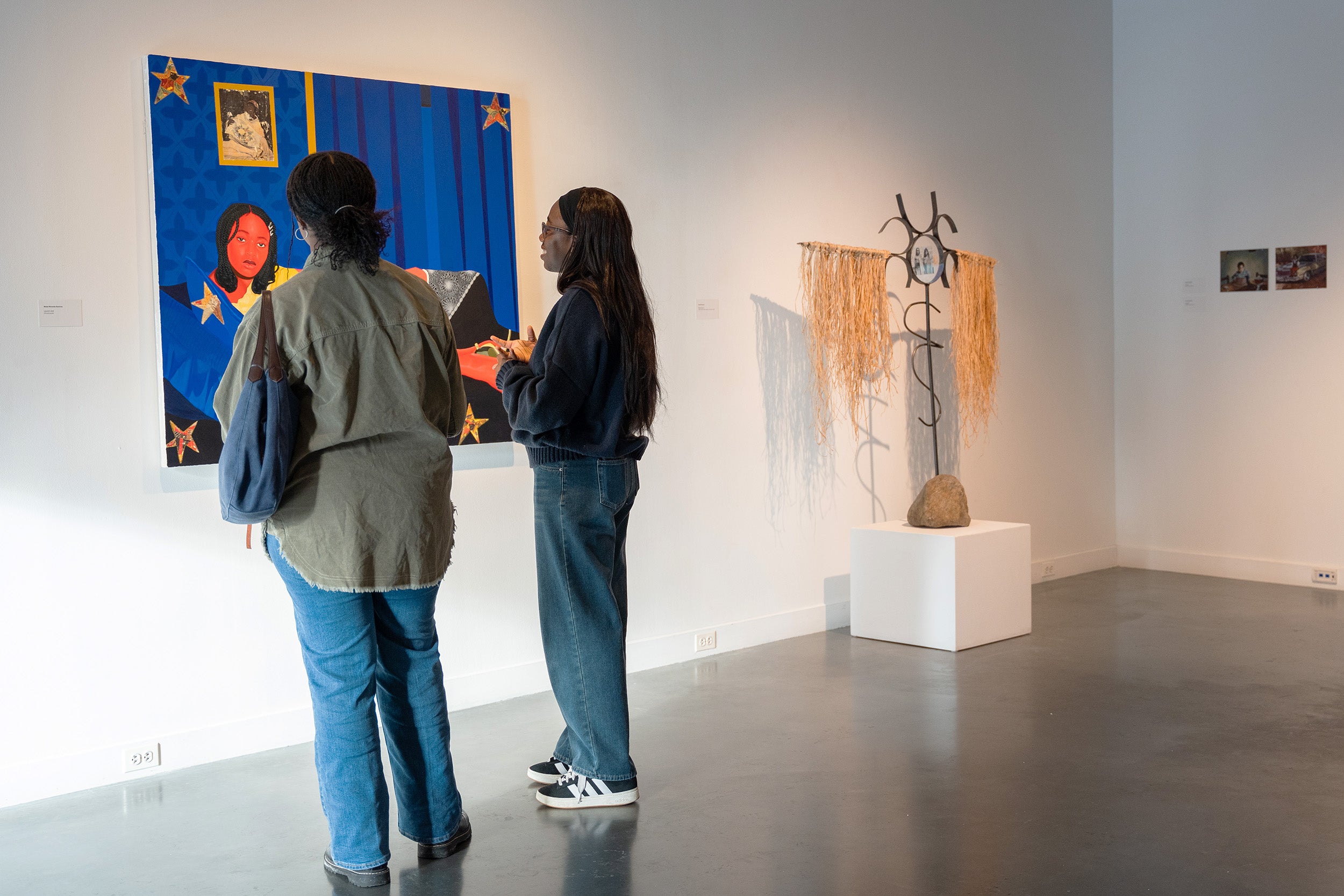
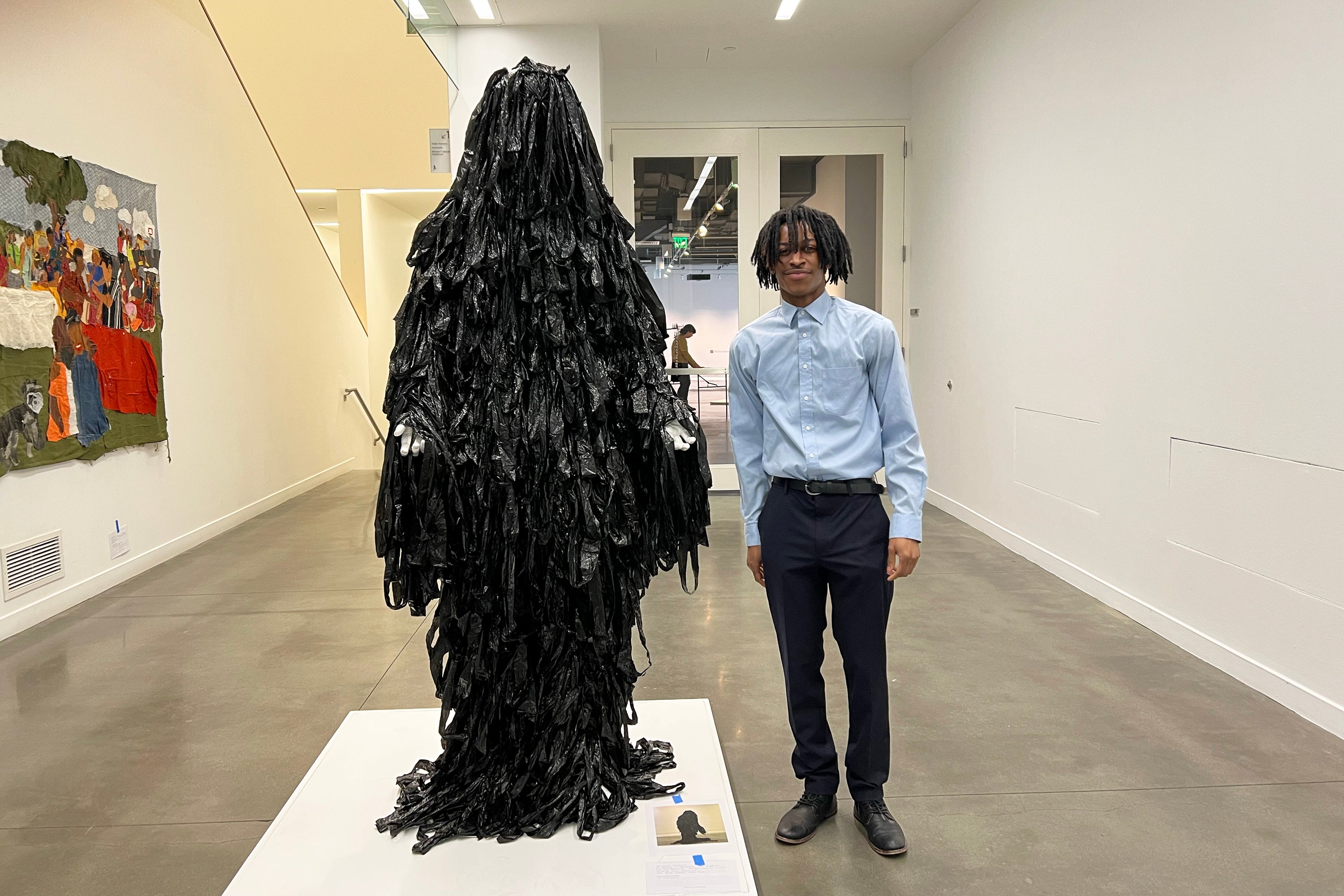
They are quick to acknowledge the invaluable mentoring they received from Director of Campus Exhibitions Mark Moscone 88 PR and his team as well as their faculty advisors, Assistant Professor Jameka Hartley and Associate Professor Derrick Woods-Morrow (whose piece Primer in Two Voices or a Threshold for technological Advancement is included in the exhibition). “I’m currently taking a Black feminism course with Jameka,” Meulens notes, “and its themes—motherhood, home, activism, imperialism, colonialism—are intersecting with the work we’re doing for the Black Biennial.”
The team is planning a community reception for February 19 featuring Black cuisines, live readings, Black music, and a lot of little surprises. “We also want to organize some community-related programming, like an artist talk and events where people can leave with something they’ve made,” Johnson adds.
“There is a lot of tragedy in Black history across the diaspora,” she continues, “but there’s also a lot of joy and beauty. We’re a people who can make leftover scraps of food into a feast! We can find joy in community, and we’re using this show as an opportunity to teach each other how to do that.”
Simone Solondz / photos by Kaylee Pugliese
February 5, 2026
Artists of color from across the state show powerful work in multidisciplinary exhibition.

A month-long, student-curated exhibition brings together artists and designers of color from RISD and beyond to illuminate the diversity of the Black experience.

The Brown | RISD Dual Degree Program grad discusses his worldly, discipline-melding approach to sculpture and installation.