
Manini Banerjee, Varun Mehta, Avantika Velho and Katia Zolotovsky are developing mycelium-based biofiltration pods capable of reseeding lost wetlands.

As universities across the US grapple with funding cuts for ongoing research projects, the National Science Foundation (NSF) and private backers are widening the scope of their investments to include Emerging Research Institutions (ERIs) like RISD. ERIs are defined as institutions of higher education with research programs that operate with limited federal funding.
In recent months, RISD faculty and staff members have procured grants totaling over $1.6 million supporting the study of everything from inclusive research approaches to carbon exchange in the Antarctic’s Southern Ocean to automated 3D textile manufacturing. “RISD is leading the charge among art and design schools that recognize the unique contributions artists and designers can make to all kinds of research,” says Director of Academic and Creative Partnerships Katherine Cooper.
Cooper is heading up a project over the next three years along with Assistant Provost for Academic Engagement Margot Nishimura and Associate Professor Tyanna Buie, who teaches in RISD’s Printmaking department. Supported by $400,000 in NSF funding awarded to RISD, this work contributes to the Supporting Partnerships for Advancement, Research, and Knowledge (SPARK) project—a collaboration among RISD, SUNY Brockport, Guilford College, and Southern Arkansas University. While each institution brings its own strengths and areas of focus, the cohort shares a commitment to expanding research and partnership capacity, developing relationships with industry collaborators and nonprofits, and strengthening the infrastructure that supports these efforts.
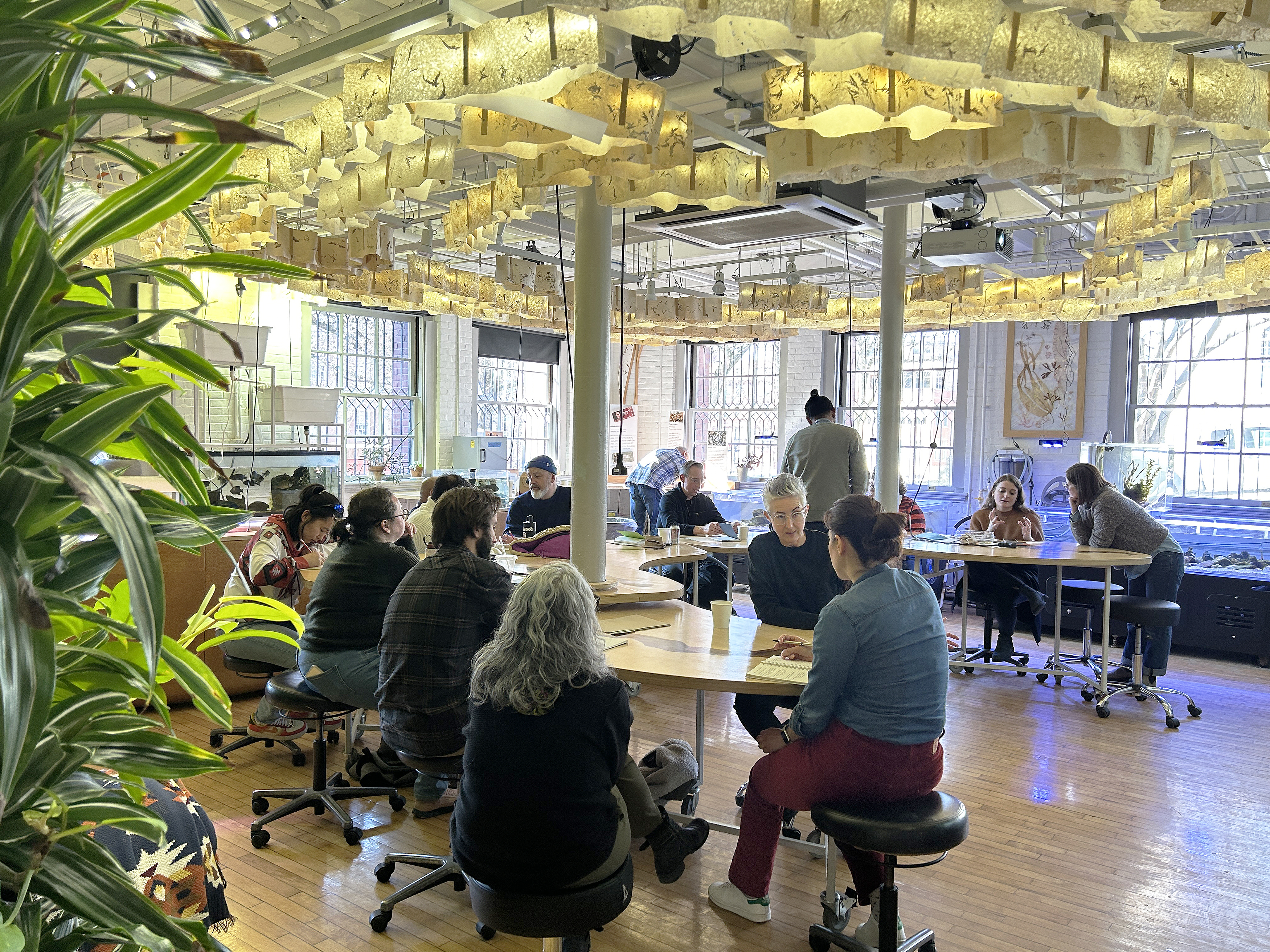
“The goal,” says Nishimura, “is to create an inclusive research enterprise that can support the inquiry, scholarship, and practices of multidisciplinary faculty. By developing a robust framework of policies, procedures, and systems, we’re opening the doors for faculty research projects that make a greater impact regionally, nationally, and internationally.”
Nishimura is also co-principal investigator for a related statewide NSF grant of more than $3 million dubbed Rhode Island Research Administration Collaborative (RI-RAC) with more than $500,000 in funding specific to RISD. The project is a collaboration among five Rhode Island-based ERIs to increase research administration capacity across the institutions, broaden the scope and reach of research in the state, and increase the number and diversity of faculty engaging in externally funded research via workshops, a summer institute, and a shared inventory of resources and research expertise.
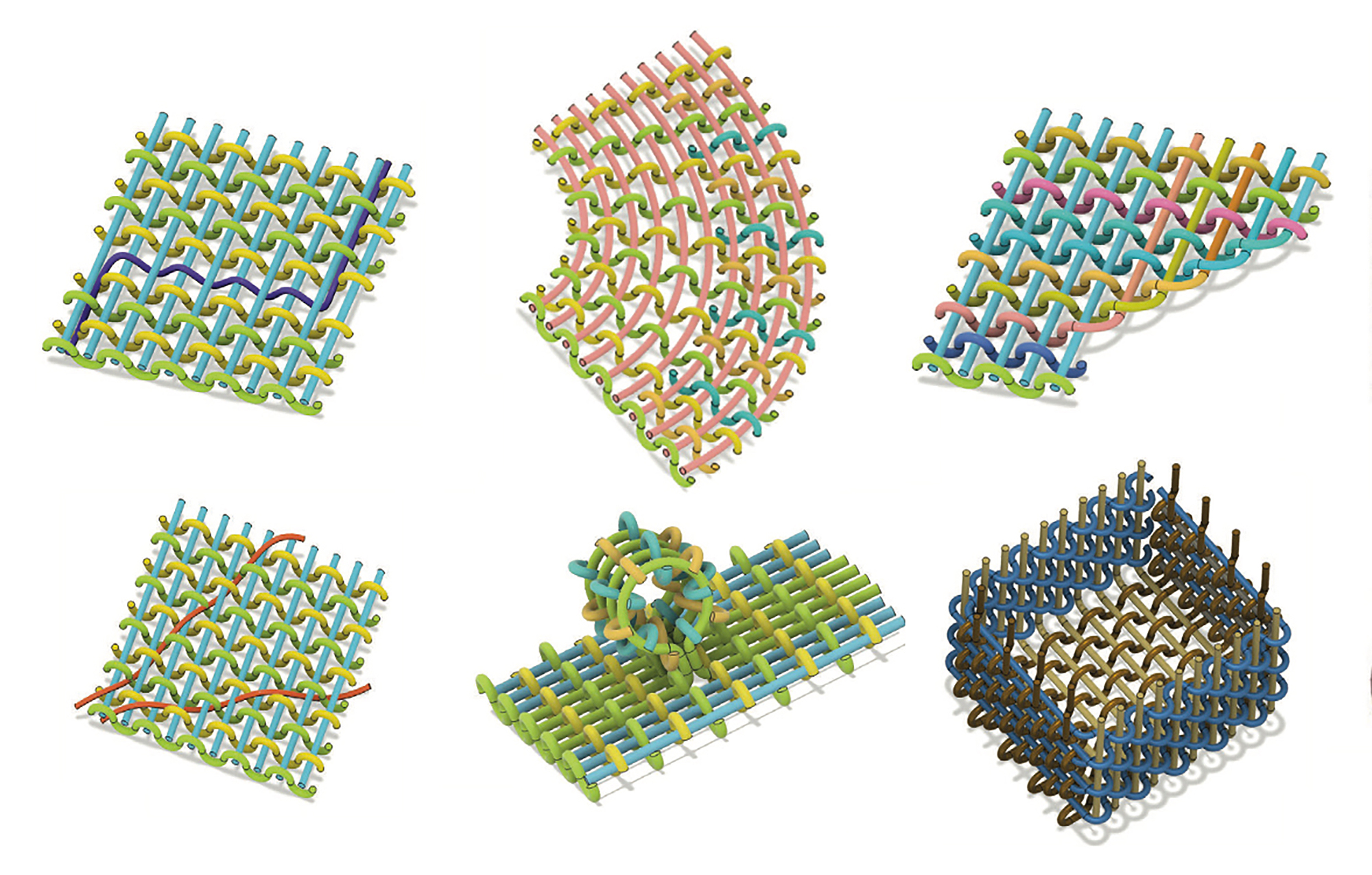
A third NSF grant in the amount of $205,000 was recently awarded to Textiles Professor Brooks Hagan MFA 02 TX for a project called Accelerating Yarn Fabrication Research Using Simulation-Informed Rapid Prototyping that will run through summer 2029. “We are witnessing an explosion in the possibilities of textile manufacturing with the emergence of new automated equipment for 3D weaving, braiding, and volumetric knitting,” Hagan explains. “This new manufacturing capability enables the creation of not just sheets of cloth but complex objects created via a single operation.”
Inspired by the availability of inexpensive 3D printers, Hagan and his team—including collaborative researchers at Cornell University who were also awarded NSF funding—plan to design and disseminate inexpensive, easily modifiable advanced yarn fabrication systems as well as Yarncraft, a process-agnostic, computer-aided design tool supporting the creation of complex, multiprocess yarn forms. The system will result in efficient production and higher-quality end products in everything from shoes to aerospace composites to integrated building envelopes.
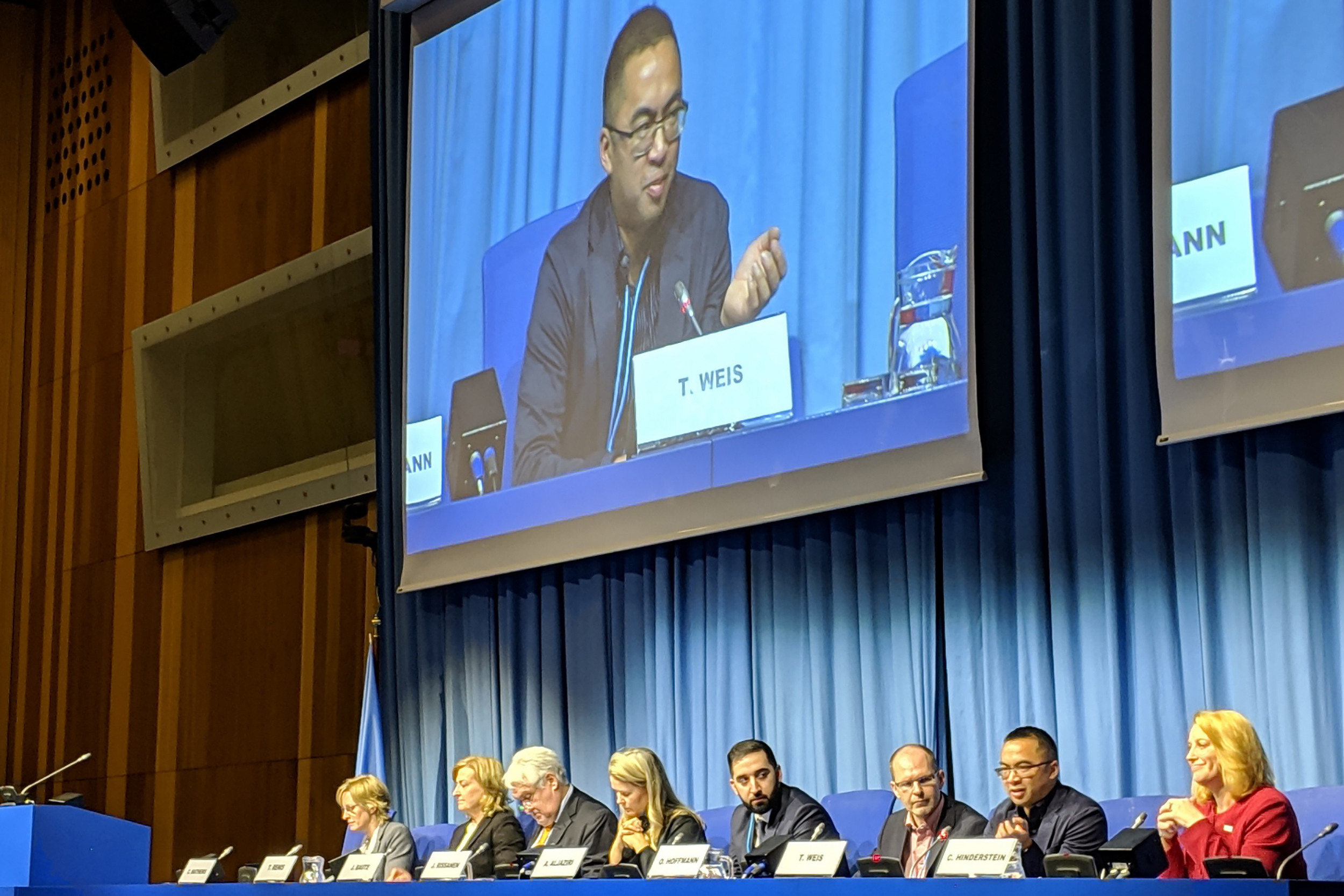
Another major philanthropic foundation now supporting RISD researchers is the Carnegie Corporation of New York, which works to reduce political polarization by supporting education, democracy, and peace. Associate Professor Tom Weis MID 08 was recently awarded a two-year, $500,000 grant to explore the critical knowledge gap in understanding how emerging and disruptive technologies (EDTs) such as artificial intelligence and cyber weapons affect nuclear decision-making and escalation dynamics.
“Rapid technological change is reshaping nuclear deterrence and decision-making at precisely the moment when traditional communication channels and crisis management mechanisms have eroded,” says the Industrial Design faculty member. He and his team will produce immersive, design-driven simulations of real-world crisis scenarios in order to ultimately reduce nuclear risk.
“RISD is leading the charge among art and design schools that recognize the unique contributions artists and designers can make to all kinds of research.”
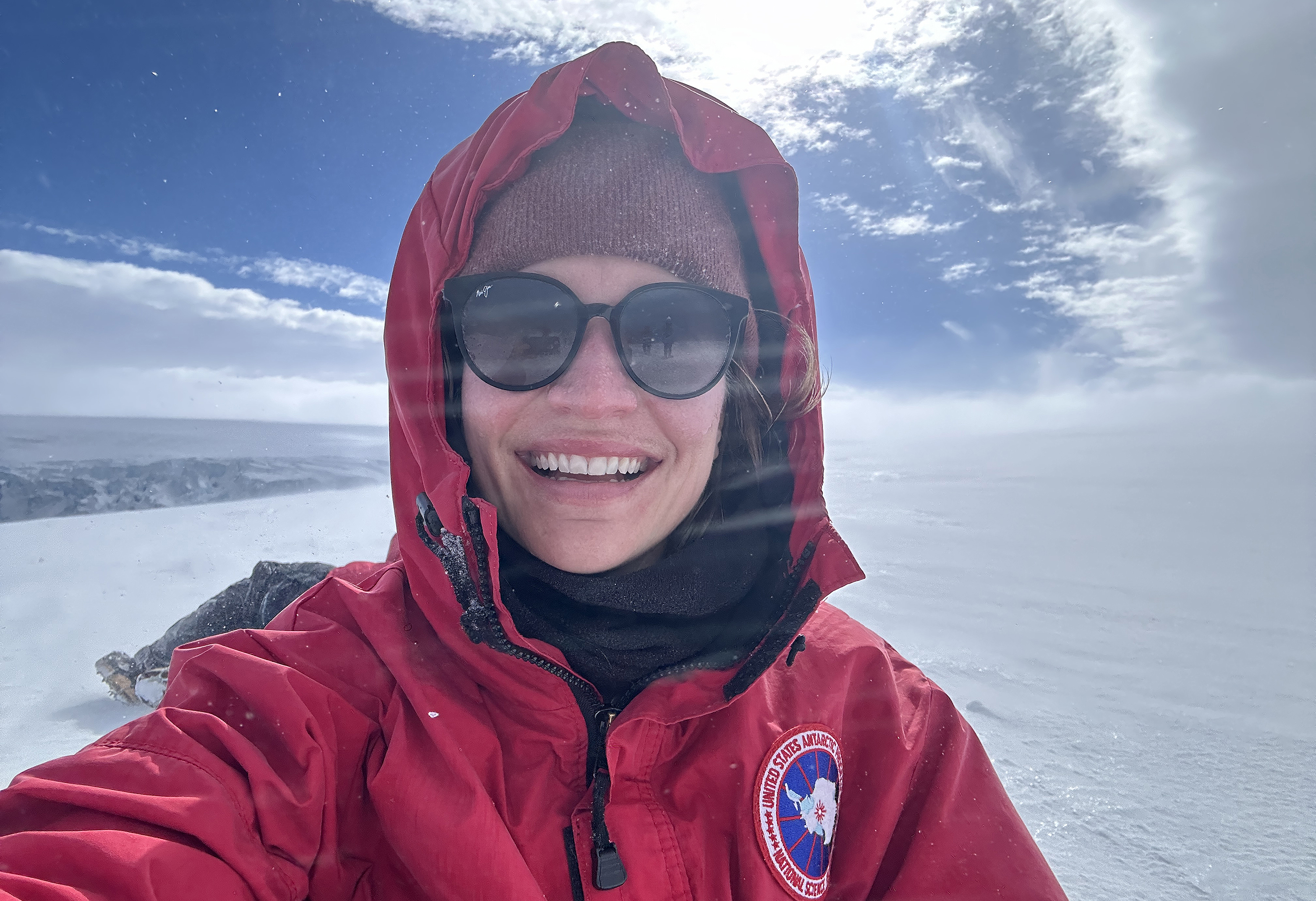
In addition to the aforementioned research, projects by other RISD researchers awarded grants last year continue to break new ground. Associate Professor of Landscape Architecture Johanna Barthmaier-Payne and her partners at the University of Rhode Island, the University of New Hampshire, and the University of Louisville (KY) are moving forward on their NSF-funded stormwater management project. RISD’s Edna W. Lawrence Nature Lab is tapping one NSF grant headed up by Houghton P. Metcalf, Jr. (HD 96) Director Jennifer Bissonnette that supports the lab and its cross-collegiate Vis-a-Thon series and one based on research conducted in the Antarctic’s Southern Ocean headed up by Visualization and Imaging Research Manager Georgia Rhodes.
“These highly competitive NSF awards are a testament to the students, professors, and institutions that contribute to these projects and help solve complex challenges,” said Senator Jack Reed in a recent press release. “They allow for critical new discoveries; shape our understanding of science, technology, engineering, and math; and expand economic growth here in Rhode Island and beyond.”
Simone Solondz / top photo by Jo Sittenfeld MFA 08 PH
December 11, 2025
Manini Banerjee, Varun Mehta, Avantika Velho and Katia Zolotovsky are developing mycelium-based biofiltration pods capable of reseeding lost wetlands.

Event organizers Georgia Rhodes and Stewart Skylar Copeland encourage visiting scientists to embrace the weird and imperfect.

RISD team led by principal investigator Johanna Barthmaier-Payne and researchers at URI, UNH and University of Louisville will develop nature-based climate solutions to stormwater management issues.