
A mix of Furniture Design and Architecture students, the class is designing and building furniture pieces that reference Kahn’s love of geometric forms and natural light.

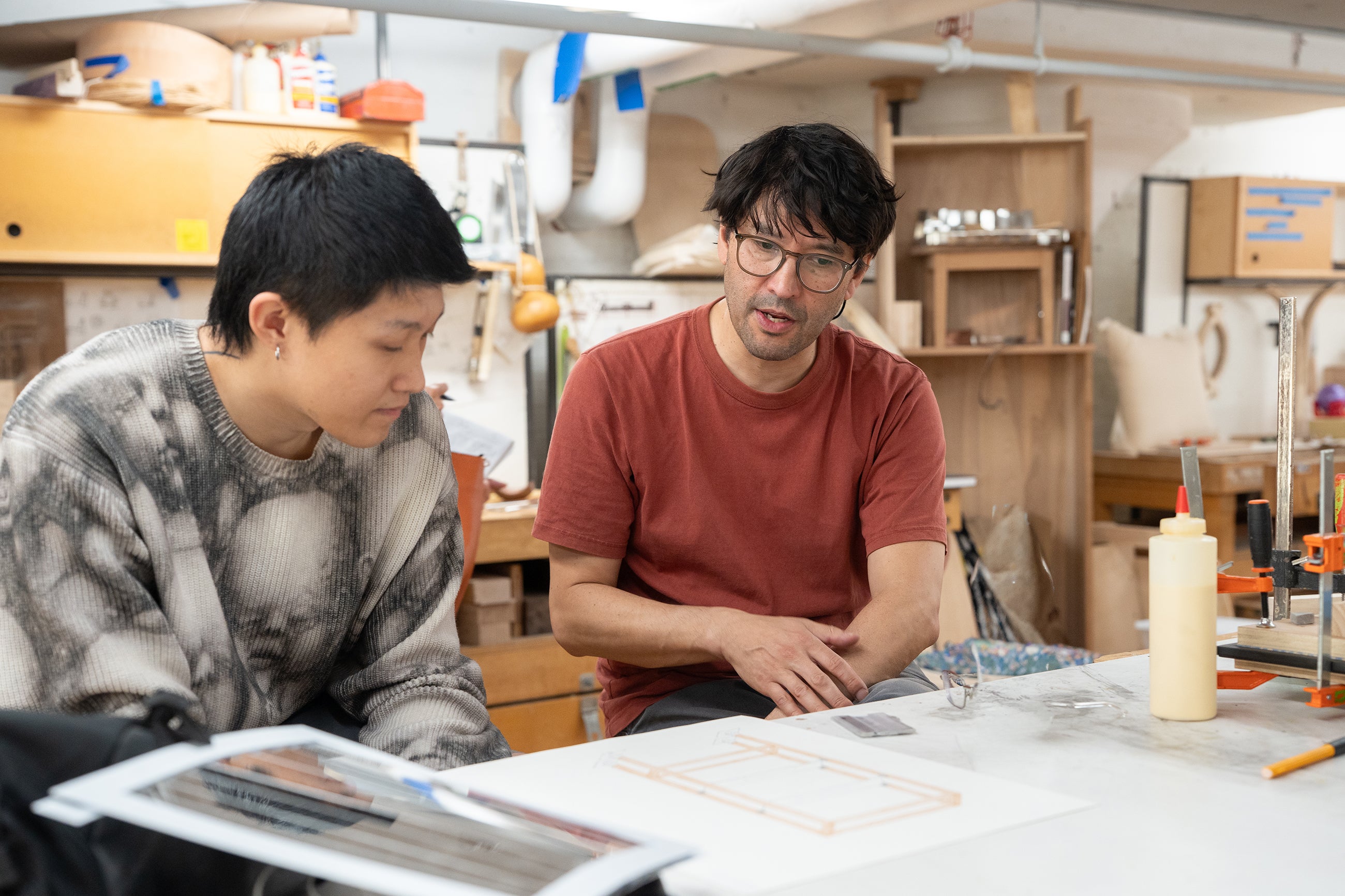
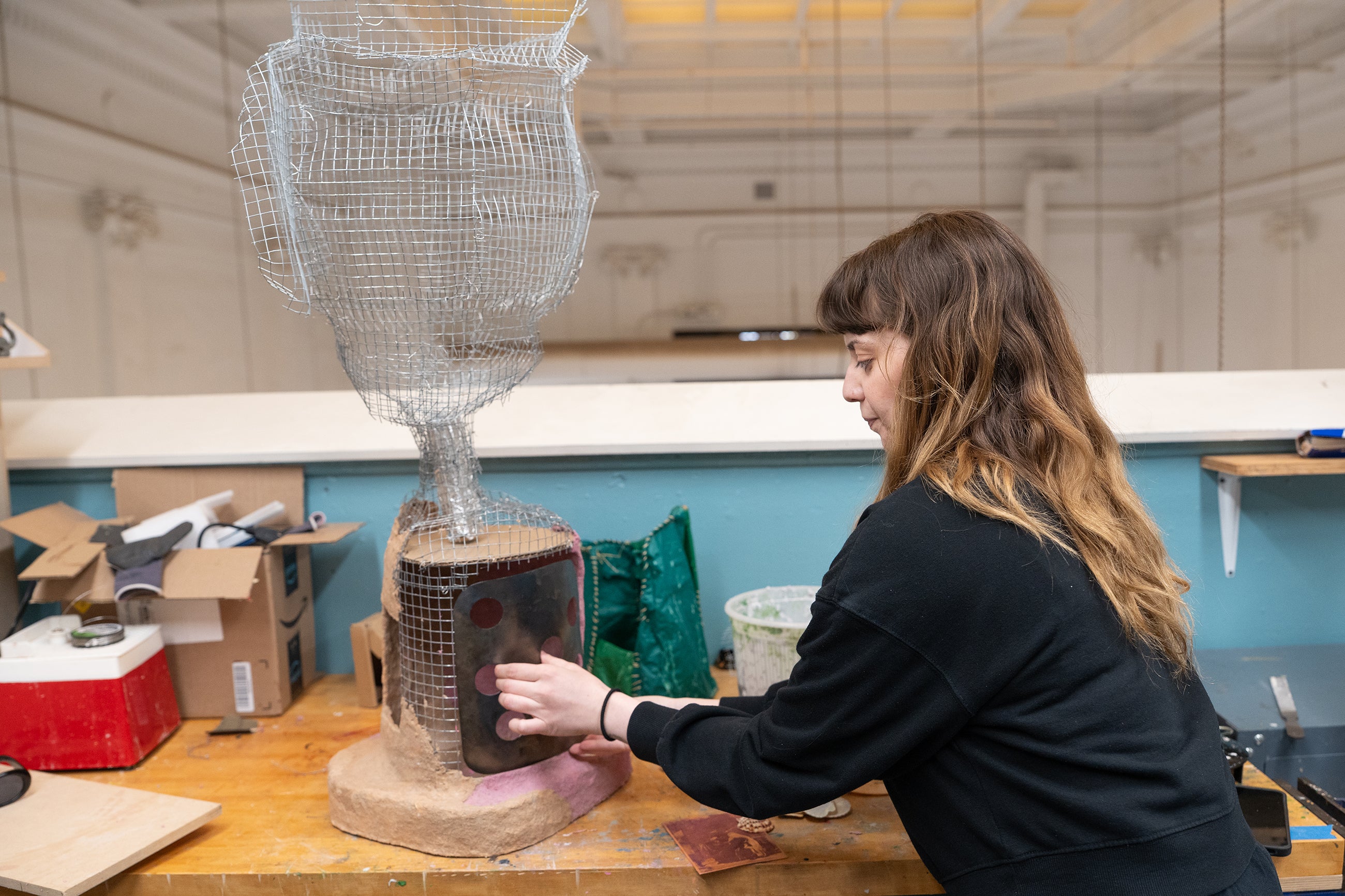
A graduate-level Furniture Design course taught by faculty member Jonah Takagi 02 FD used Providence’s Lippitt House Museum as a lens for understanding how furniture and interiors reflect the social, cultural, and technological forces of the late 19th century. A National Historic Landmark, Lippitt House has one of the best-preserved Victorian-era interiors in the US. Students considered the house as a system shaped by class, gender, labor, evolving technologies, and the industrial economy of Providence.
“Each student was assigned a different room in the house to focus on,” Takagi says, “and they conducted independent research to generate ideas for furniture pieces using an iterative design process to test and evaluate proportion, structure, material logic, performance, assembly, and experiential impact.”
Teresa Wang MFA 27 FD was assigned the bedroom of one of the daughters, Mary “May” Lippitt, and says that she “wanted to make something girly. The whole family was anti-suffrage, but May changed her mind later in life,” Wang adds. She also went on to found the Providence chapter of the American Red Cross at the beginning of World War I.
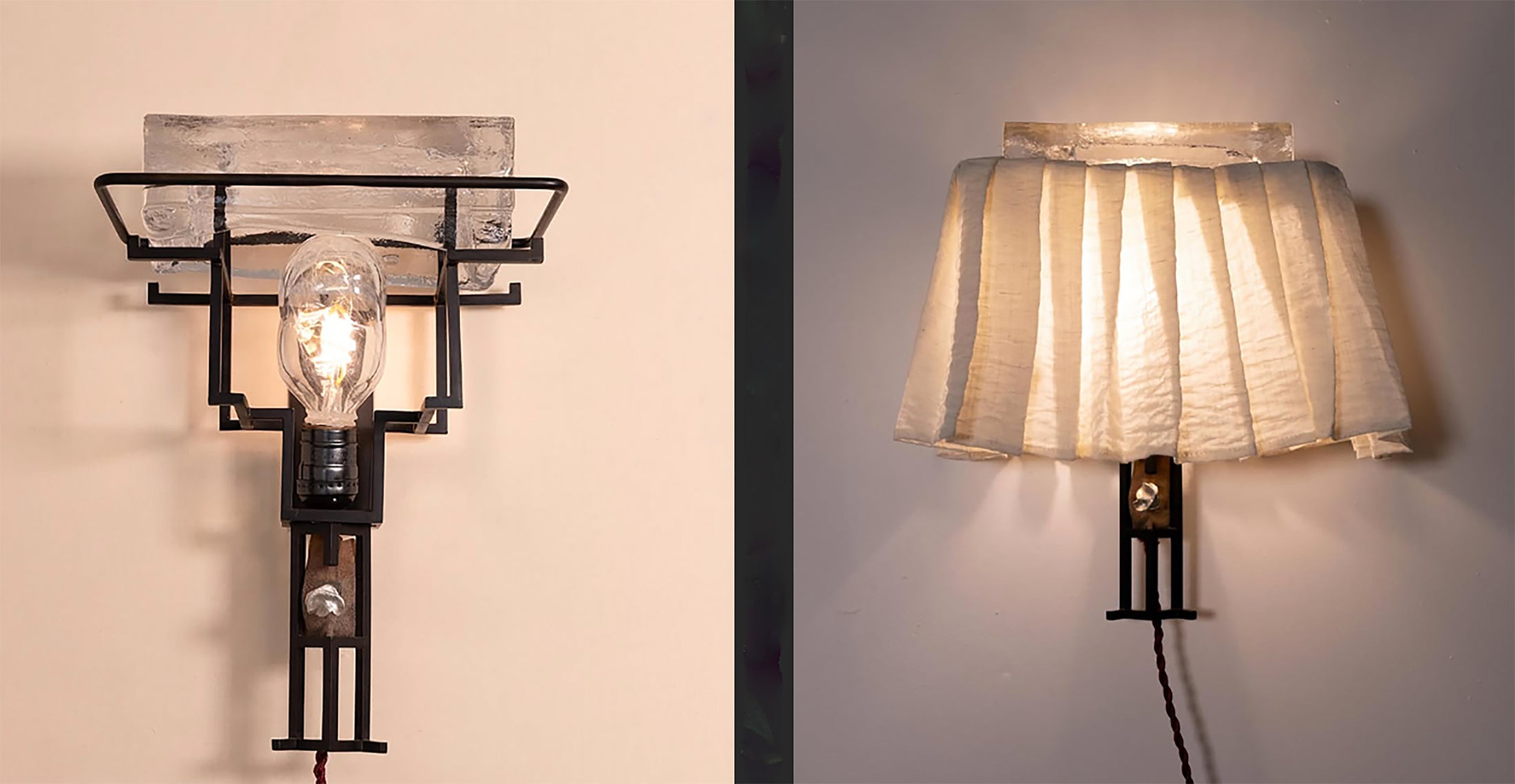
Wang designed a wall-mounted sconce with a dimmer and a kind of skirt and enlisted the help of a friend in the Glass department to make handblown bulbs. “Miniskirt Sconce examines feminine interiors through filtered visibility,” Wang explains. “The bedroom was a highly controlled domestic interior space decorated with objects to signal taste, status, and femininity. Fabric, like curtains or clothing, does not simply cover; it regulates visibility.”
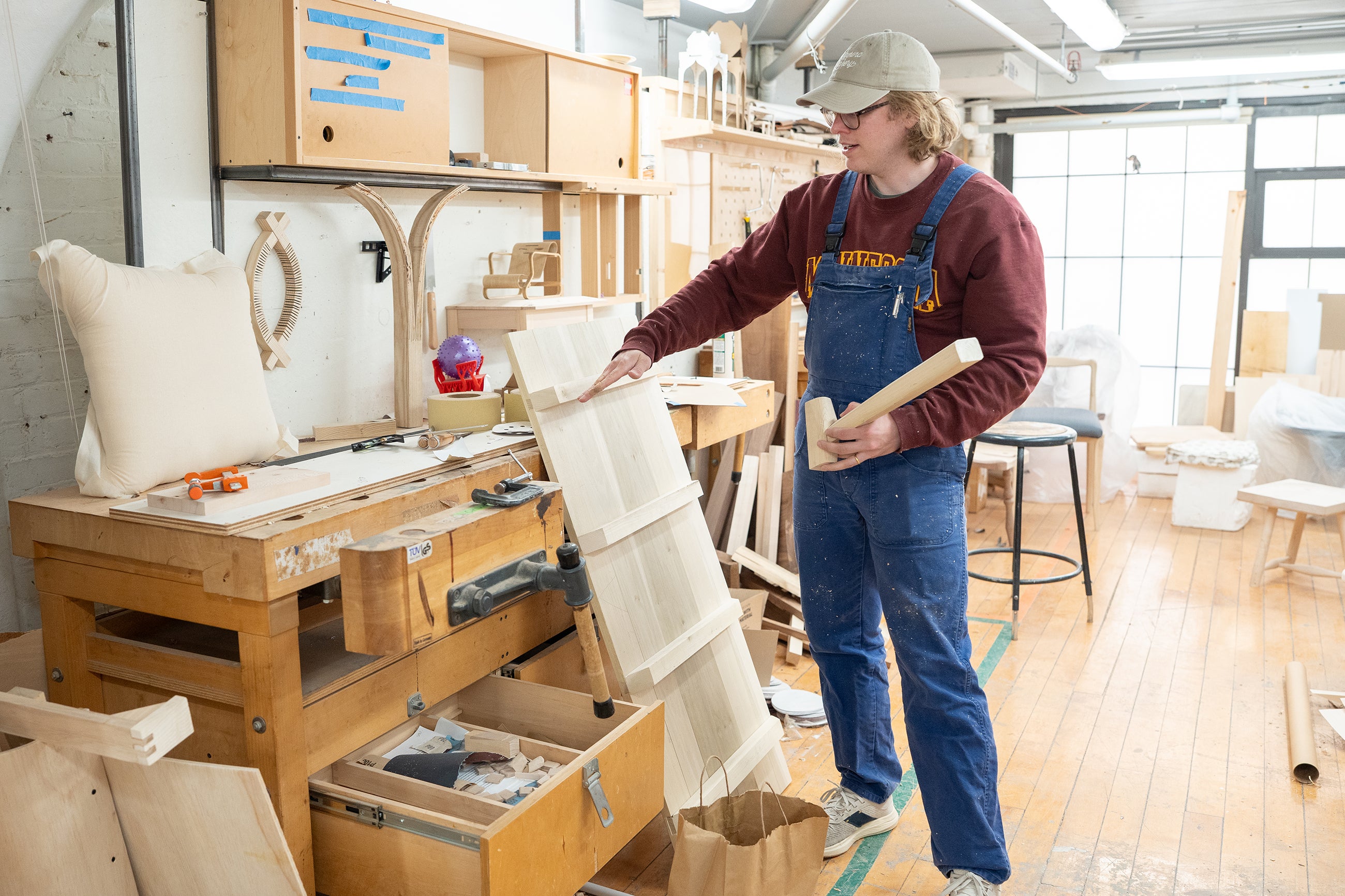
McKenzie Robida MFA 27 FD studied the house’s drawing room before coming up with a table, mocked up in poplar, featuring tapered sliding dovetails. “Lippitt House was built at the peak of Colonialism, when kids had to work in the textile mills,” he says. “I’m not keen on those suppressive values and decided to subvert the assignment by making something less ornate.”
Russ Fogle MFA 27 FD also focused on the industry that financed the house’s construction and created a digital clock for the drawing room reflecting on the concept of time. “Industrialists in the 1800s used time as a means of control,” he explains. “We toured Slater Mill in Pawtucket as part of our research and learned that wristwatches were not allowed, basically so that managers could short-change the workers on breaks.” His wall-mounted clock taps into a Google doc in which he painstakingly typed in each minute of the day to be replayed in perpetuity.
“Each of the domestic objects the students designed responds to the rich history of the Lippitt House while proposing new, critical relationships between object, occupant, and broader contexts,” Takagi notes.
At the end of the semester, the class shared their final projects with Furniture Design department faculty members and visiting critics from Lippitt House Museum, Director Cathy Saunders and Communications and Events Manager Jane Bird. The group was blown away by a tubular floor lamp for the Lippitt House library created by Chuheng He MFA 27 FD that changes color with the touch of a hand. “Questioning the idea of transporting light as energy, this project proposes to treat light as a natural physical phenomenon,” says He.
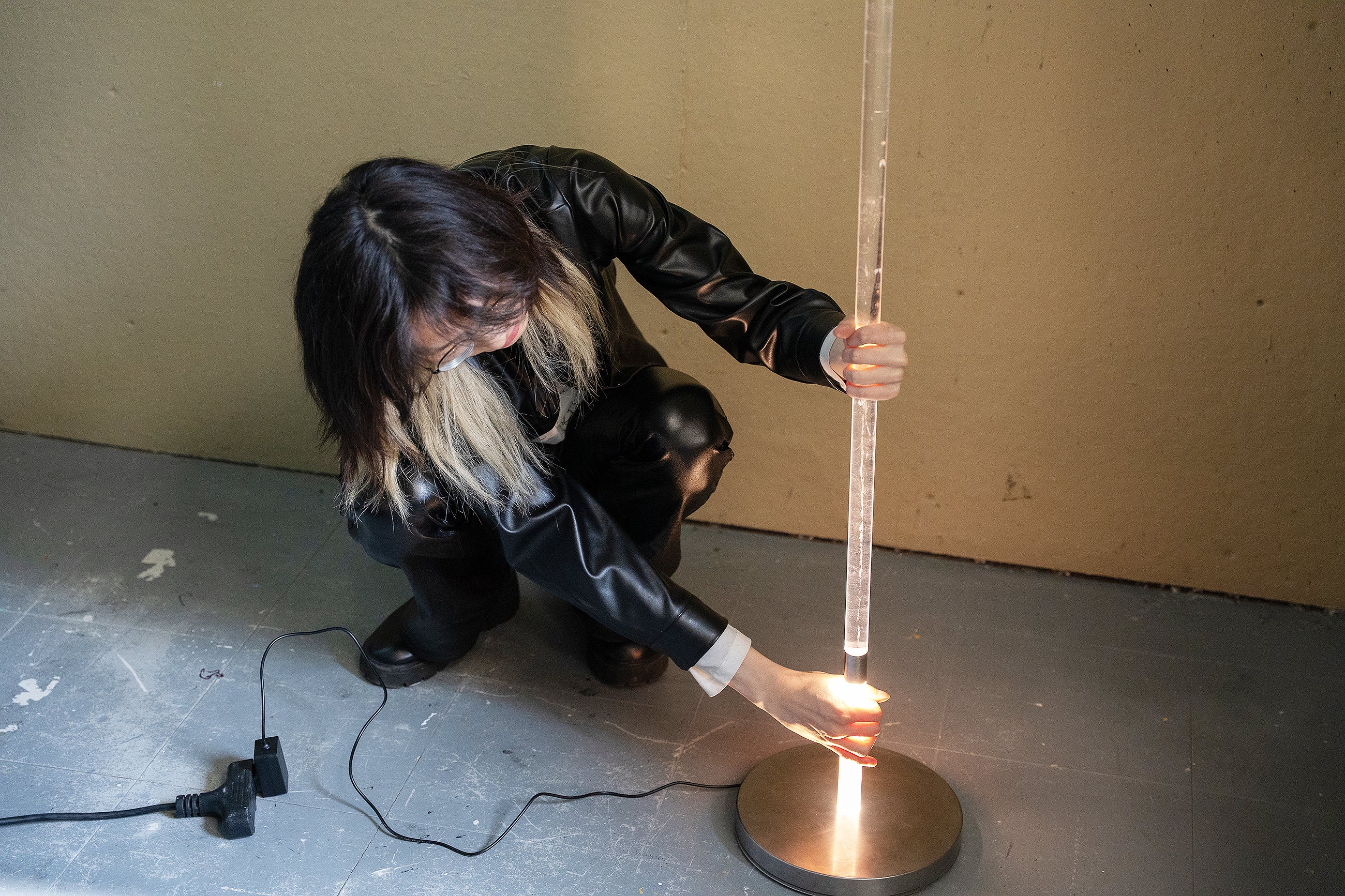
Graduate Program Director Pete Oyler MFA 09 FD described the work as ready for production, adding “the lighting industry would be all over this. This is a really strong proof of concept.” Bird pointed out that the original gas-powered chandeliers in the house and others like it were known for leaking and may explain why so many Victorian-era people saw ghosts.
Takagi is looking forward to sharing the student work with other members of the Lippitt House Museum staff and the general public via an exhibition at the museum planned for this fall. And he’s proud of the class for using the collaboration to push their visions and design choices, tapping into “historical, archival, spatial, and contemporary sources to generate informed and focused design proposals.”
Simone Solondz / photos by Kaylee Pugliese
June 10, 2026
A mix of Furniture Design and Architecture students, the class is designing and building furniture pieces that reference Kahn’s love of geometric forms and natural light.

A spring semester studio explores the design process as a comprehensive arc, from research and ideation through development, prototyping and implementation.

Offered through the Furniture Design department, In Situ: Design in Context encourages experimentation and hands-on making as well as the use of digital tools.