
Student interventions transform the Front Street Family Center in Woonsocket, RI into a celebration of food, wellness, and community.

An interdisciplinary spring course at RISD explores the networks of interdependencies and contradictions that make up the contemporary post-industrial city. Using as a template the East River area of Pawtucket—including the now empty Memorial Hospital site—Interior Architecture and Landscape Architecture students are mapping the forces that have shaped the neighborhood over time and reenvisioning it to serve as a community-oriented hub for local residents.
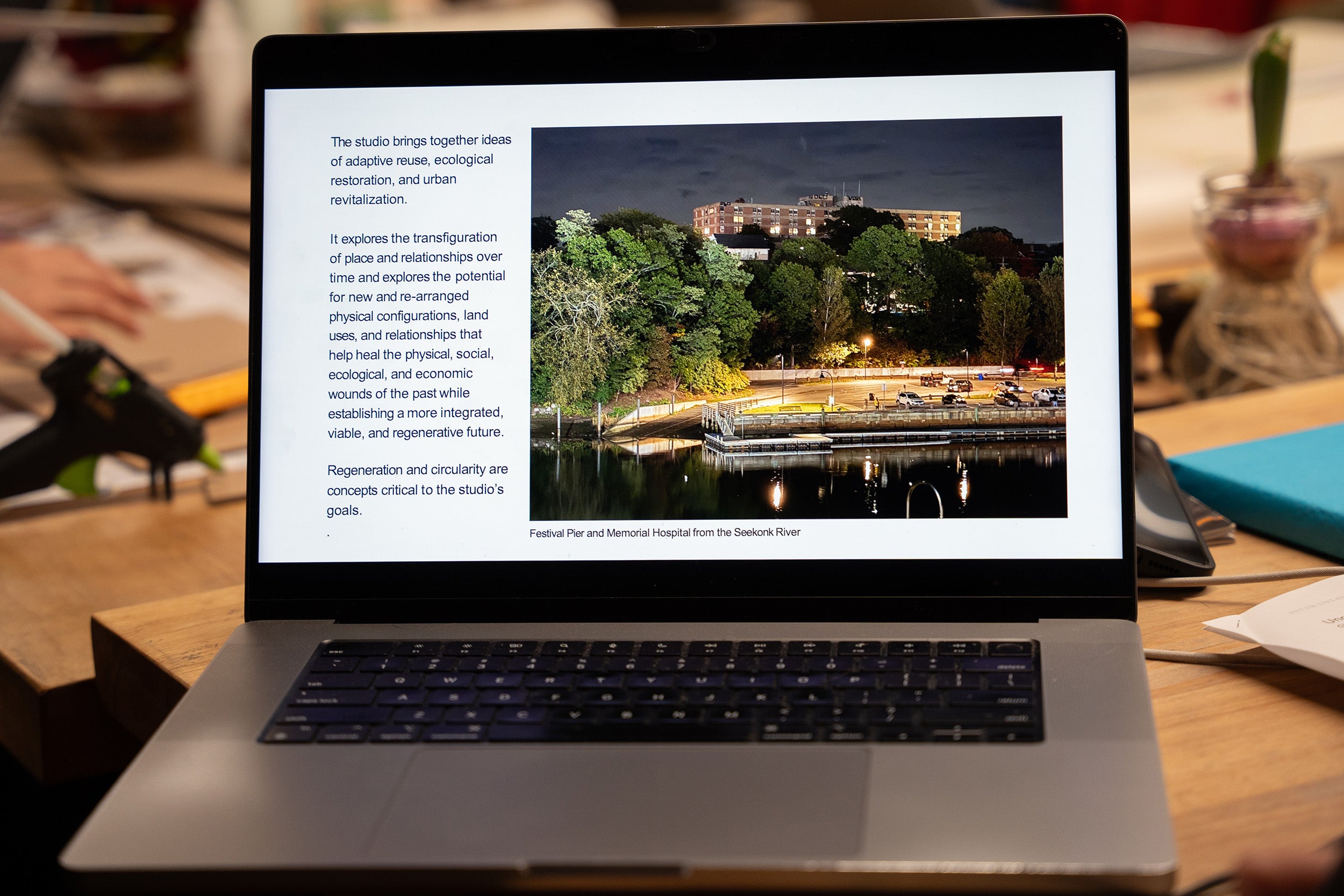
“The once coherent urban fabric has undergone the effects of physical disruption, social fracturing, a faltering economy, disinvestment, and serious environmental degradation,” says Landscape Architecture Professor Elizabeth Hermann, who is coteaching the course with Interior Architecture faculty member Jonathan Bell. “Our studio examines the transfiguration of place and relationships over time and the potential for new and rearranged waste, energy, and water systems, land uses, and programming to help heal the physical, social, ecological, and economic wounds of the past while establishing a more integrated, viable, and regenerative future.”
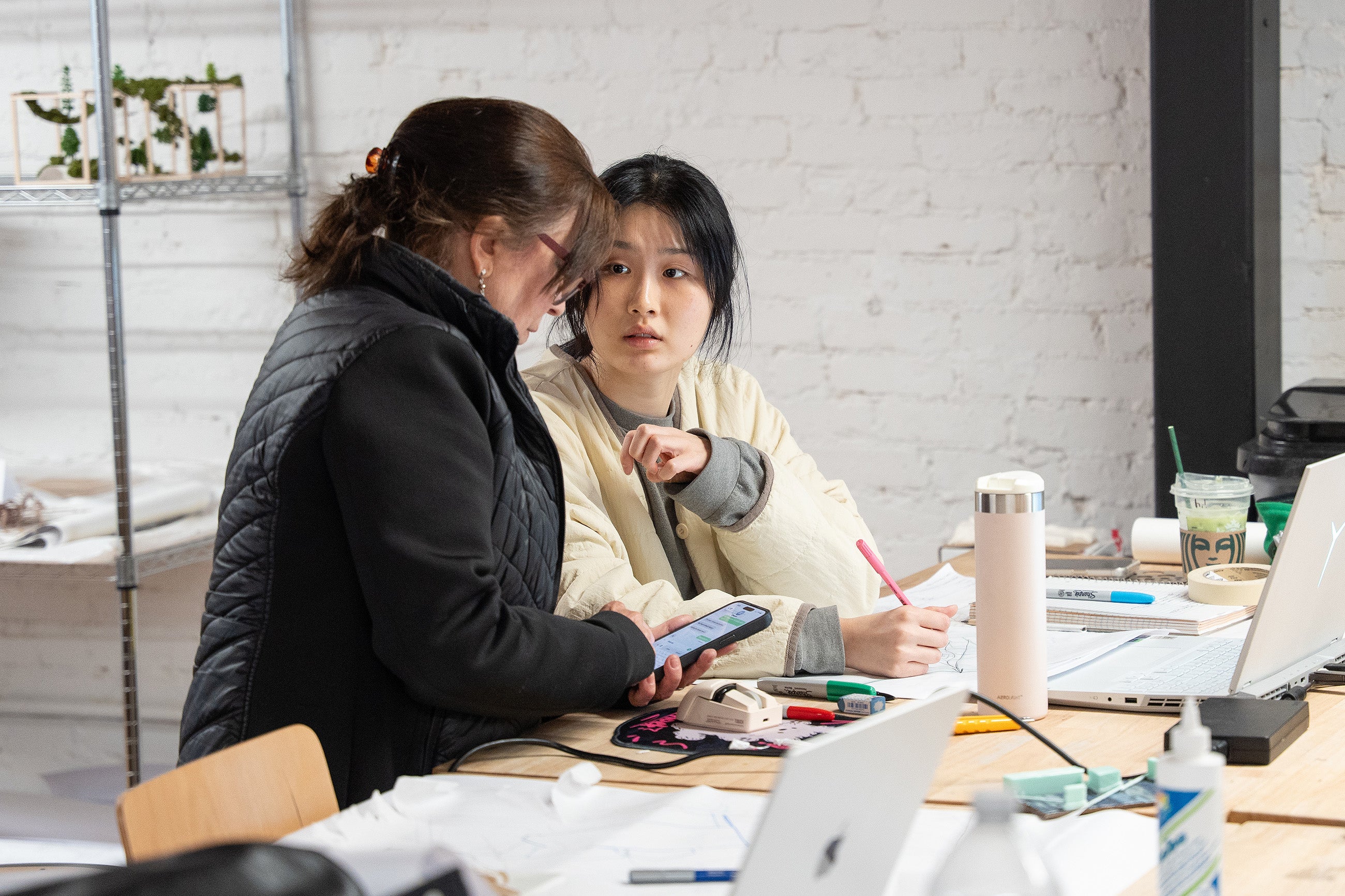
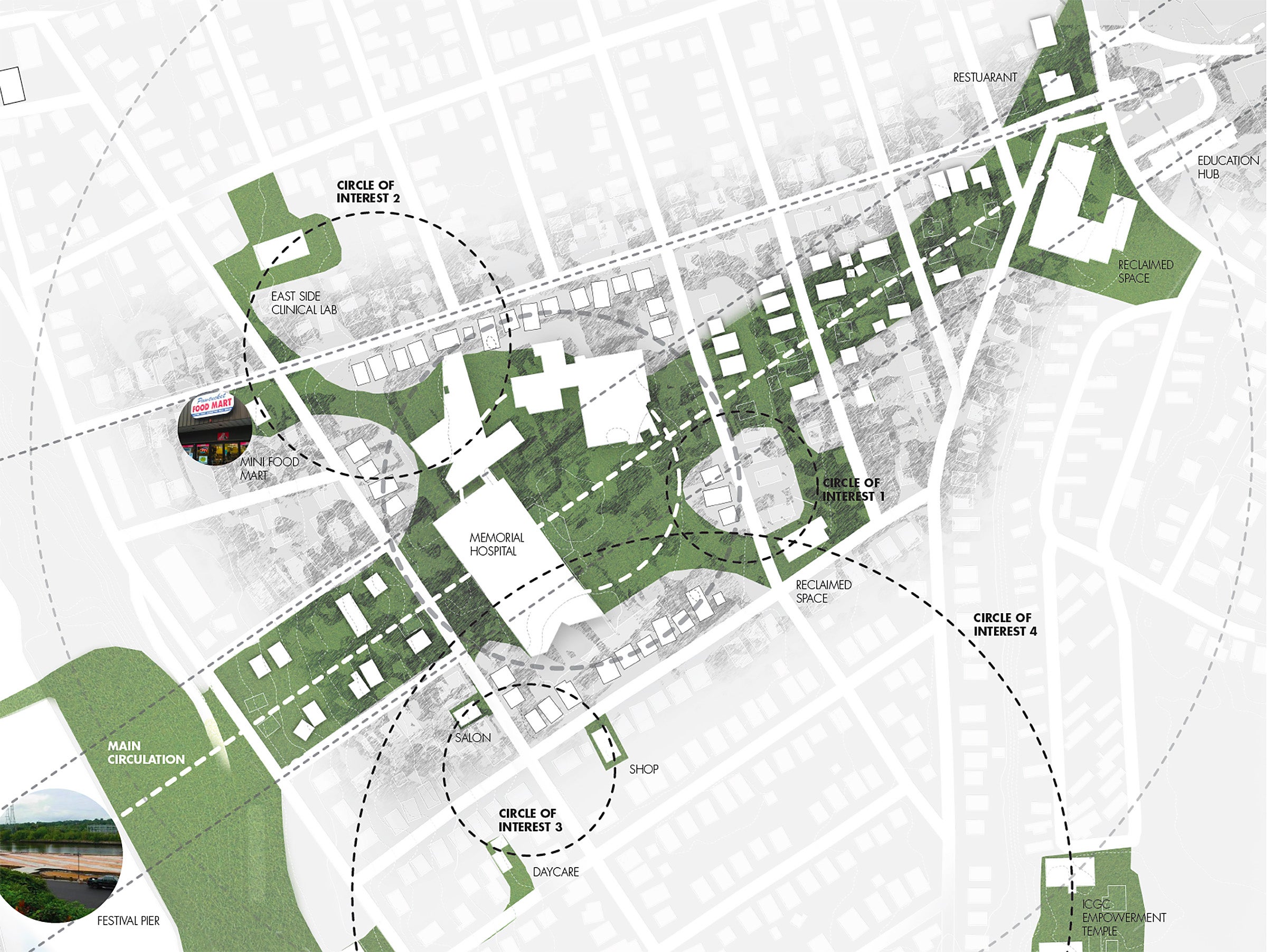
Each student is determining which aspects of the site they want to focus on and what the reimagined place might contribute to local residents going forward. Since the assignment is purely speculative, they do not need to consider budget constraints, although they are expected to propose real-world, civic-minded interventions that consider such things as the scale of the neighborhood, zoning, waste management, and community amenities.
“A new high school is under construction where the old PawSox baseball stadium was,” Bell notes, “which will create a kind of educational cluster. And the city of Pawtucket is developing the waterfront neighborhood as well, with the recently built soccer stadium, a pedestrian bridge, and new housing in the works.”
Students had the opportunity to walk around the site—a hodgepodge of industrial storage facilities, loading docks used by trucking companies, one-, two-, and three-family houses, and brownfields—but were not allowed to enter the hospital building. Several of them are considering moving existing buildings and watched this time-lapse video of the Sharpe House at Brown University being moved in 2018 to get a sense of how it might be done.
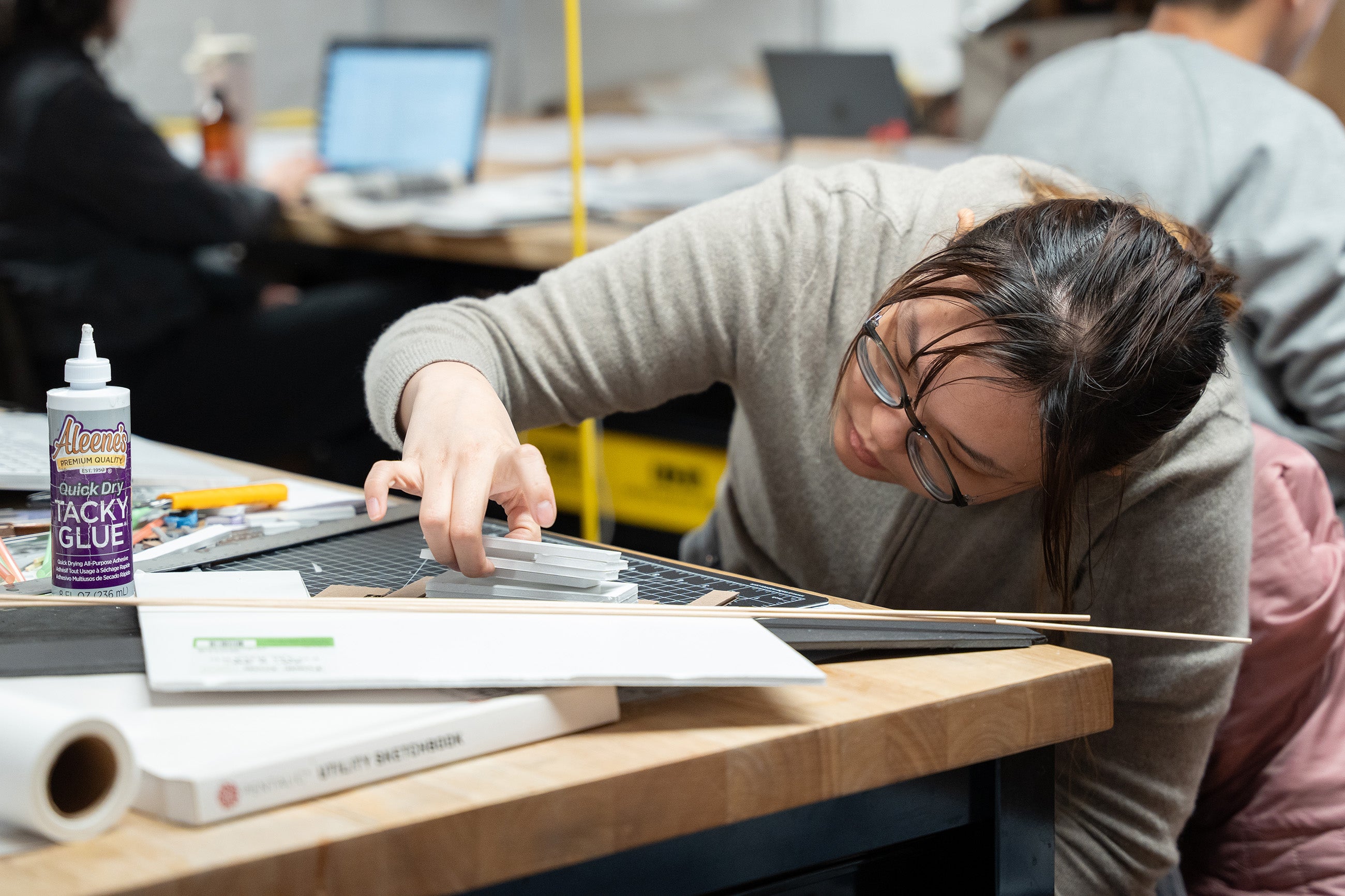
Junior Zoë Scarlett 27 IA would like to leave part of the hospital structure standing but cut through its walls to create access. “In a way, I’m connecting the circulation of the building with the circulation of the surrounding neighborhood,” she explains. She also wants to create a healing garden that local residents would have access to, a small commercial district, and an educational hub for school-age residents.
Grad student Gabrielle Gehler MLA 27 also envisions a greenway and a nursery, but she imagines growing plant species that are able to bioremediate heavy metals and other pollutants in the area. “Programming could include educating the residents to maintain the nursery and export the plants across the city,” she notes.
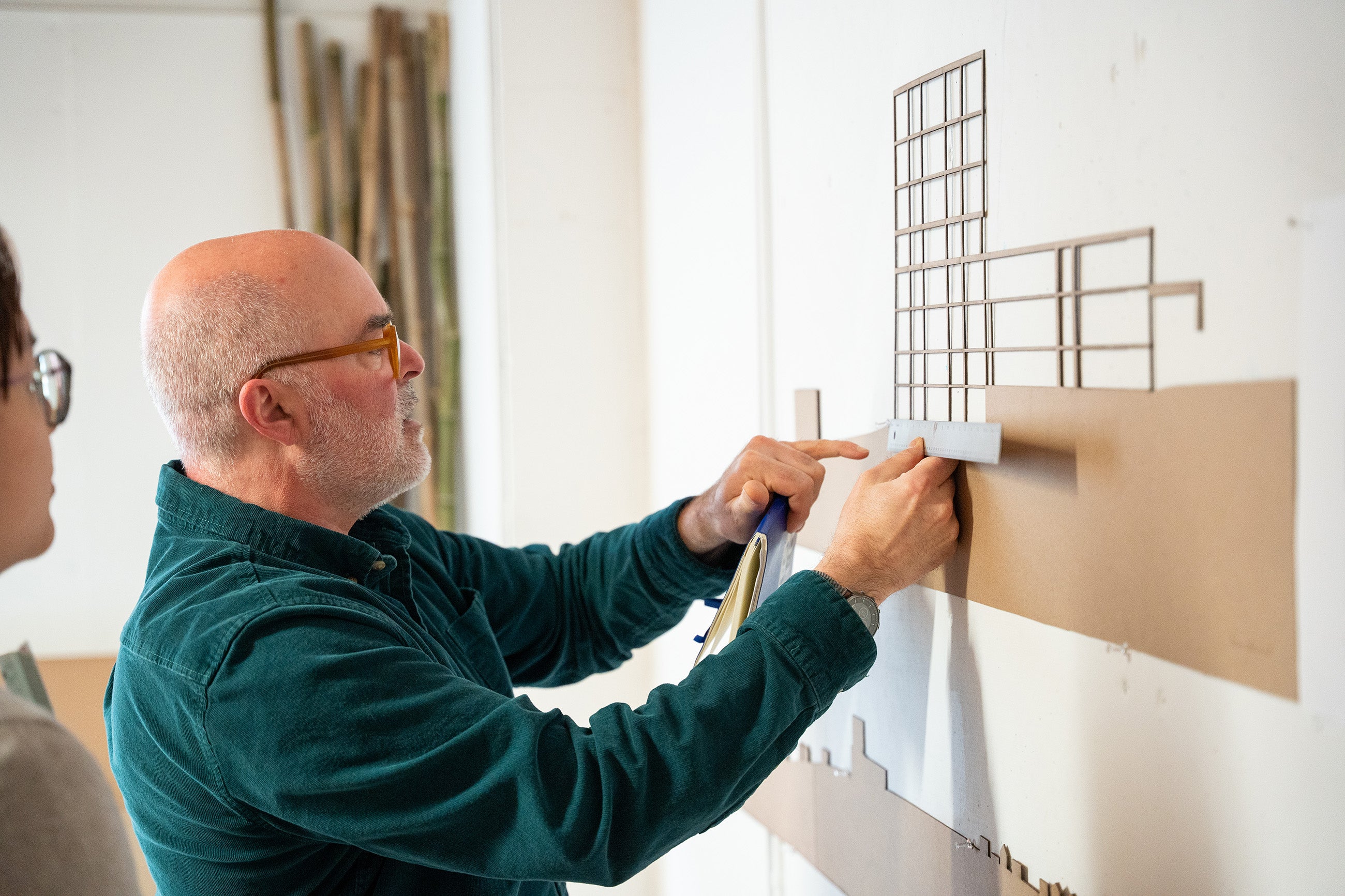
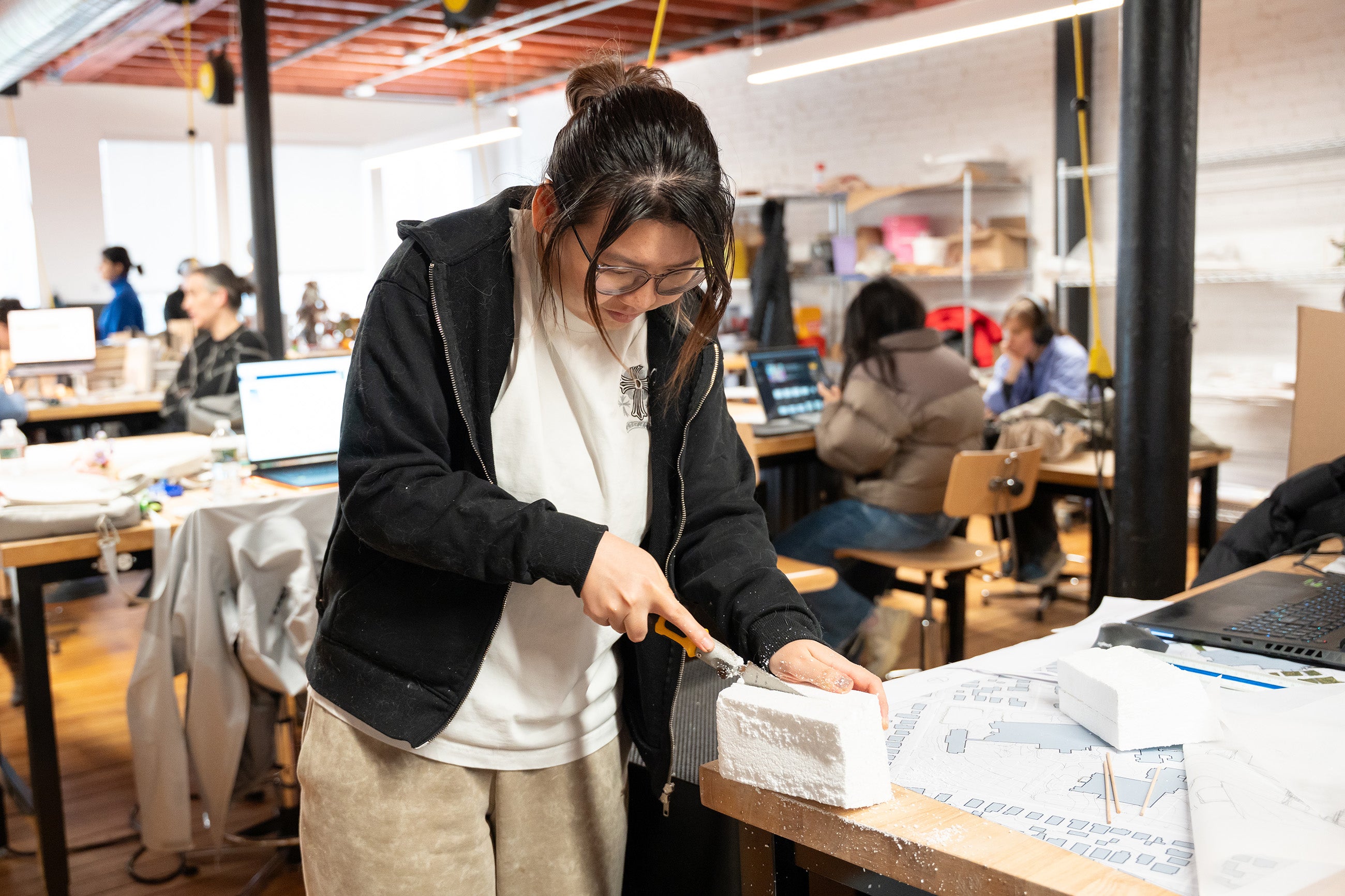
Fellow grad student Zheng Zhu MLA 27 is considering airflow, passive and active cooling systems, and natural runoff as she develops her proposal. The hospital sits on top of a hill, so rainwater moves quickly into storm drains and to a nearby water treatment facility that is strained from overuse. Zhu’s project would harness that runoff and pump it into the garden she is proposing, perhaps using a human-powered system operated via stationary bicycles. “Together, these strategies suggest a framework in which runoff management, flood mitigation, habitat creation, and public access are integrated into one regenerative landscape system,” she explains.
Bell and Hermann are excited about the thoughtful concepts the students are working on. “They’re coming up with so many cool, generative approaches,” says Bell. “Zheng’s plan to capture and reuse water productively is a great example.”
Simone Solondz / photos by Kaylee Pugliese
April 16, 2026
Student interventions transform the Front Street Family Center in Woonsocket, RI into a celebration of food, wellness, and community.

A spring adaptive reuse studio offers hands-on experience navigating the unique circumstances architects face working with historically significant structures.

Landscape Architecture students develop environmentally just proposals for managing sea-level rise in the Narragansett Bay as part of the Envision Resilience Challenge.