
Offered through the Film/Animation/Video department, the course explored the role of movement in public projections that breathe new life into the built environment.

The poor image is a copy in motion. Its quality is bad, its resolution substandard. As it accelerates, it deteriorates. It is a ghost of an image, a preview, a thumbnail, an errant idea. … It is about defiance and appropriation just as it is about conformism and exploitation. In short: it is about reality.
So wrote acclaimed filmmaker Hito Styerl in an essay called In Defense of the Poor Image. Her words inspired artist Hunter Whitaker-Morrow—currently a research fellow in the Movement Lab housed in RISD’s Film/Animation/Video department—to develop The Transforming Image, a Wintersession course that pushed the boundaries of digital video production.
“I would characterize the work of the class as approaching digital video as a medium for expression rather than a form of narrative,” Whitaker-Morrow explains. “We worked to recognize the material qualities of video, like pixel movement and electronic impulses, and considered how the devices we use mediate our experiences.”
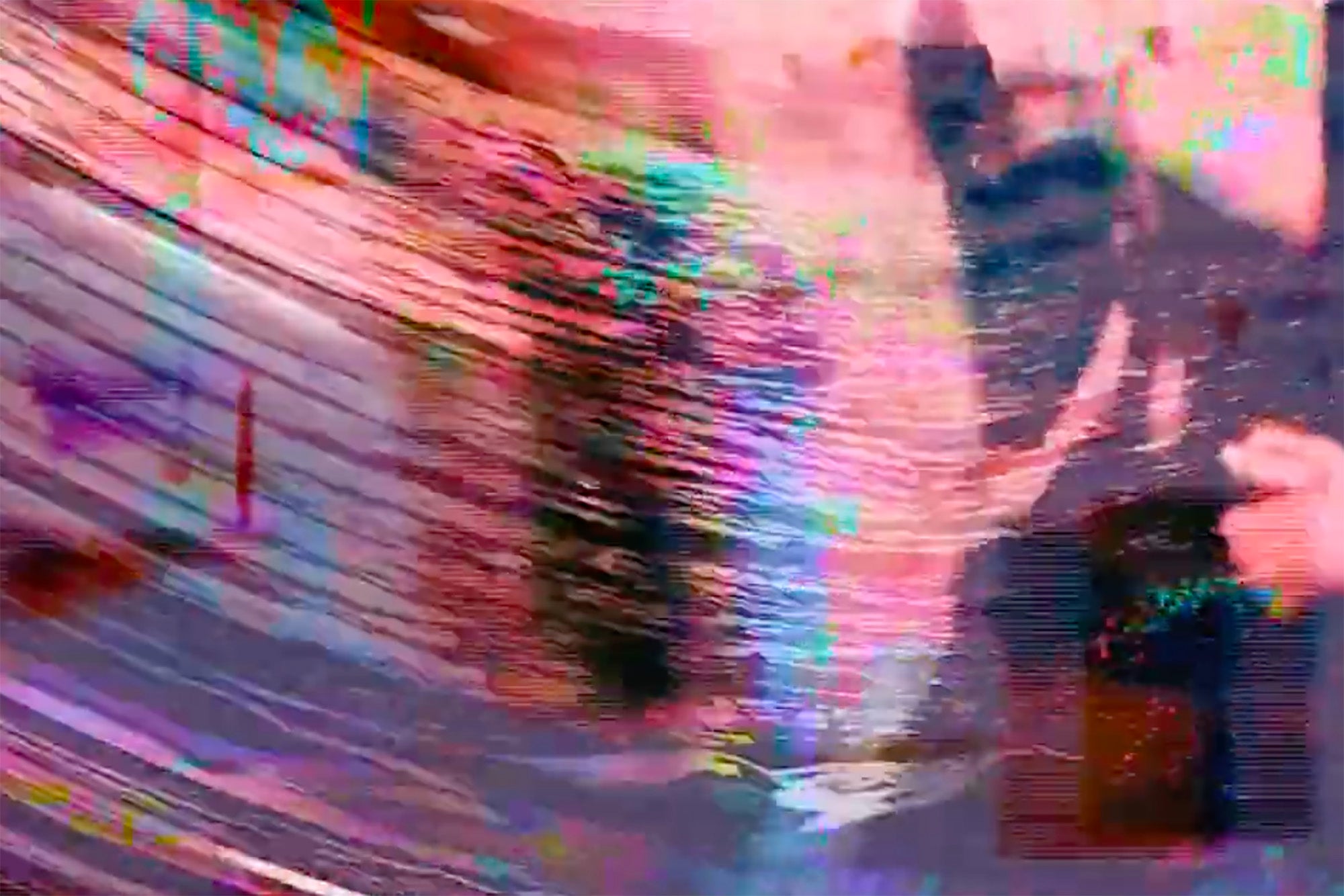
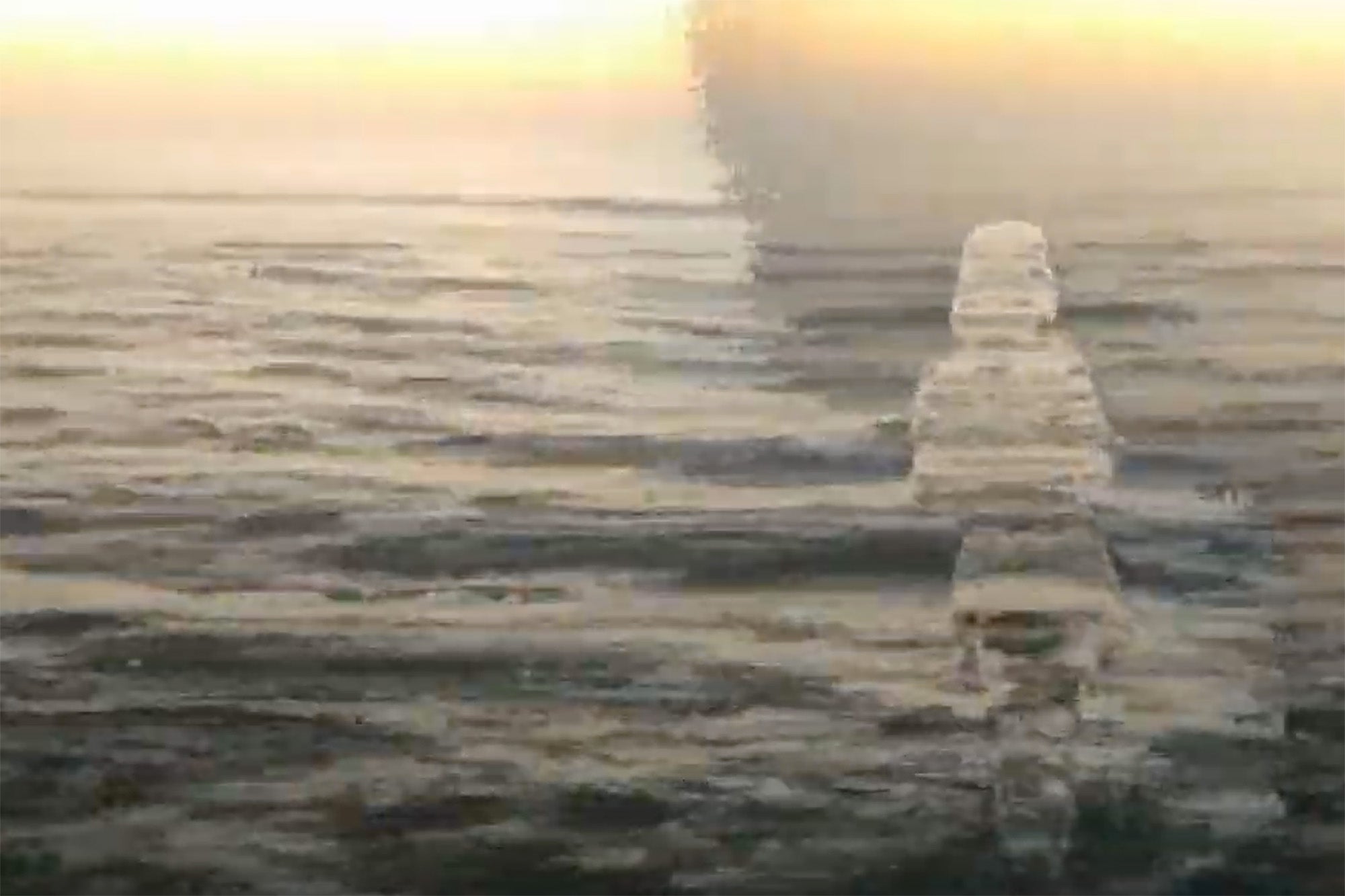
Advancing the exploratory ethos of early video art, the course invited students to probe new possibilities for experimentation against the contemporary backdrop of ubiquitous access to smartphones and production capabilities. It introduced a range of tools for manipulating digital signals intended to open new avenues of exploration.
After providing the class with historical, conceptual, and technical grounding in the medium, Whitaker-Morrow introduced a series of assignments intended to spark students’ imaginations. In one they were tasked with selecting three words from a list of verbs and recording videos demonstrating their actions in different ways. In another, they were asked to pick a physical spot to stand on and capture an unexpected occurrence with their phones.
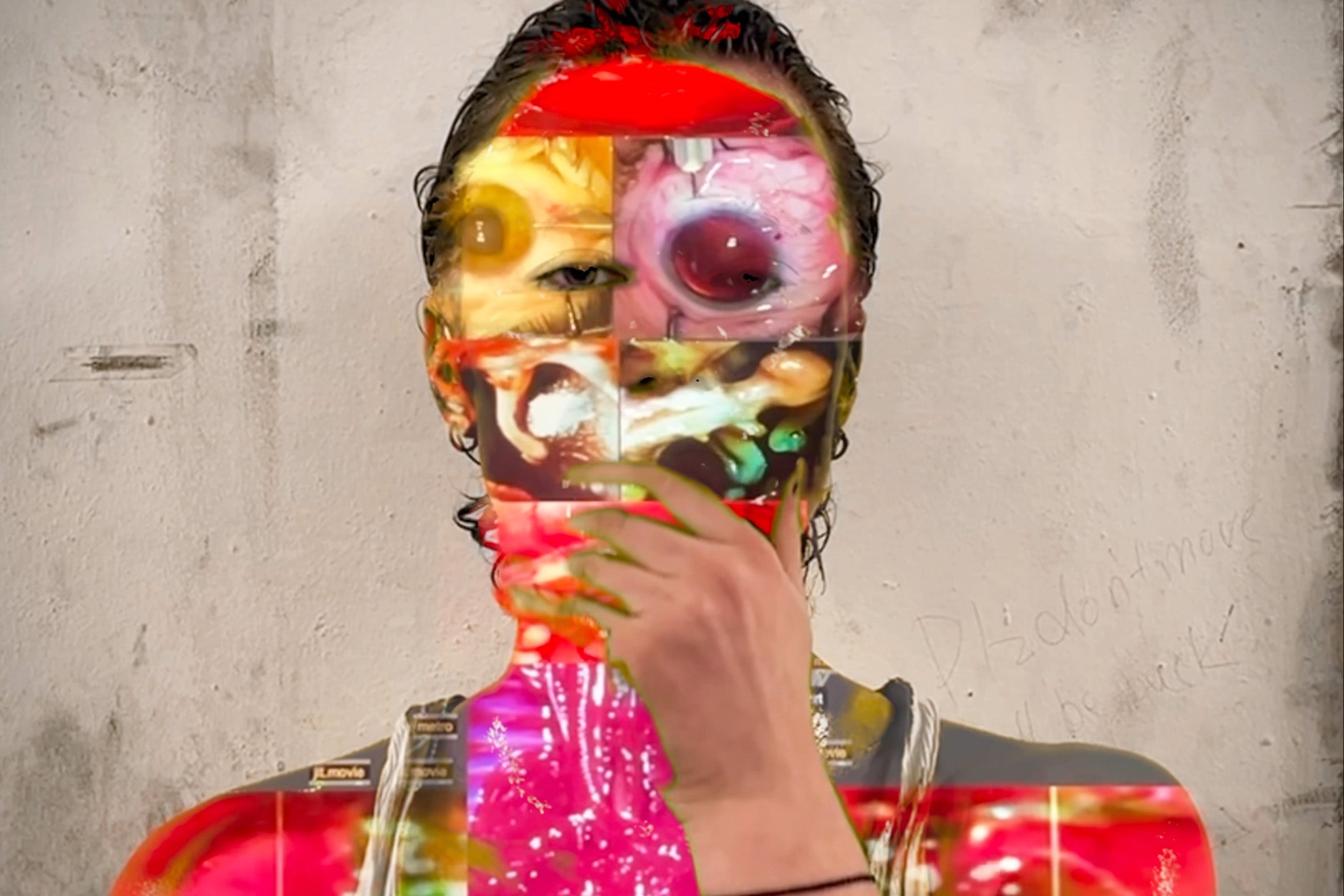
By the end of Wintersession, each student had created an experimental project incorporating video and audio that defied their previous expectations. First-year student Tallulah Mankins 29 EFS created a green screen effect by smearing green paint across her face and chest and used Adobe Premiere to project interior anatomy videos onto her body. “I tried to find footage of body interiors that wasn’t too gruesome,” she explained to the class during final critiques.
Grad student Elysia Perkins MFA 27 PH shared an abstract video featuring moving bodies, sunlight, and shadows. As the piece progressed, the images overlapped and became more and more distorted. “It’s beautiful,” one of her classmates commented. “I like how it grows and evolves, getting crazier and crazier.” Another student likened the experience of watching the film to looking into a microscope.
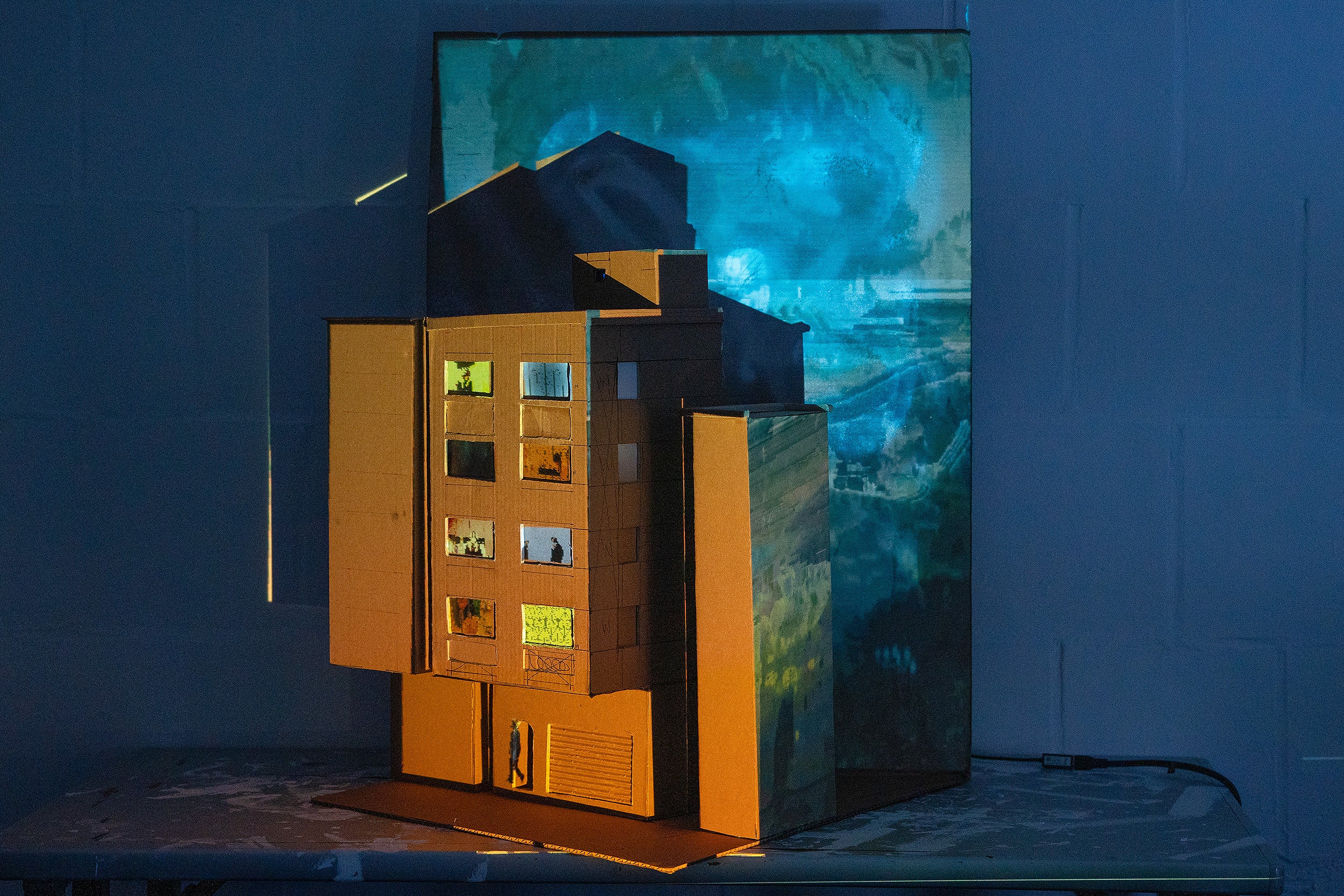
First-year student Isabella Cheung 29 EFS went in a different direction with her final project, simultaneously projecting different videos onto the door and windows of a cardboard building she made, creating an immersive installation. A hidden camera captured students watching the piece and projected a live feed of their image into one of the windows. The soundtrack incorporated traffic noise, snippets of conversation, someone playing a piano—pushing the artist’s “slice of life” concept even further.
Meanwhile, students enrolled in the other Wintersession Movement Lab offering, Transversal Storytelling, focused on using stories to bring together seemingly unrelated elements into “a convergence of poetic resonance.” Developed and taught by filmmaker Patrick Buhr, the course explored how transversal lines cut across worlds, moving through unexpected spaces, ideas, people, and moments. It encouraged students to explore how such crossings can inspire new forms of expanded storytelling and technique, creating meaningful transitions and intersections.
Top image: still from Hard to Remember by junior Caroline Carcamo
Simone Solondz
March 12, 2026
Offered through the Film/Animation/Video department, the course explored the role of movement in public projections that breathe new life into the built environment.

Film/Animation/Video students presented their final projects in December, considering such aspects as camera angle, composition, pacing, and framing.

Students considered how sound can serve as a spatial and experiential medium, guiding attention, shifting atmosphere, and provoking new forms of encounter.