
Students considered how sound can serve as a spatial and experiential medium, guiding attention, shifting atmosphere, and provoking new forms of encounter.

“I wanted to create a popup monument in the form of a projection riffing off the merchandise that was traded and sold at Market House in the 18th century,” senior York Mgbejume 26 IL explained to guest critics at an early February gathering. “I used a type treatment and pattern design to educate people about the goods that were once sold here and the fact that people were also treated as merchandise.” He went on to explain that Providence’s economic prosperity was built on the transatlantic slave trade in the late 1700s “right here in our backyard.”
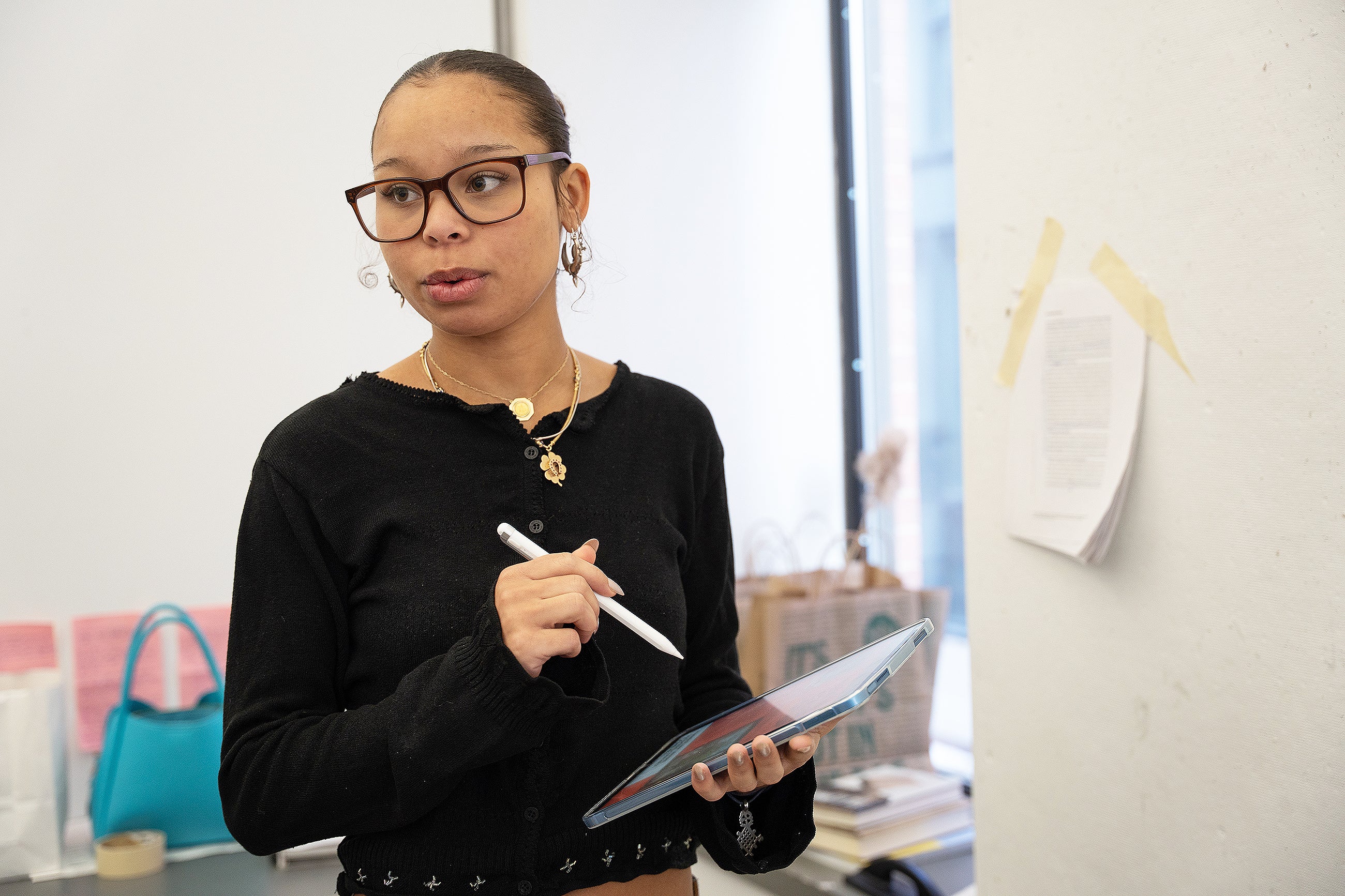
Mgbejume is one of eight students inspired by a Wintersession course called Monumental: Reimagining Memory and Storytelling led by faculty member Rene Payne 83 GD. In her design practice, Payne has worked on a wide range of Civil Rights-related projects, including ongoing work with the Emmett Till Memory Project, Black Press @200, and Daughters of the Movement, a multigenerational sisterhood that advocates for social justice in order to inspire, empower, and activate future generations.
Interdisciplinary in scope, the course she developed wove together research, discussion, and studio practice in collaboration with partners beyond the classroom, including RISD’s Katherine Cooper in Academic & Creative Partnerships and the Social Equity and Inclusion division. “Students engaged with community leaders, national nonprofits, and initiatives such as Monument Lab in Philadelphia, a nonprofit public art, history, and design studio,” Payne said. “Each of them was asked to produce an intervention addressing commemoration and the ways in which we preserve, question, and expand on shared, layered histories.”
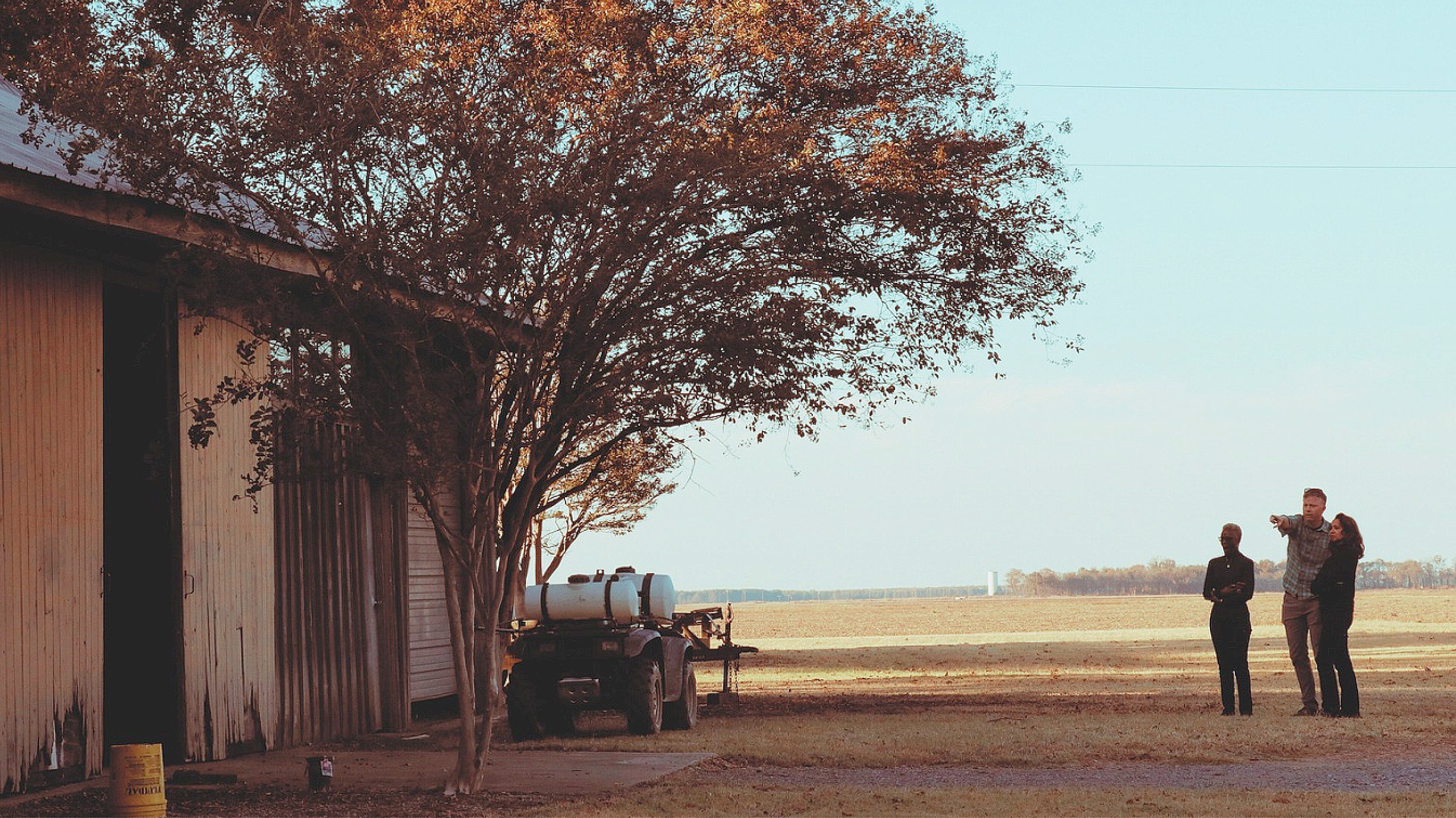
Students in the class were given the rare opportunity to engage directly with primary sources of historical information, including Reverend Parker Wheeler, Jr., the last living witness to the abduction of his then 14-year-old cousin Emmett Till in 1955. Speaking to the class via Zoom, Wheeler described Till as a “prankster” who was visiting Mississippi from the north and not “entrenched in the ways of the south.” Till made the fatal mistake of whistling at a white woman in town and was subsequently kidnapped by a mob of angry racists, who tortured and murdered him and left his body in the Tallahatchie River.
“The trauma of those events is hard to imagine or explain,” Wheeler told the class. “I’m still trying to make sense of it 70 years later. The people who stood up for what’s right had a fire in their bellies. You want to be counted on the right side. We’ve come a long way, but we’ve still got a lot of work to do to make sure the truth will stand.”
In his quest to preserve truth, first-year student Colin Rice 29 EFS began the term with the desire to focus on his own people, Jews who were slaughtered in World War 2. But the recent shootings of US citizens by federal agents in Minneapolis and across the nation compelled him to shift the focus of his project. He ended up creating a powerful video piece inspired by First They Came, a kind of ode to solidarity written by Pastor Martin Niemöller in 1946.
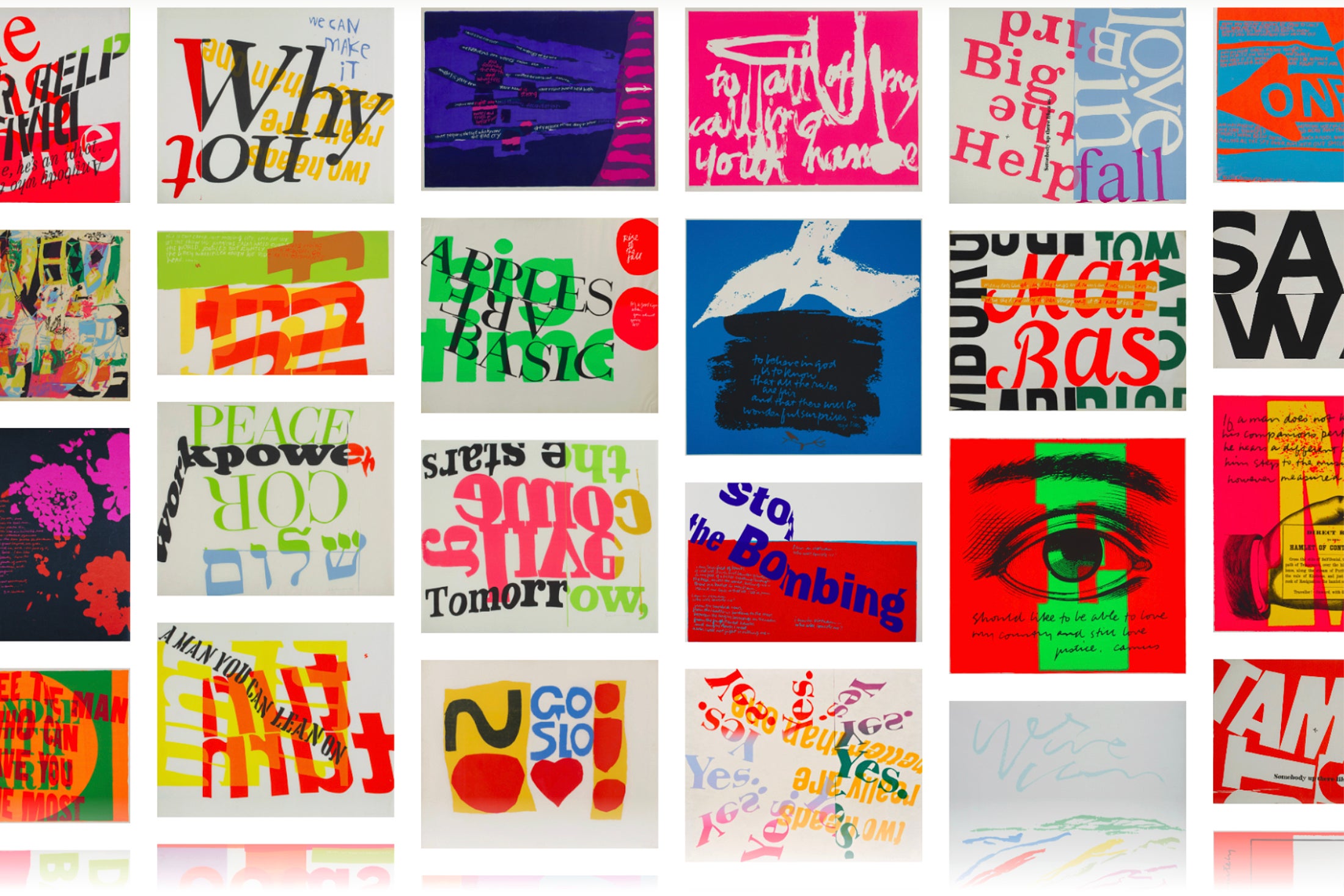
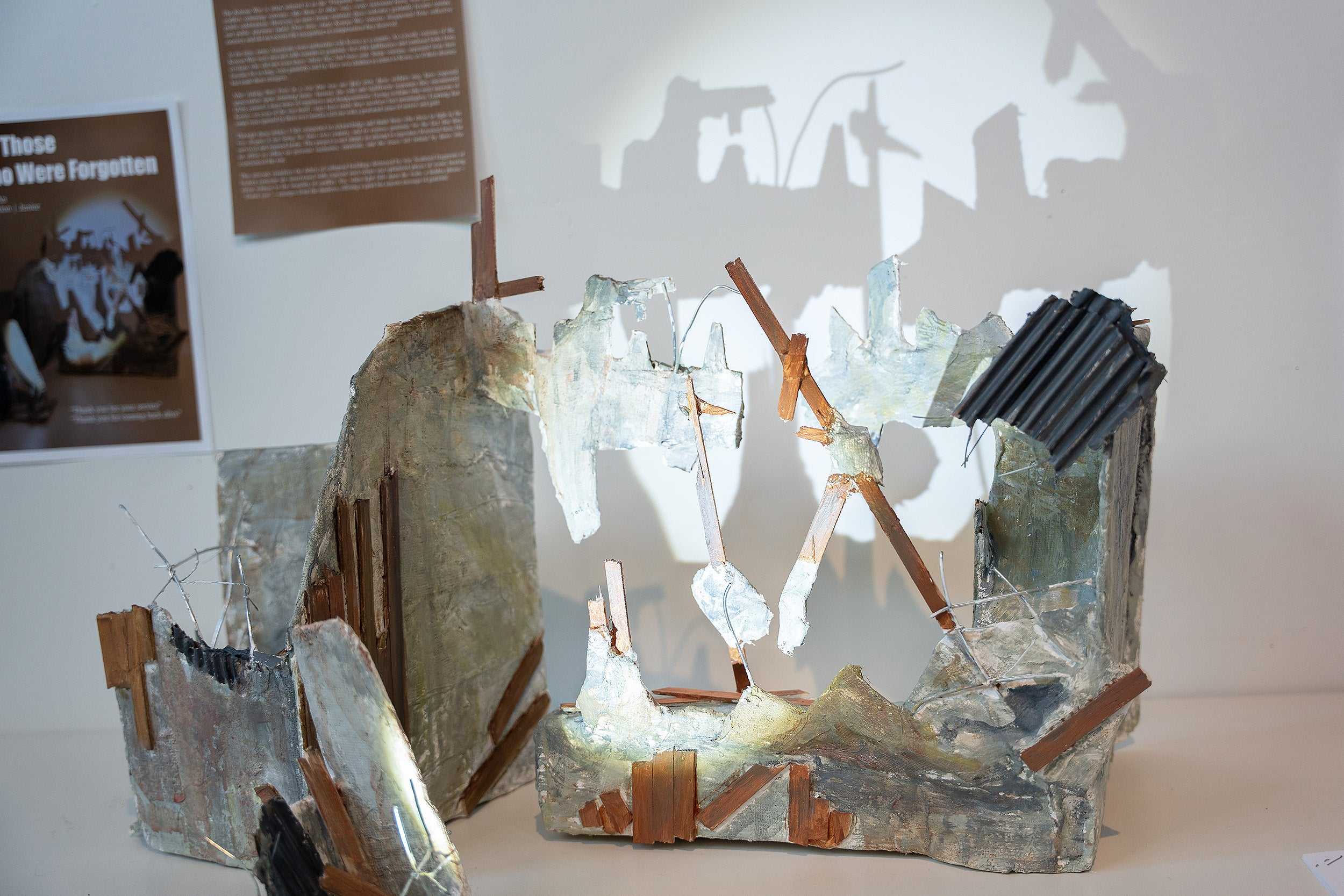
Other student projects focused on paying homage to local activist and educator Michael S. Van Leesten, for whom downtown Providence’s pedestrian bridge was named; enslaved people who worked at Primus House on College Hill but are not mentioned in the official memorial plaque; and Korean War veterans, whose sacrifices have largely been forgotten.
“The goal of the course,” Payne explained, “is keeping alive moments from our collective past that run the risk of being erased. To quote late activist Paul Robeson, artists are gatekeepers of truth. The students in this class developed cohesive campaigns examining the power of monuments and storytelling in service of truth that speaks across generations.”
Top image: work by senior York Mgbejume drawing attention to Providence’s historical involvement in the transatlantic slave trade
Simone Solondz
March 4, 2026
Students considered how sound can serve as a spatial and experiential medium, guiding attention, shifting atmosphere, and provoking new forms of encounter.

Working collaboratively, students are designing and building exhibits in preparation for an immersive show in the Center for Integrative Technologies.

The alum and designer of the classic Cubebot toy robot worked with first-year students in a Wintersession studio focused on iteration and simplicity.