
Students traveled to Ocean Hour Farm in Newport, RI as part of their yearlong investigation into earth-friendly materials like wool.

Island nations are at the forefront of climate change and have the potential to act as incubators and leaders in regenerative design strategies. That’s why husband-and-wife faculty team Jonathan Knowles BArch 84 and Laura Briggs BArch 82—who both teach in RISD’s Architecture department—have teamed up with students, scientists from the University of the Azores, designers from arts organization Walk & Talk, and local artisans to design a butterfly pavilion that demonstrates multiple sustainable initiatives for organic farm Quinta BioKairos Malaca in the Azores.
The Azores, an archipelago in the Atlantic Ocean, are situated about 900 miles west of mainland Portugal. The mission of the farm on São Miguel Island, where the structure will be built, is to promote organic farming and provide training and employment opportunities for people with disabilities. Farm Director Raquel Vargas originally proposed the project for the students’ consideration.
“We began with a 2019 RISD Global summer course on São Miguel that focused on exploring the island’s ecosystem, advances in organic agricultural practices, and pioneering bio-plastic research,” says Knowles. “Since then, we have returned each summer to advance the work with funding from RISD and the Luso American Development Foundation (FLAD).”
“The project combines architectural design, environmental sensibility, and material innovation.”
The majority of the funding—including a Somerson Sustainability Innovation Fund award from RISD and a grant from the Saab Family Foundation—were used to develop sustainable bio-fibers to replace nylon and serve as the enclosure’s netting. Recent Architecture department alums Aleza Epstein MArch 24, Felicia Neuhof MArch 24, and Julia Woznicki MArch 24 worked with University of the Azores biologist Telmo Eleutério to develop fibers using local materials such as brown algae, limpet shells, and food waste.
“The project addresses the urgent environmental challenges posed by nylon production and plastic pollution, particularly in agricultural and marine ecosystems,” Knowles says. “A new $25,000 FLAD grant will support the next stage of the project: building the pavilion itself.”
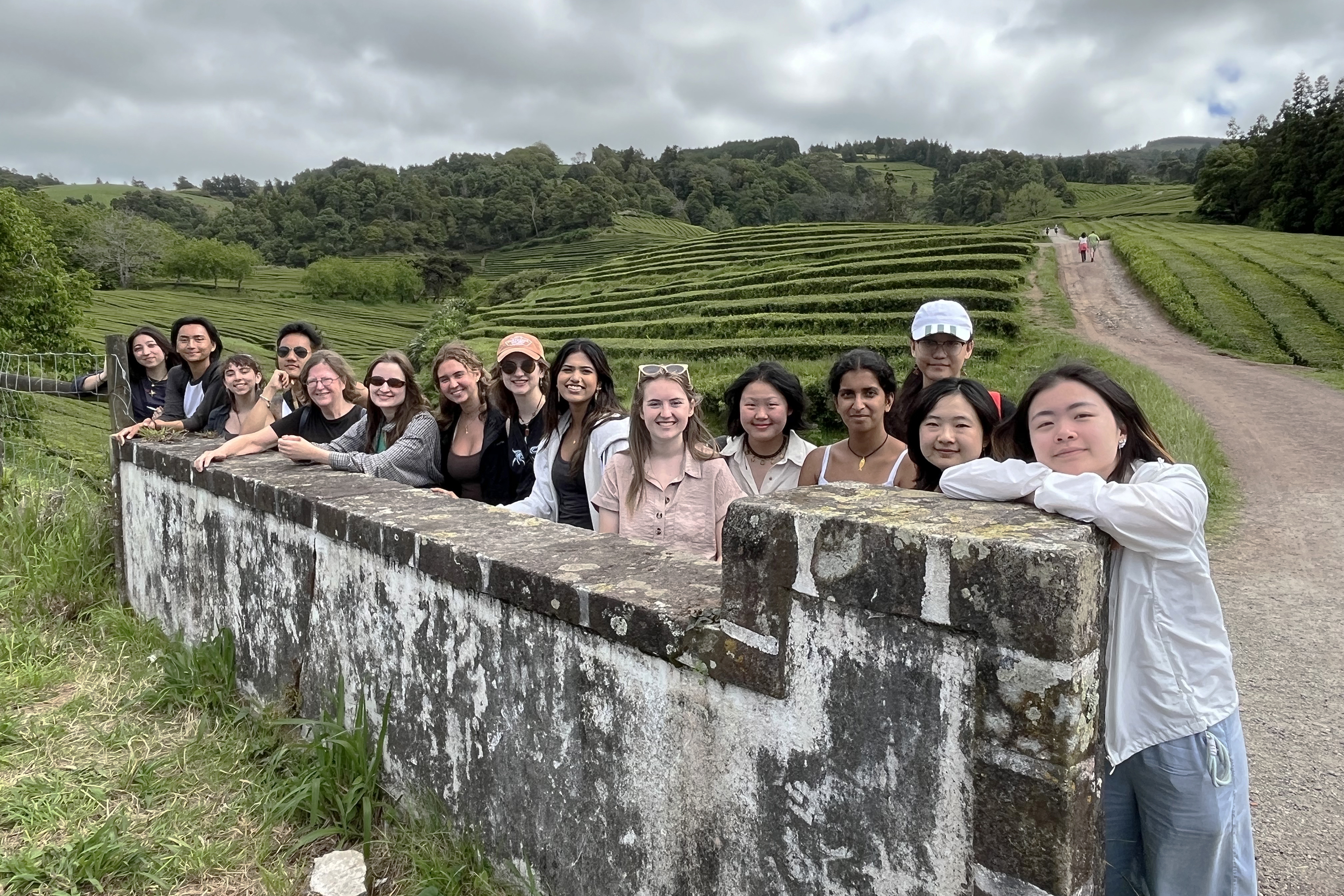
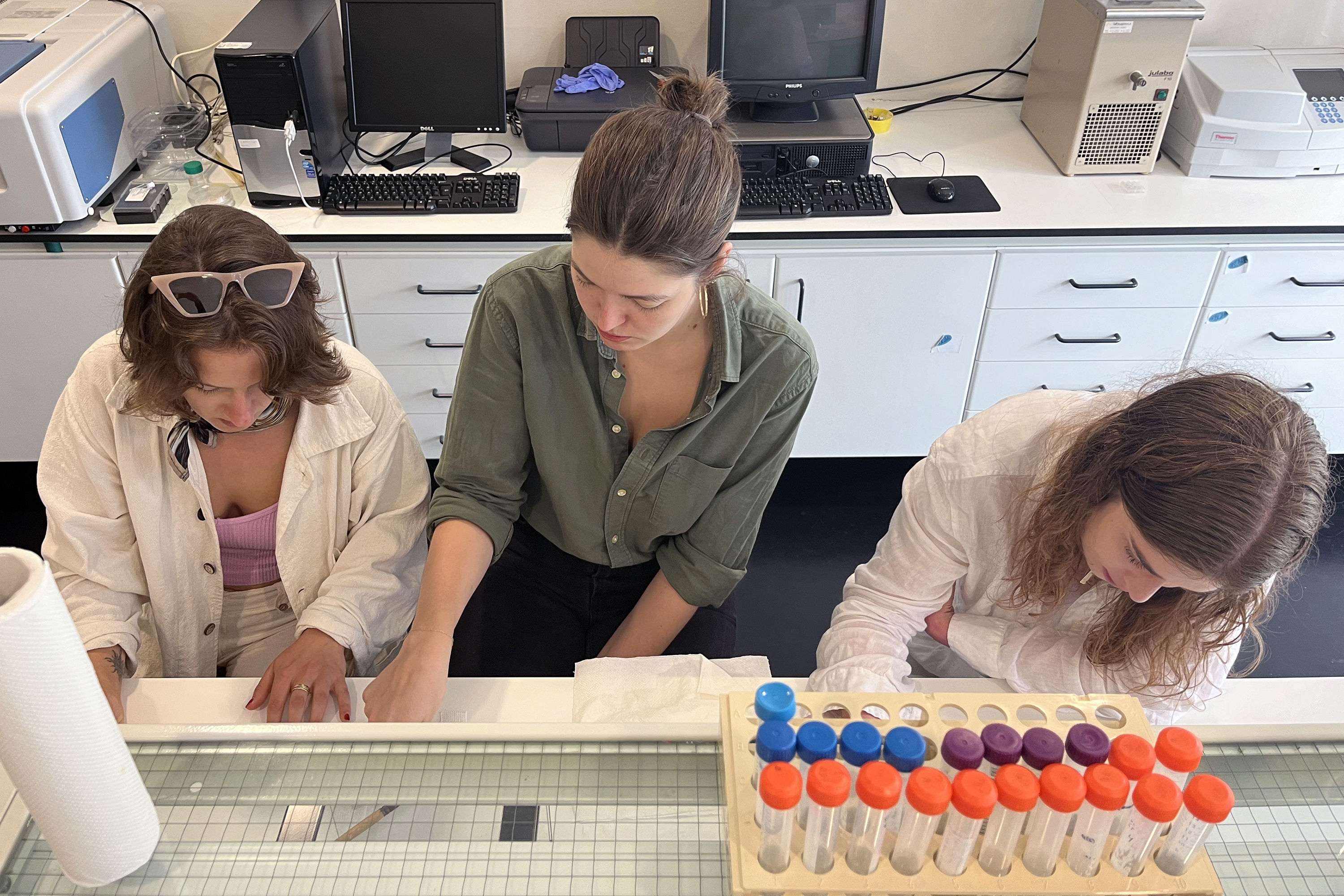
“The partnerships we have developed with local residents have been critical to the work,” says Briggs, “as have the incredible teams of RISD students from various departments that have been involved over the years.”
Grad student Marguerite Kreuzkamp MLA 26 worked on the project last summer and says that the experience was transformative and integrated directly with her landscape architecture practice. “After Commencement, I booked it to Logan Airport, and when I got to the Azores the pieces of my education kind of fell into place,” she recalls. “You learn through practice, and if you get the chance to practice with rock stars like Jonathan and Laura, you become that much better.”
Straddling design, science, and community building, the project began as three separate student proposals, each based on a different area of the site: a valley, a slope, and a hilltop. Inspired by the beauty of butterflies and the stunning location, the students designed structures that intersected with the visitor path while interacting with the natural environment. They brought their findings back to Providence and synthesized the three concepts into one working prototype with the help of research assistants.
Students explored the potential of two materials: cryptomeria—a prevalent cypress used in the Azores for timber production and erosion control—for the structure, and the invasive conteira plant, which can be rendered with lime to produce a sustainable wall assembly, for the lab. “Cryptomeria provides long, straight, lightweight posts that are easy to work with and naturally resistant to water and insects,” Knowles explains. “The biodegradable conteira fiber offers a sustainable solution to multiple building components.”
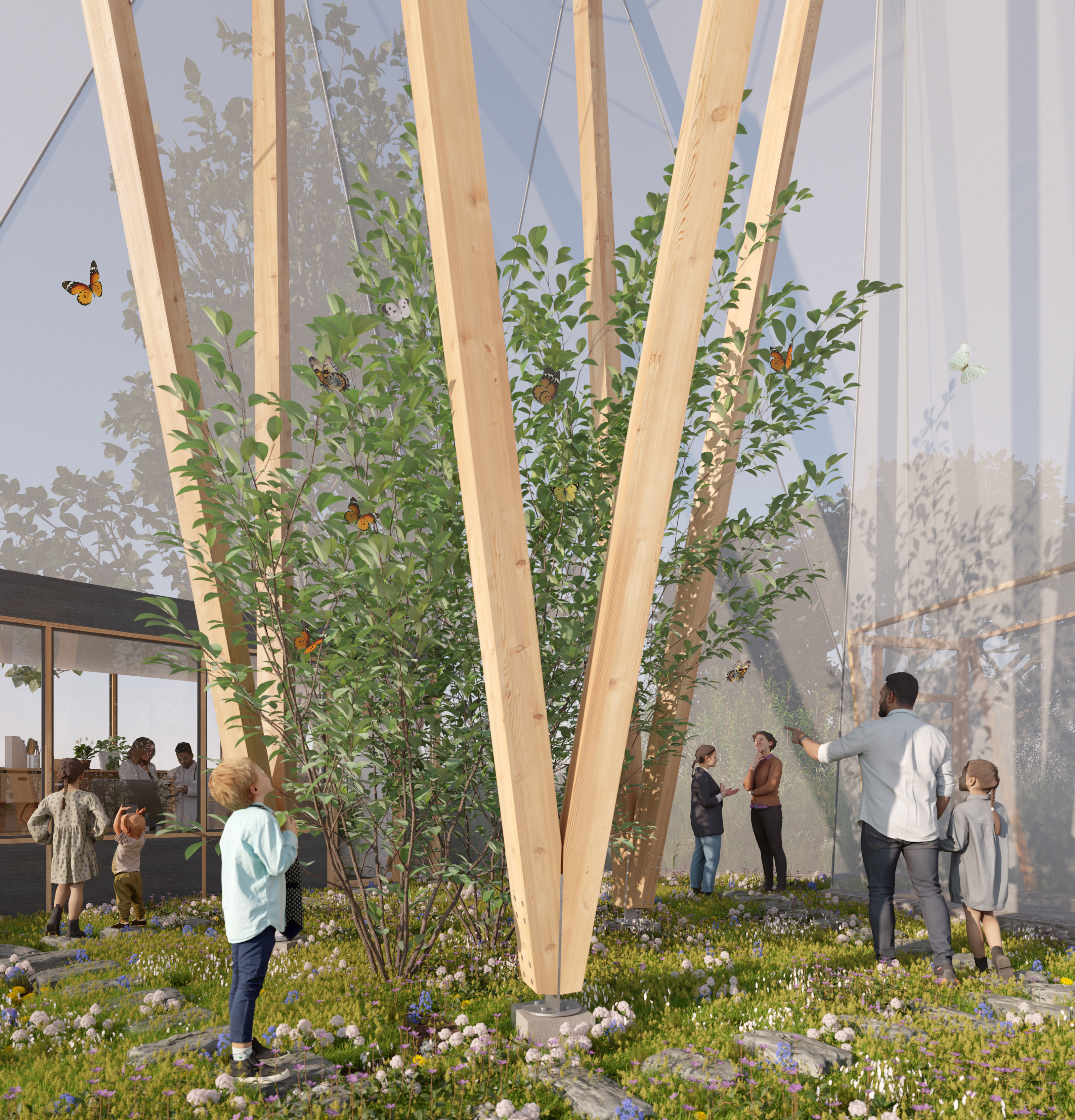
The butterfly pavilion will be located at the southern edge of the farm, with the goal of attracting wild butterflies and bees to support biodiversity. The structure will protect the butterflies from predators while safeguarding the farm’s crops when the butterflies are in their caterpillar stage.
As visitors follow the winding boardwalk downhill, they will encounter the pavilion, whose cryptomeria struts will be draped with the bio-fiber sheathing that forms the butterfly sanctuary. Inside, a garden of companion plants (selected with guidance from RISD’s Nature Lab) will provide food for both native and migratory species, a laboratory utilizing passive and active solar energy, and an incubator that will allow researchers to hatch and care for new inhabitants until they reach maturity.
“The project combines architectural design, environmental sensibility, and material innovation,” says Knowles. “We are continuing to raise funds through the spring and plan to return to the site in the summer to begin construction.”
Simone Solondz / top rendering by Betty Ng BArch 25 and Jay Hwang BArch 27
January 8, 2026
Students traveled to Ocean Hour Farm in Newport, RI as part of their yearlong investigation into earth-friendly materials like wool.

Four ongoing research projects by faculty and recent alums focus on composting, improving the visual data used to drive climate research, sustainable biomaterials and tenants’ rights.

A sponsored spring studio led by Professor Jonathan Knowles took the concept of “clip-on architecture” to new heights.