
Emerging artists and designers worked with TLAD students and community arts educator Jacques Bidon to honor historic Rhode Island figures.

Twelve area K-12 teachers are developing creative ways to bring Rhode Island’s diverse civic and cultural heritage into their classrooms as part of a new federally funded initiative offered through RISD’s Center for Community Partnerships. Headed up by Assistant Professor Caitlin Black, who teaches in RISD’s Teaching + Learning in Art + Design department, Rhode Island Histories in Action combines civic literacy, creativity, critical thinking, and interdisciplinary learning.
Open to educators across the state, the program provides strategies, tools, and resources designed to deepen students’ cultural literacy, inspire creative engagement, and foster thoughtful dialogue about Black America’s history. “It seeks to ground participants in practices and approaches that further historical truth-telling about American history—specifically, the history of Rhode Island,” Black explains.
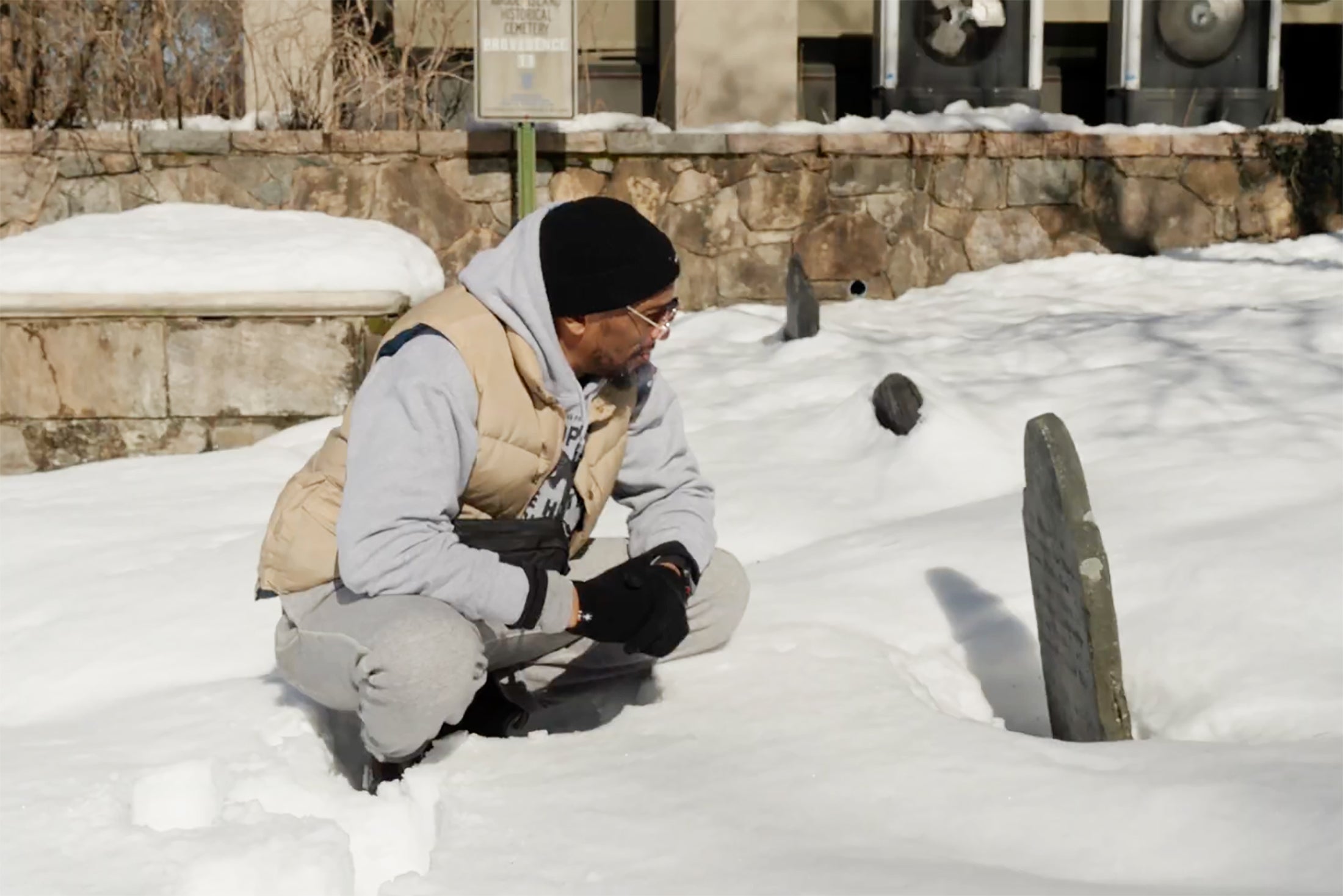
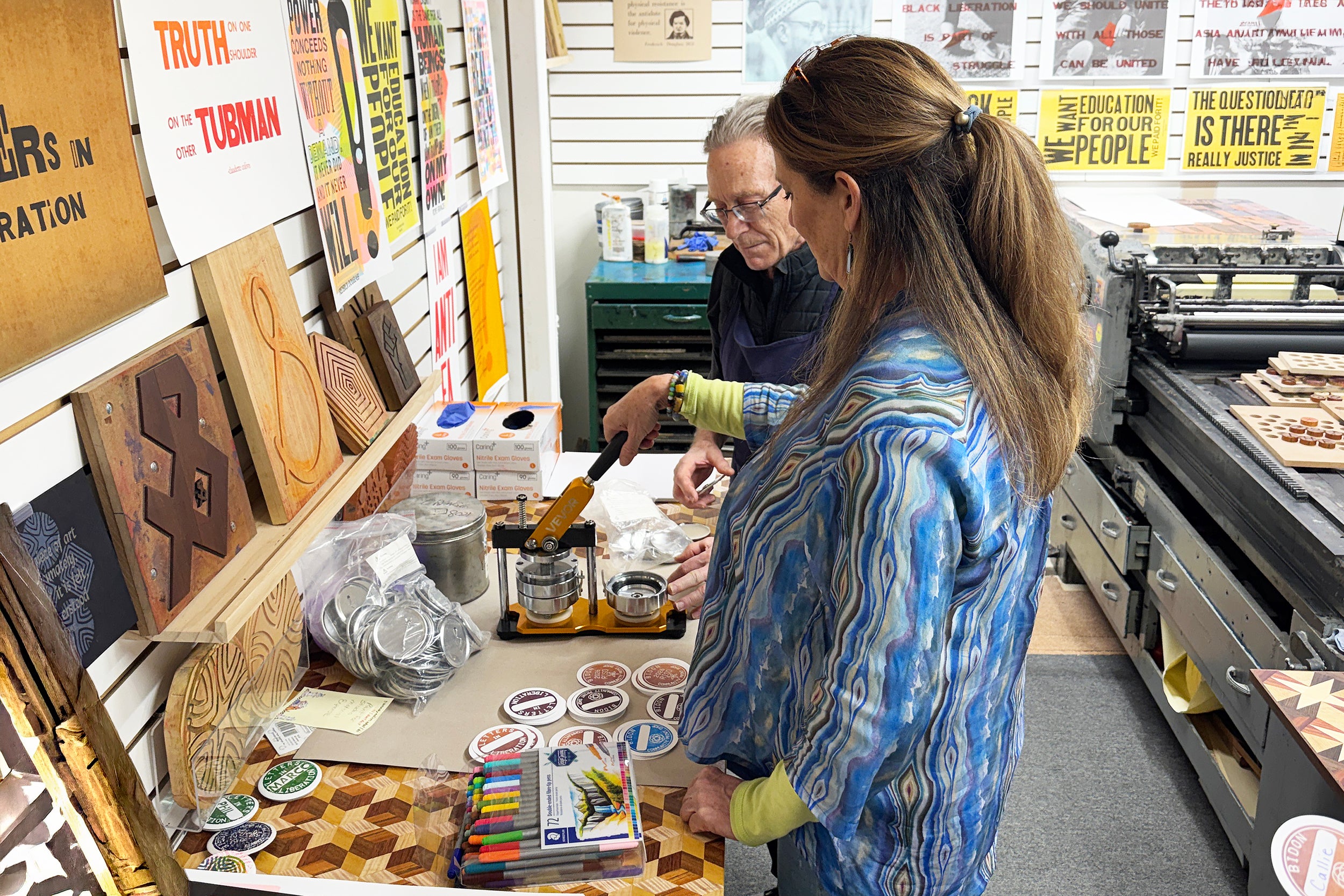
The first cohort is made up mostly of art teachers—including five RISD alums and two teachers who studied under Black—as well as social studies and general ed teachers working in elementary, middle, and high school classrooms. “Art teachers are often isolated at their schools, so participants were excited to be together in community and to collaborate on ideas they can bring back to their classrooms,” says Black.
The group began by watching a video of an educational walking tour highlighting significant historical sites near RISD’s campus. It was led by University of Rhode Island Africana Studies faculty member Marco McWilliams, who recently co-taught a Wintersession class at RISD called Letters in Liberation rooted in the history of Black resistance and offset and letterpress printing. The tour was intended to be analogue, but the Blizzard of 26, which dumped three feet of snow on Providence, necessitated a change in plans.
“We’re actually filming all of the sessions so we can create an online professional development course that will be free for teachers across the state,” says Black. She is working with local filmmaker Phoenix Kabali, who teaches at local arts nonprofit AS220 and in RISD’s Project Open Door program for creative, underserved youth.
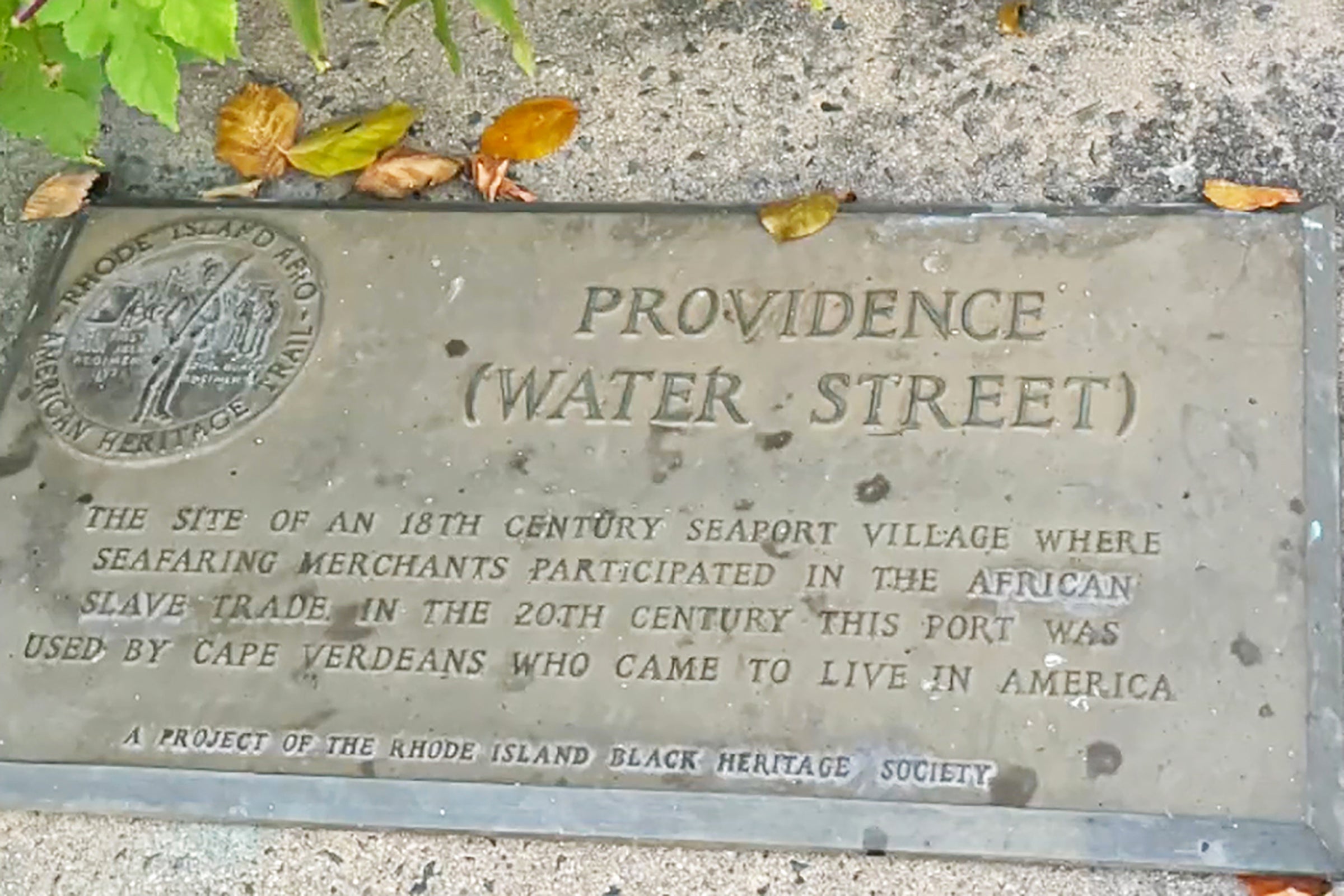
The walking tour highlights historical Providence sites, including Meeting Street School, the first public school in the nation open to African-American students; a historical marker where the interracial Snowtown neighborhood once stood; and another marker at Water Street calling out Rhode Island’s role in the trans-Atlantic slave trade and commemorating the arrival of Cape Verdeans, the first West African people to come to the US as free people.
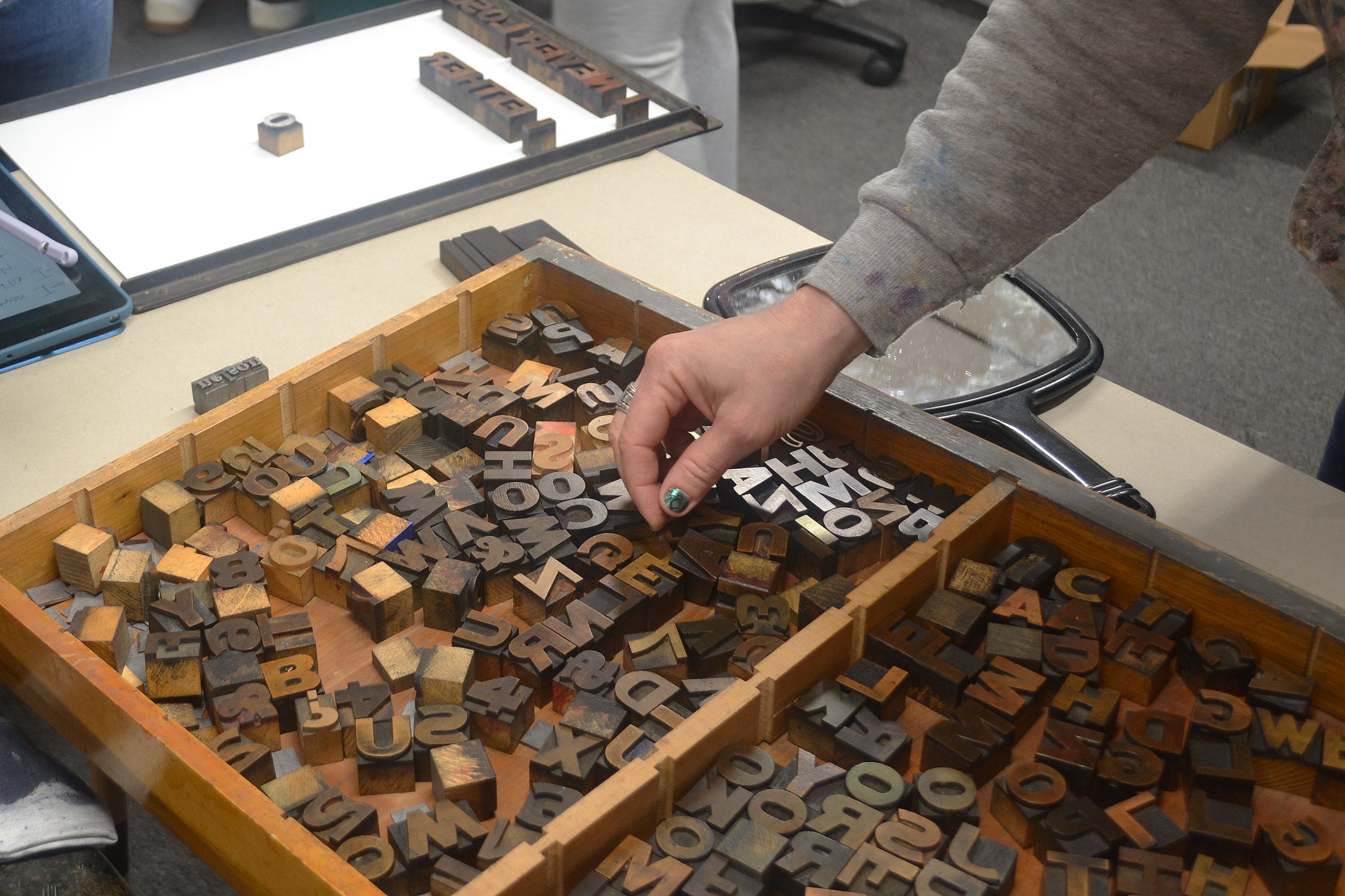
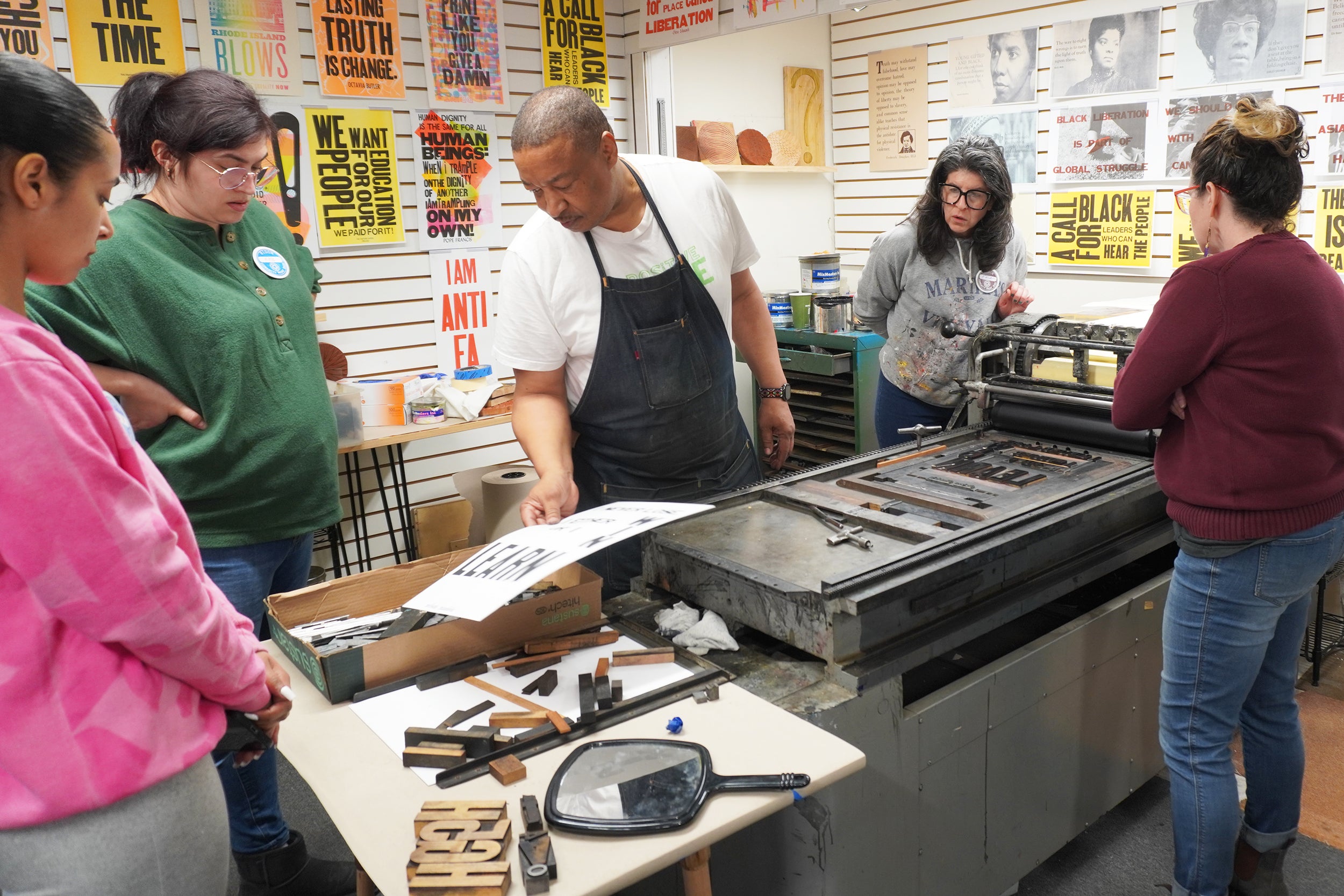
Program participants will apply what they learned in a series of hands-on workshops in the studio that McWilliams shares with master printmaker and educator Jacques Bidon, who has taught the art of printmaking for decades and served as a mentor to many local artists. “It’s a creative, experimental space where the group can play with ideas they have identified and come up with fun, critical engagements for students in their classrooms,” says Black.
Participants will also work with writer/editor Francie Latour, manager of community-engaged learning at Brown University’s Swearer Center for Public Service, co-founder of social justice project for children Wee the People, and author of the picture book Aunt Luce’s Talking Paintings (Groundwood Books).
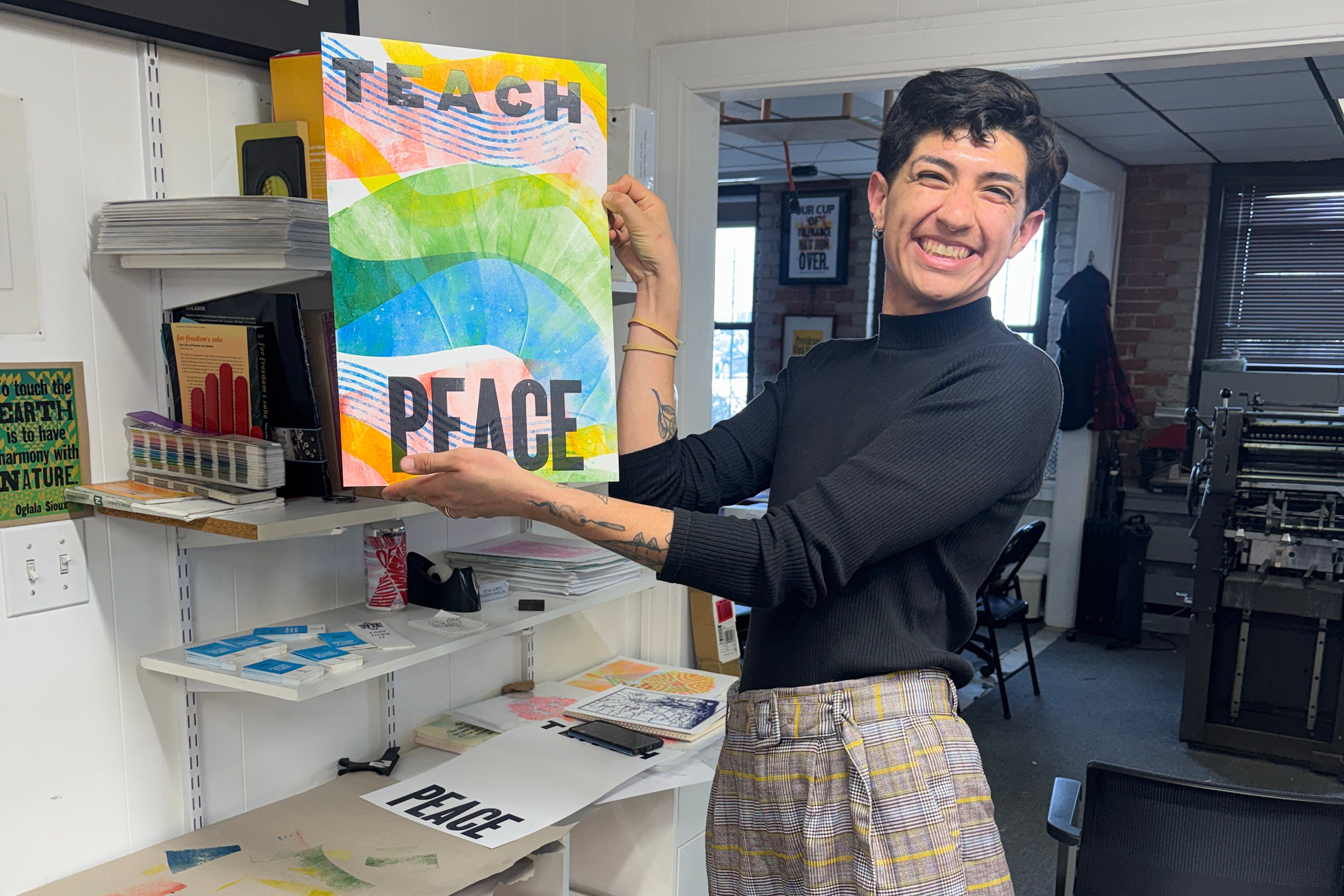
“The great thing about art,” says Black, “is that it allows you to reach people with lots of different interests and perspectives. It feels so good to provide meaningful professional development to public school teachers in Rhode Island!”
And Center for Community Partnerships Executive Director Bethany Costello agrees, adding, “We’re so grateful for the support of Senator Jack Reed’s office, which made this meaningful work possible. Caitlin and her team have done an incredible job launching this initiative, and their innovative integration of art, design, and history will make a lasting difference for Rhode Island’s public school teachers and students.”
Simone Solondz / top image: master printmaker Jacques Bidon
April 6, 2026
Emerging artists and designers worked with TLAD students and community arts educator Jacques Bidon to honor historic Rhode Island figures.

Dozens gathered at Woods-Gerry Gallery in June to commemorate two decades of POD and its commitment to supporting access to art education.

Students conducted research and proposed monuments for College Hill that commemorate the past while reinterpreting symbols of collective memory.