
The Texas native and Illustration alum shared sage advice with current students about sustaining a healthy creative practice.

How much magenta-colored paint appears in George Seurat’s 1884 painting A Sunday on La Grande Jatte? How might one re-create the quality of light in the Lascaux caves in a gallery setting? Can soft-serve ice cream cones evoke the colors of a St. Louis sunset?
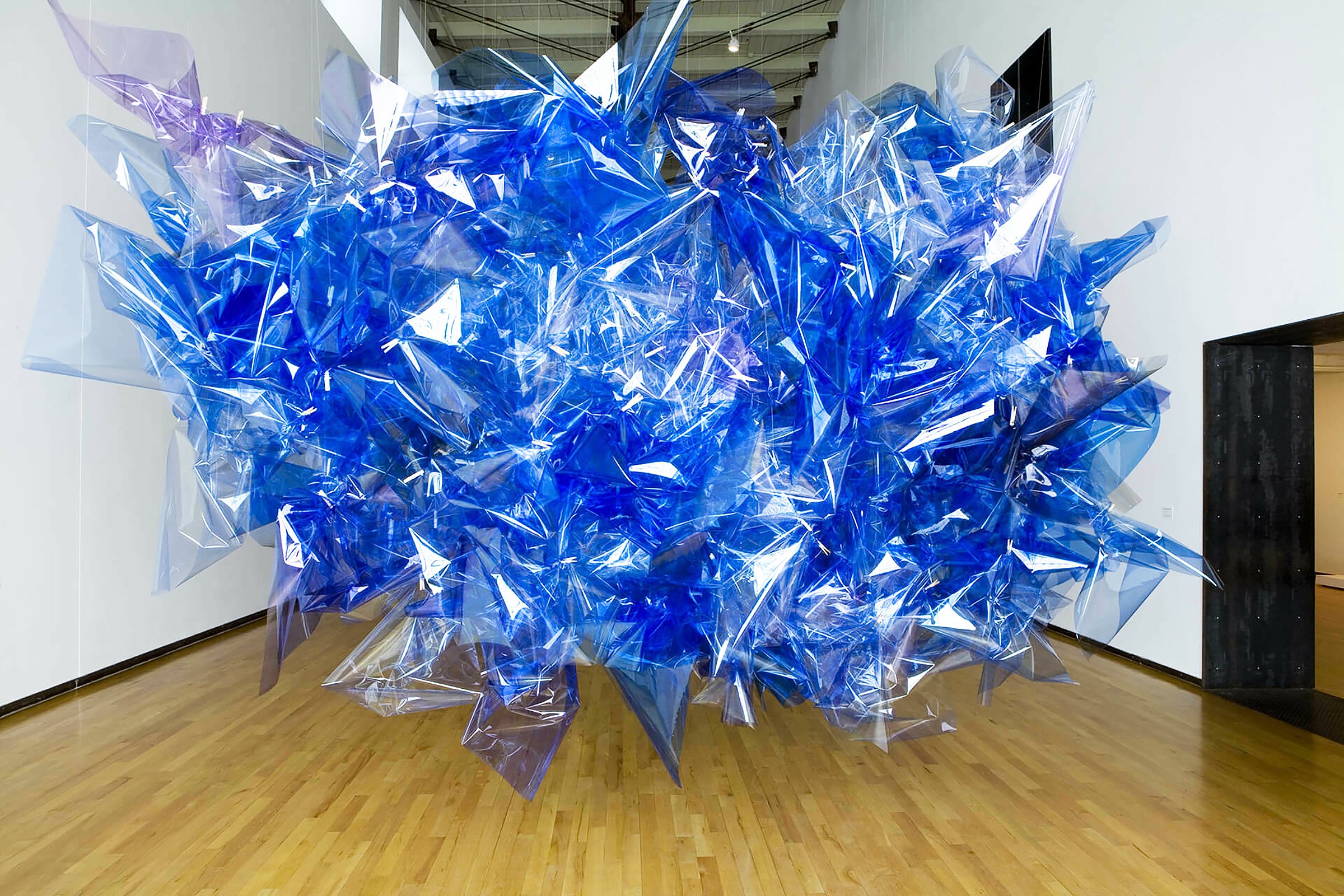
These are just a few of the questions that have inspired artist and RISD Sculpture alum Spencer Finch MFA 89 SC to make conceptual work exploring light, color, and human perception. A firm believer in subjective reality, Finch discussed the ideas behind some of his recent pieces with RISD students earlier this month.
“The singular image is insufficient to the understanding of reality,” noted the prolific artist, who borrows ideas from such historical luminaries as Claude Monet, James McNeill Whistler, and Emily Dickinson. “It’s so important to allow yourself to become bored so your mind can wander,” he told students. “I like work that questions its own validity while trying to speak with a true voice.”
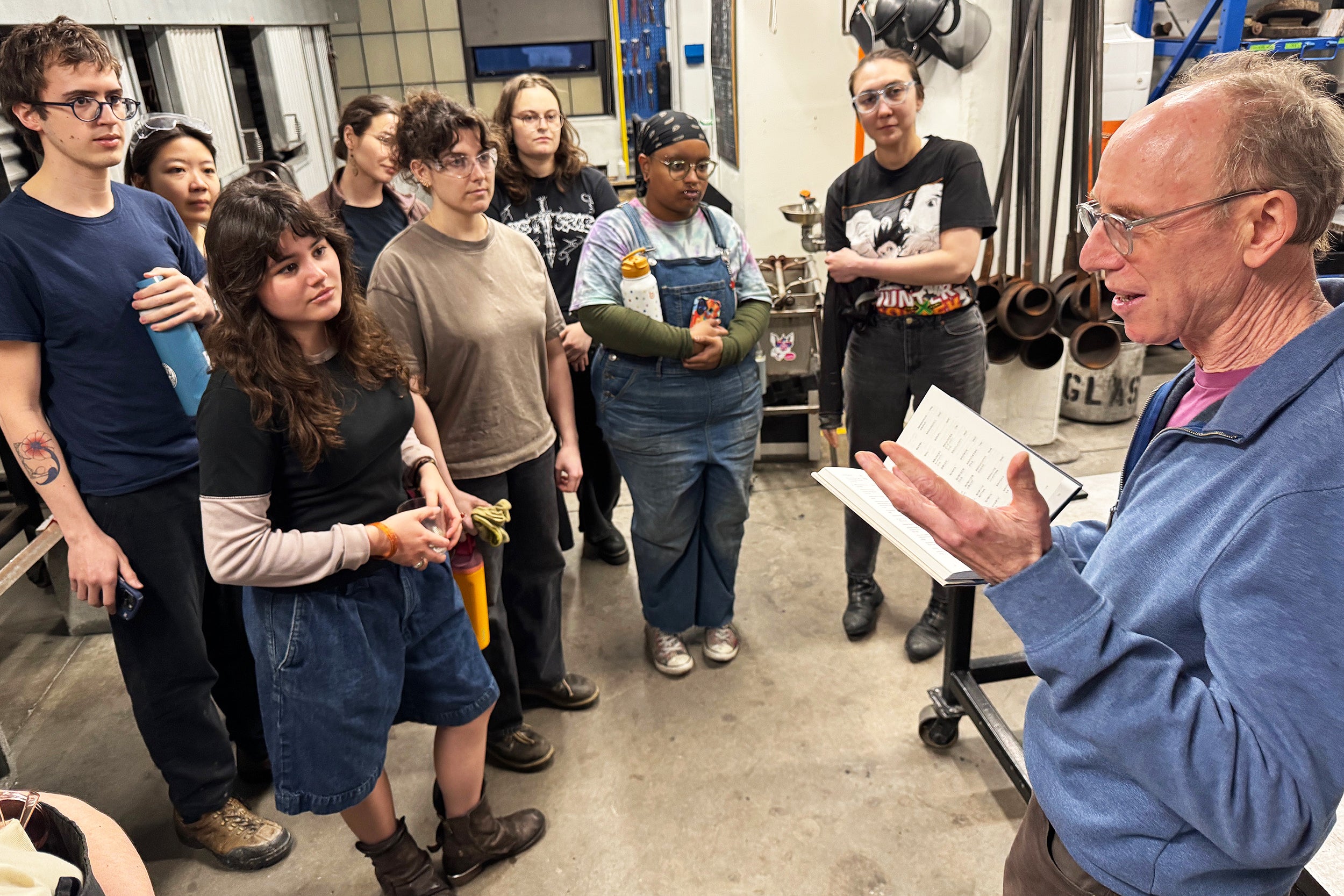
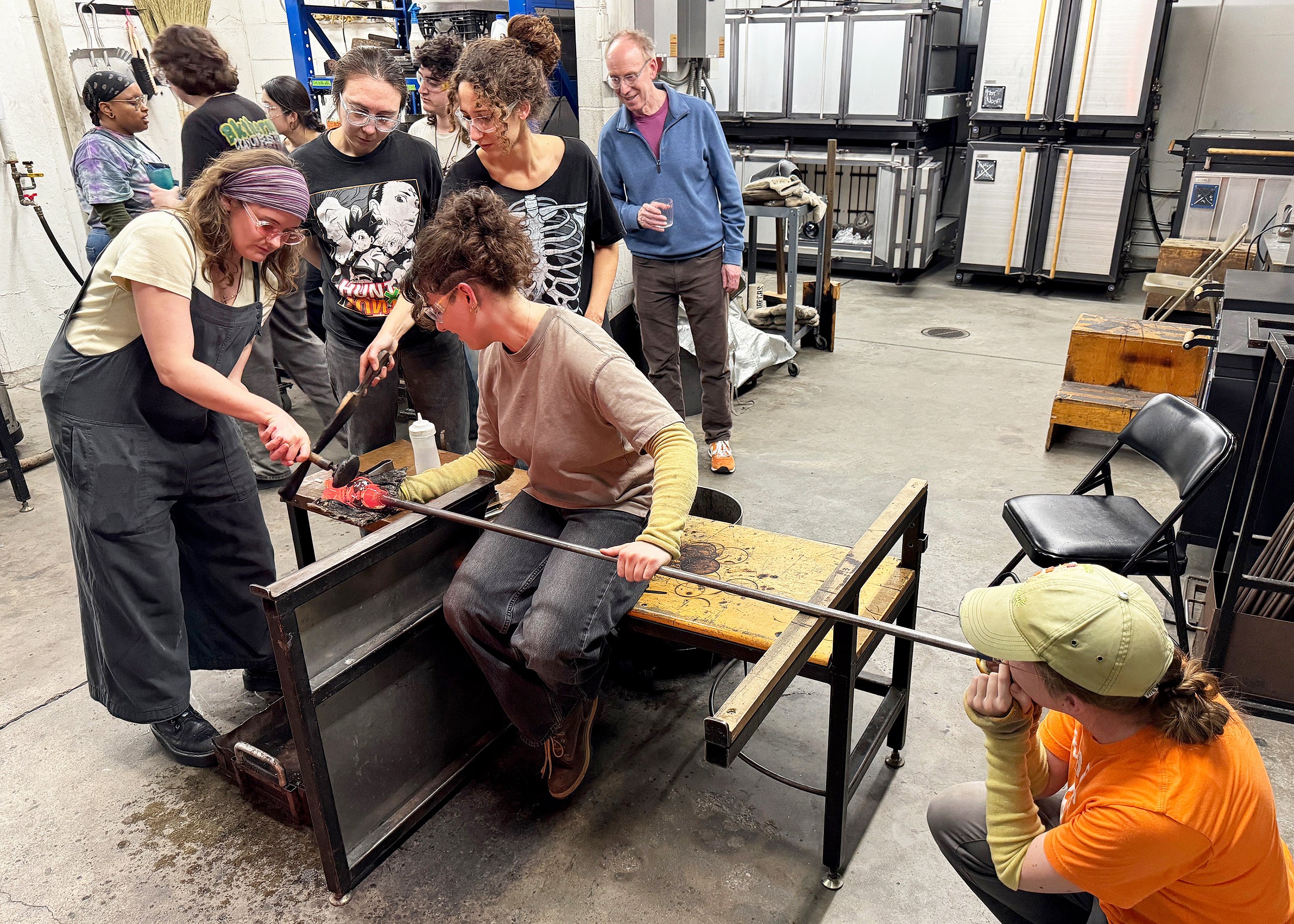
Finch was on campus as part of the Glass department’s Hot Nights lecture series, in which artists working in different mediums collaborate with students and faculty members in the hot shop. Other recent participants include Black studies scholar Christopher Roberts, who teaches in RISD’s Theory and History of Art and Design department and the Experimental and Foundation Studies division, and visual artist Anna Riley, who studies the relationship between artisanal and scientific practice.
“Many of our lecturers are non-glass artists who bring something else relevant to the table,” says Department Head Rachel Berwick 84 GL, who developed the series years ago. “They come with an idea they want to play out in the hot shop, and then the students help them make it happen.”
Finch’s idea involved responding to Miya Ando’s Water of the Sky: A Dictionary of 2000 Japanese Rain Words. The prompt inspired students to create large-scale pieces featuring inclusions (or imperfections in the glass) that resembled storms, water droplets, or the shape of water itself.
It’s exactly the kind of scientific and referential approach to making that normally inspires the ineffable experiences Finch creates, encounters that “mine the space between abstraction and representation.” To create One Hundred Famous Views of New York City (After Hiroshige), for example, he overlaid a map of Hiroshige’s 19th-century Edo (now Tokyo) over a map of the New York City area to select the settings for his own series of watercolor paintings, ranging from a junkyard in New Jersey to an iconic view of the Statue of Liberty and the Staten Island Ferry.
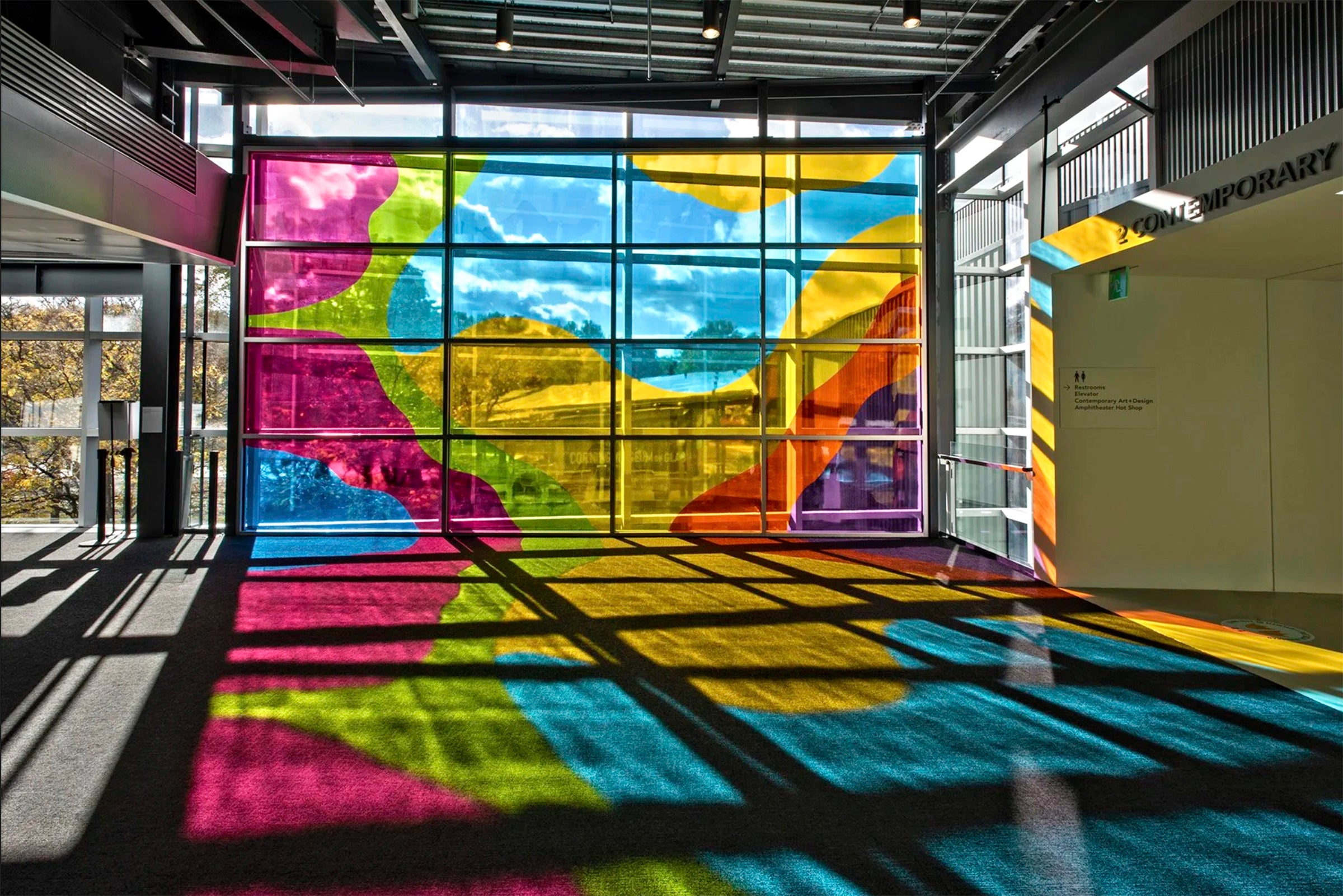
In The Secret Life of Glass, a site-specific piece he created for the Corning Museum of Glass in 2020, Finch translated the temperature readings taken on site into colors inspired by the Sennelier watercolor palette favored by Henri Matisse.
But Finch eschews the notion of the brilliant, narcissistic artist and prefers to create work based on the brilliance of others. “This approach helps create a work that’s about ideas, usually inspired by someone else’s thoughts, but through my own awareness,” he explains.
His ceramic tile installation To Disappear Enhances (Memory Landscapes), which will be unveiled at the Obama Presidential Center in Chicago on Juneteenth, evokes color memories of places relevant to President Obama’s formative years. Four different cities are referenced in the piece: Jakarta, Honolulu, Chicago, and Nairobi.
“The idea for this work came from re-reading President Obama’s Dreams from My Father and thinking about how his experiences in different places inform his worldview and his character,” says Finch. “I aim to open it up for the viewer. The viewer then has an experience that is their own, rather than being told what to think.”
Simone Solondz / top photo by Matthew Herrmann © Hill Art Foundation
March 30, 2026
The Texas native and Illustration alum shared sage advice with current students about sustaining a healthy creative practice.

Open to students in every major, Interdisciplinary Hot Casting explores a range of traditional and non-traditional techniques and mold materials.

A studio led by Professor Rachel Berwick brings to light the transformative effects of heat and molten glass on a variety of natural materials.