
From Apparel Design to Textiles, campus hummed with innovative approaches and generative discussions the week before the winter break.

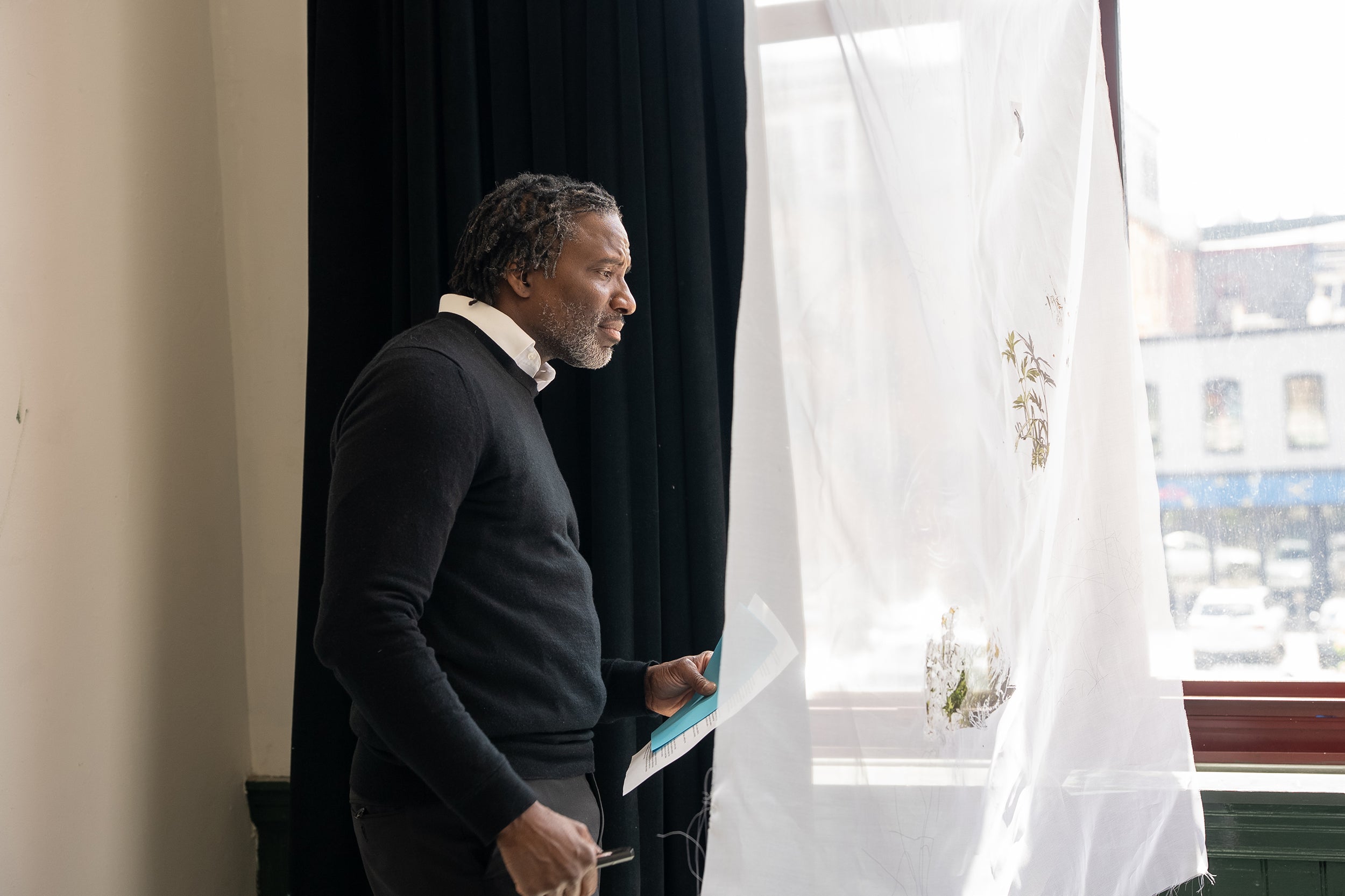
“I really like the complexity of your colors, and you bring so much materiality into your digital prints,” Textiles Department Head Anna Gitelson-Kahn MFA 09 TX told junior Nick Merlo 27 TX as she reached out to touch one of his designs. The prolific Merlo presented an entire semester’s worth of crumply, twisted, and hand-dyed knitted and woven textiles to faculty members and visiting critics as his classmates installed their work elsewhere in the College Building.
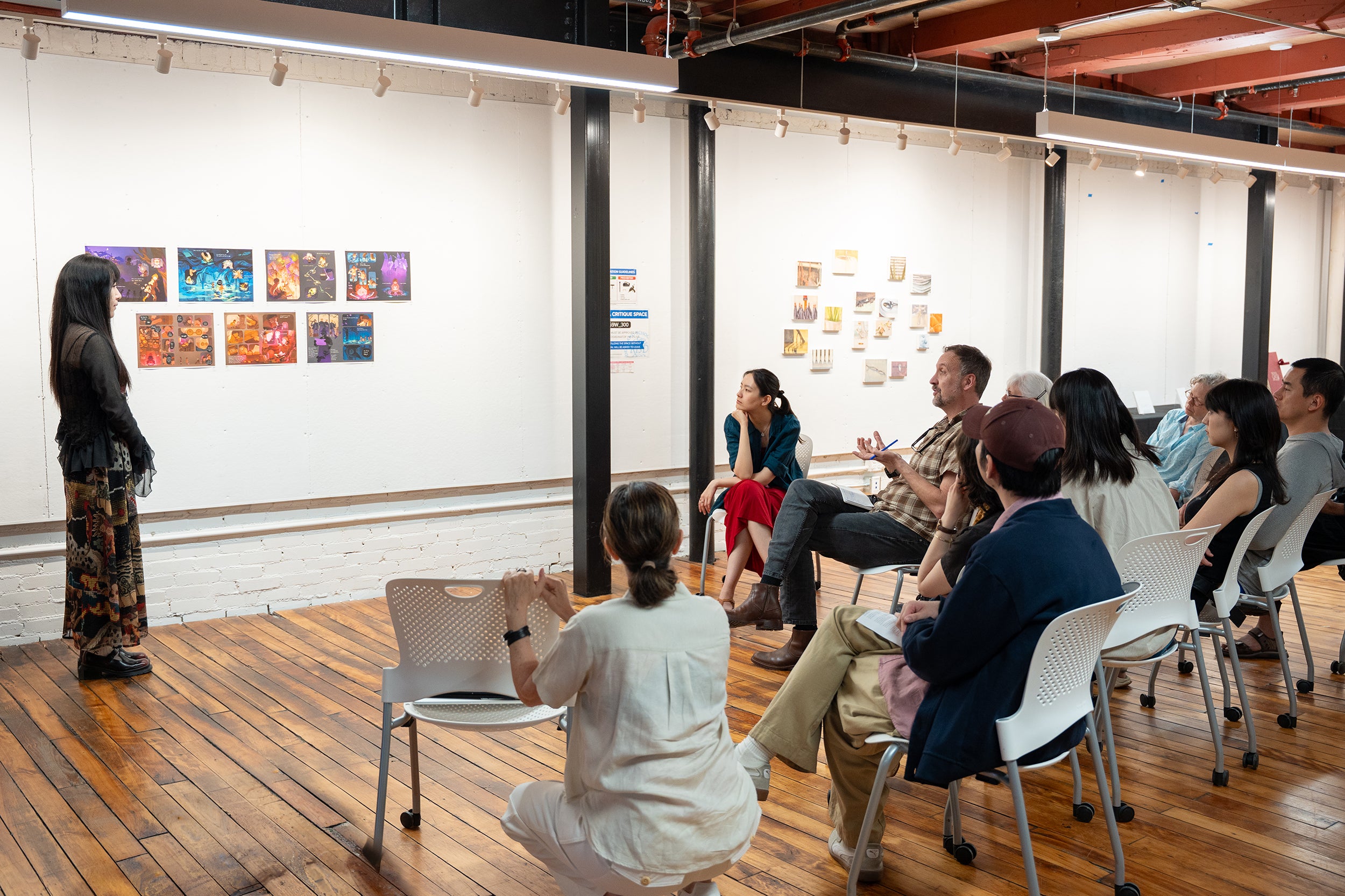
With the clock ticking down the minutes until the end of the 2025–26 academic year, RISD’s campus was buzzing with such discussions, as students in every department shared their work and gathered insightful feedback from peers and experts in their fields. As defined by RISD’s Center for Arts & Language, “critique is a learning experience that can help everyone—the presenter, peers offering feedback, and the whole class—grow and improve.”
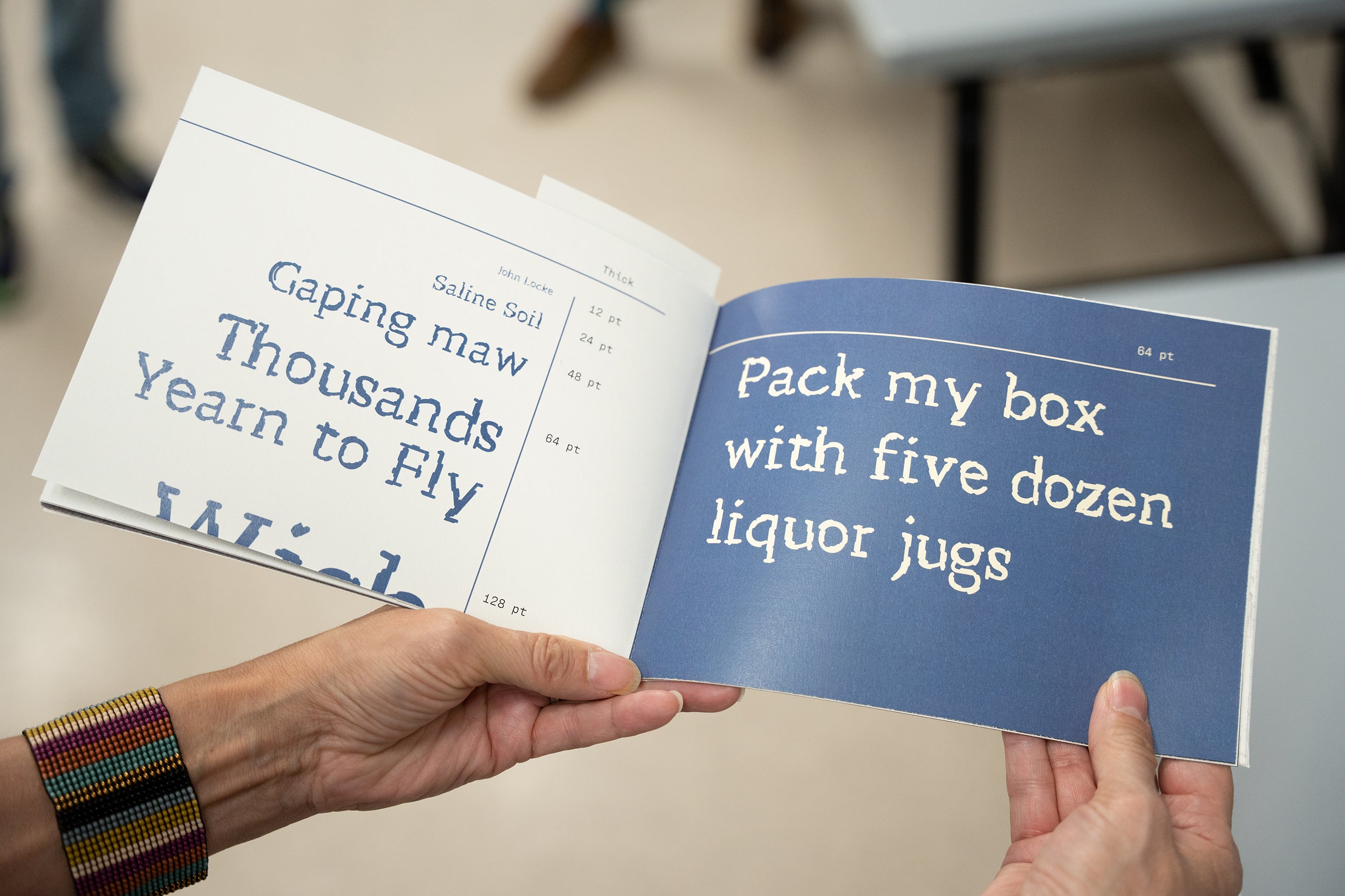
Seniors in the Graphic Design department were looking for that kind of fruitful feedback. Zimo Yang 26 GD presented a portfolio of work focused on his typography and poetry. “I try to hone in one idea or conceptual kernel with each new project I undertake,” he said as faculty members Anther Kiley MFA 13 GD and Kelsey Dusenka and visiting critic Mary Banas MFA 09 GD examined his work. Kiley said that he appreciates Yang’s nuanced and complex investigations, and Banas noted, “you believe in your ideas, and that’s going to take you through life.”
Across campus, Printmaking grad students Tiantian Yu MFA 27 PR and Karen Hu MFA 27 PR gathered notes from a team of critics, including Hyperallergic and New York Times contributor Seph Rodney. Yu told the group that she works intuitively, moving between painting, printmaking, and mixed-media installation. Graduate Program Director Tyanna Buie noted that she likes how Yu “messes around with materiality,” and Rodney encouraged her to avoid “getting bogged down with mimetic imagery” and instead to let the medium take her where it will. Hu presented mezzotint prints she’s hoping to incorporate into her social justice work that Assistant Professor Juana Estrada Hernandez described as “empowering.”
Across the river in the Architecture department’s Bayard Ewing Building, spirited discussions could be heard through every open door. Students in an advanced studio taught by W Gavin Robb presented Boston-area projects combining architecture and community service in response to the prompt “wouldn’t it be incredible if.”
Enid Barragon-Ortiz MArch 27 showed plans for transforming an old courthouse in Union Square into a community center for youth featuring a three-story courtyard and flexible space for programming. Critics gushed over her strategy, and one noted how the arched window design she proposed would signify change and undermine the original structure’s imposing rectangularity.
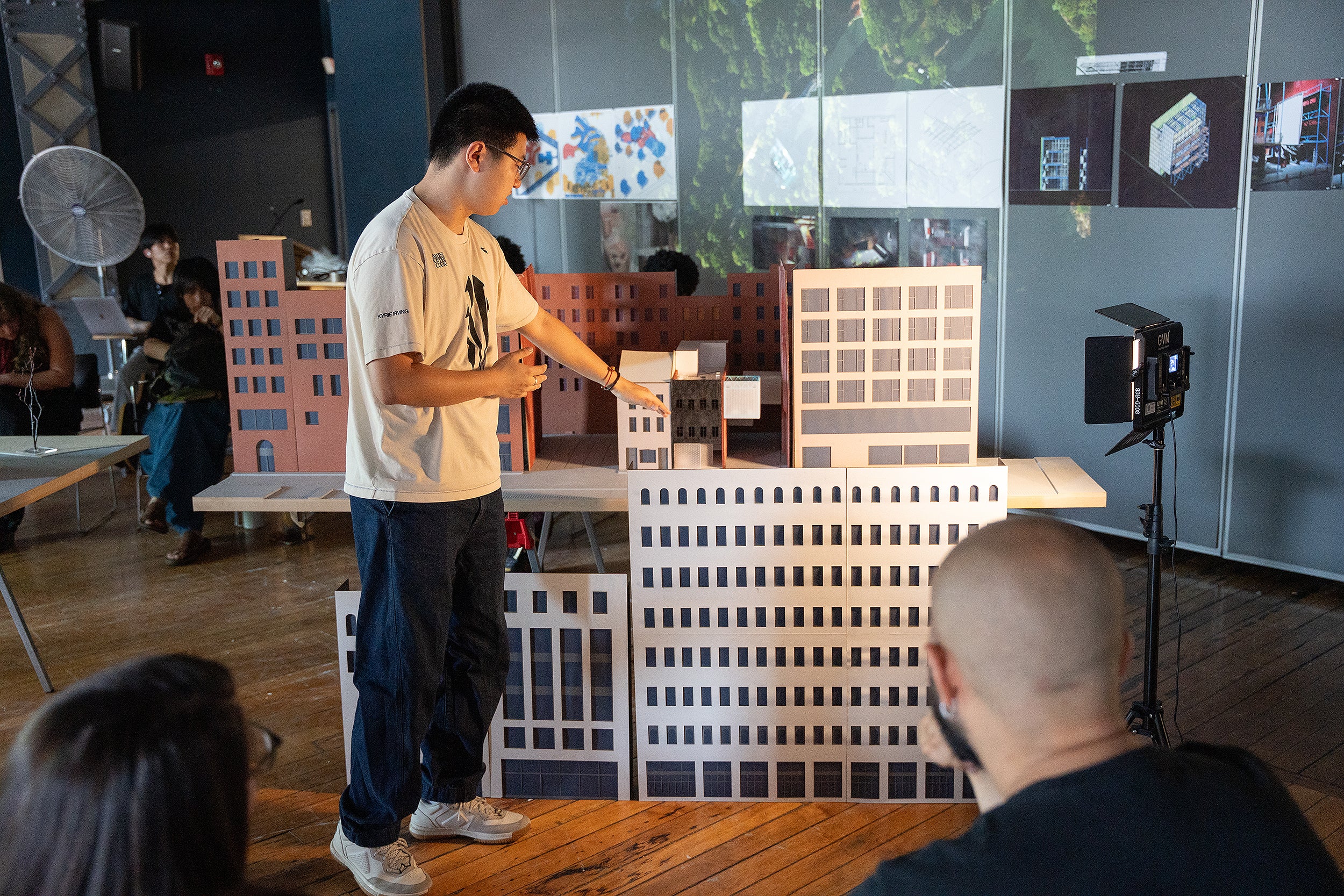
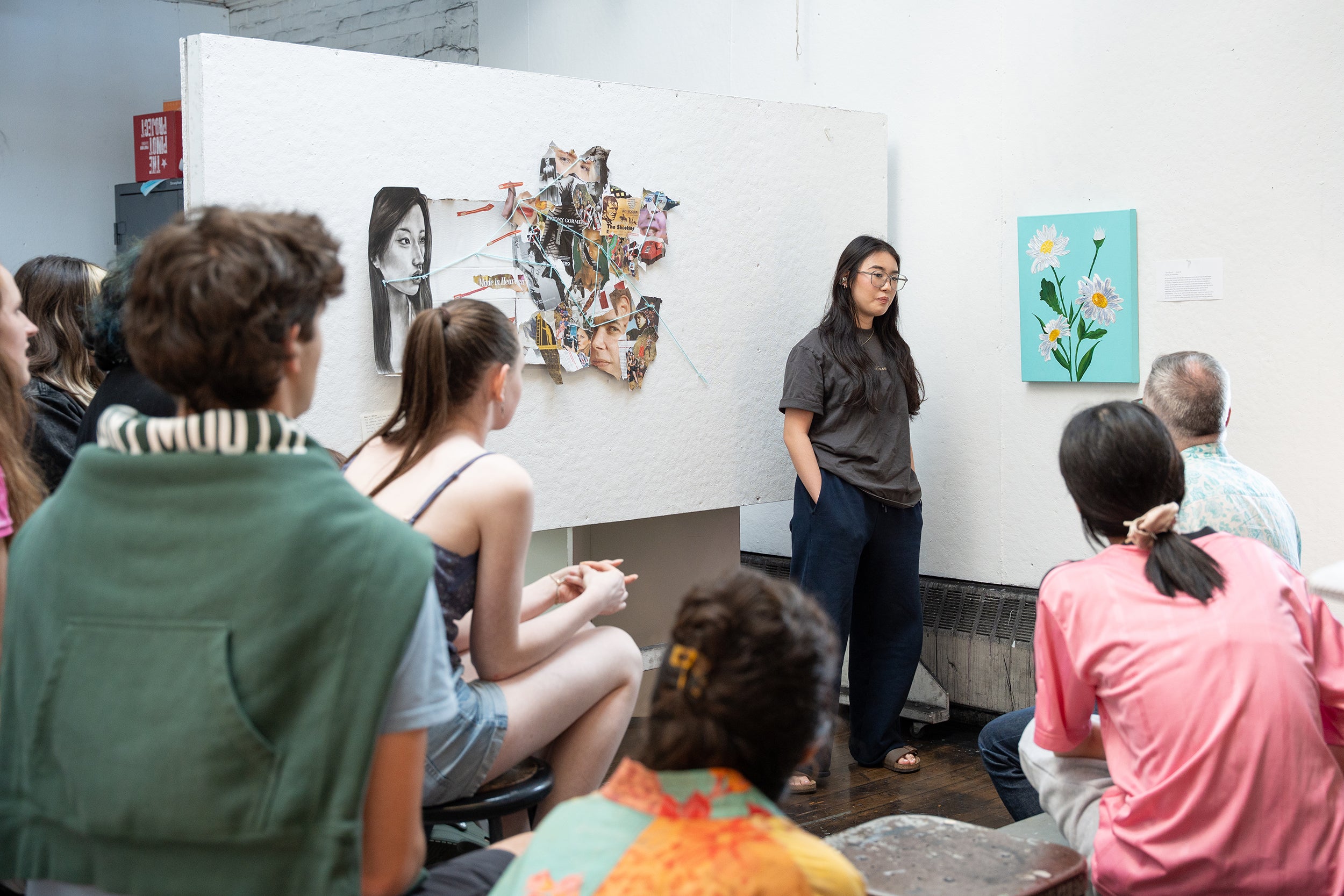
Across the hall, students in a studio taught by Ernesto Carvajal Maldonado showed interventions to existing buildings that “read the city of Boston through different lenses.” Grad student Yiming Wang MArch 27 envisioned adding translucent blocks to the cramped Brattle Book Shop that would provide space for small meetings and create visual interest that might draw in customers. Critics loved the performative aspect of the intervention, and one suggested an architectural staircase connecting the new structures.
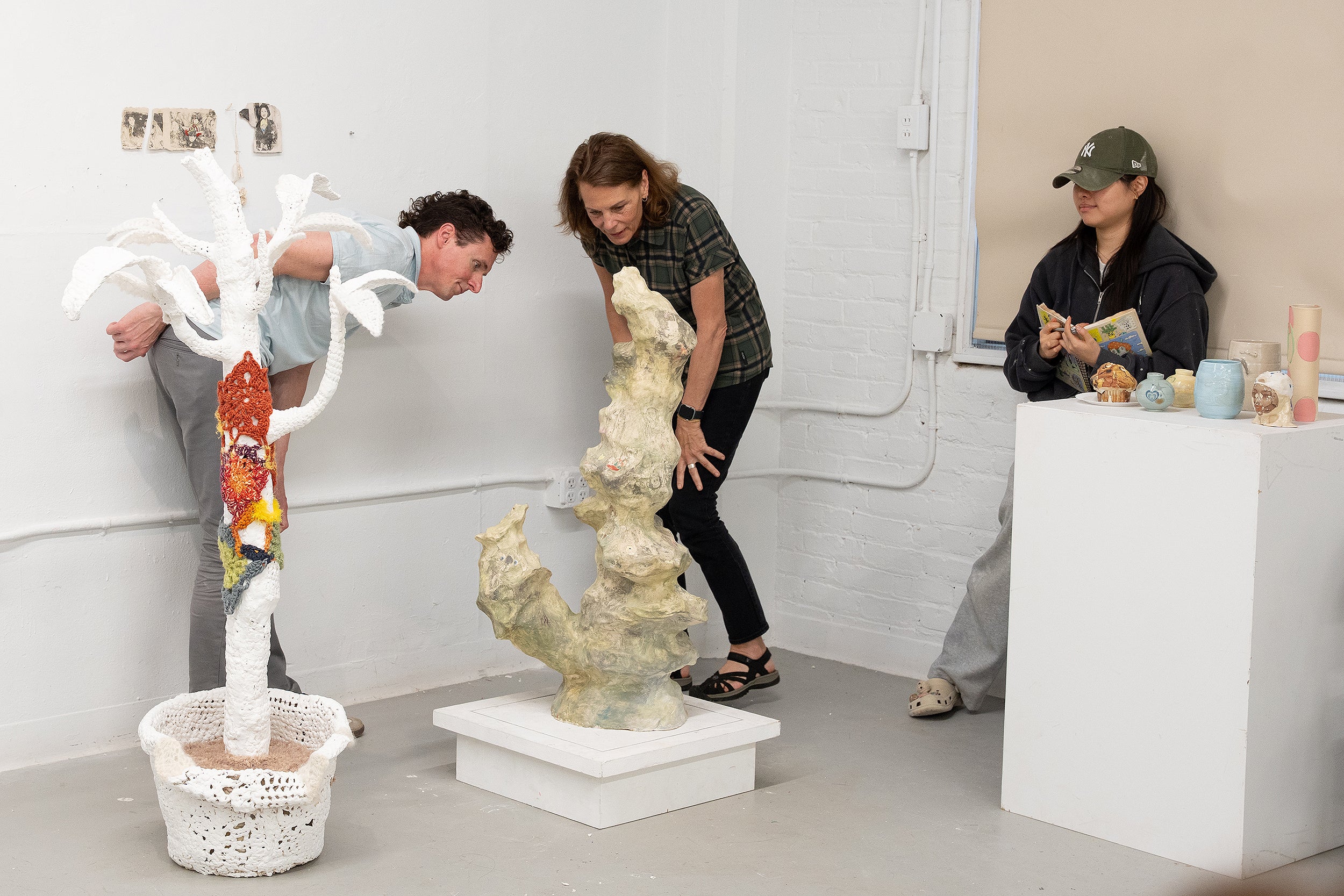
In the Ceramics department, grad students Claire Elise Elley MFA 27 CR and Jeeyou Jung MFA 27 CR showed their evolving work incorporating clay and yarn. A crocheted botanical piece by Jung was well-received, and Professor Shoji Satake wondered if it would more clearly express the ideas of alienation and vulnerability the artist mentioned in the crit if it was stark white. “I’m a little bit distracted by the colorful additions,” he explained.
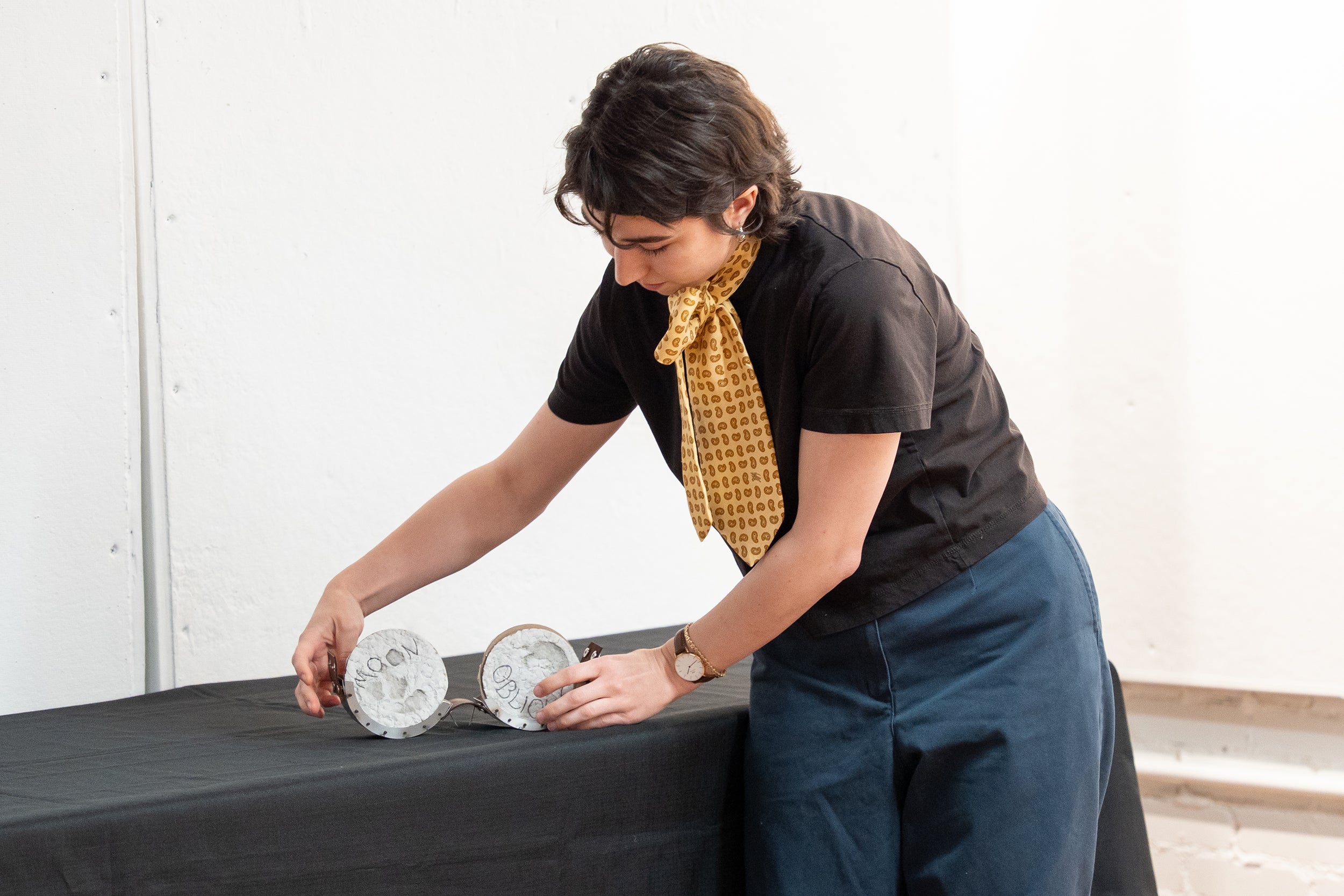
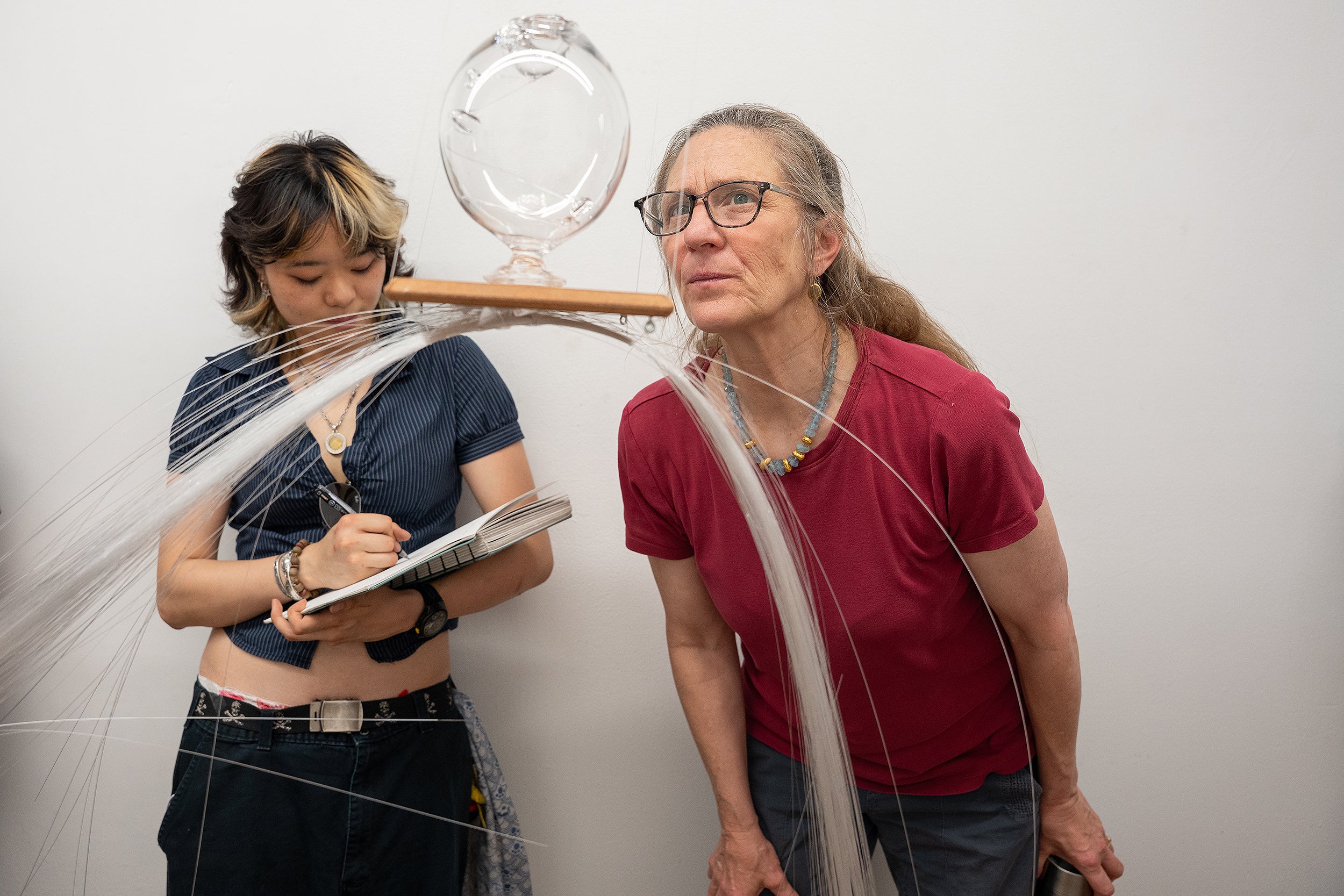
One floor up in the Glass department, sophomores showed work inspired by the theme of time. Jolin Zheng 28 GL attempted to “make time visible” with a piece incorporating glass threads that she hung in a hallway of the Metcalf Building. Department Head Rachel Berwick 84 GL appreciated the intentionality behind the work, and visiting critic Matthew Day Perez suggested that she continue to work the installation’s elements by taking it apart piece by piece and photographing each remaining iteration in the process.
Outside on Moore Terrace, the Interior Architecture department reviewed carefully researched modular systems for exhibiting art by students in an advanced design studio led by faculty member Ece Yetim. The group described a system by Joey Castro MDes 27 as flexible, finished, and beautifully articulated. “There is so much potential in this project,” said visiting critic Aida Miron. “It transforms the viewer’s perception of space through modulation. Fantastic work!”
Simone Solondz / photos by Kaylee Pugliese
May 29, 2026
From Apparel Design to Textiles, campus hummed with innovative approaches and generative discussions the week before the winter break.

The end-of-semester rite of passage teaches students to discuss their work, give and receive constructive criticism and push the boundaries of their burgeoning practices.

Grads and undergrads in departments across campus present their final projects to faculty members, peers and visiting experts in their fields.